
Exercises to Avoid if You Have a Weakened Pelvic Floor
If after childbirth you experience urinary leaks, heaviness, vaginal pressure, or discomfort during exertion, it is important to avoid certain prohibited exercises for a weakened pelvic floor.
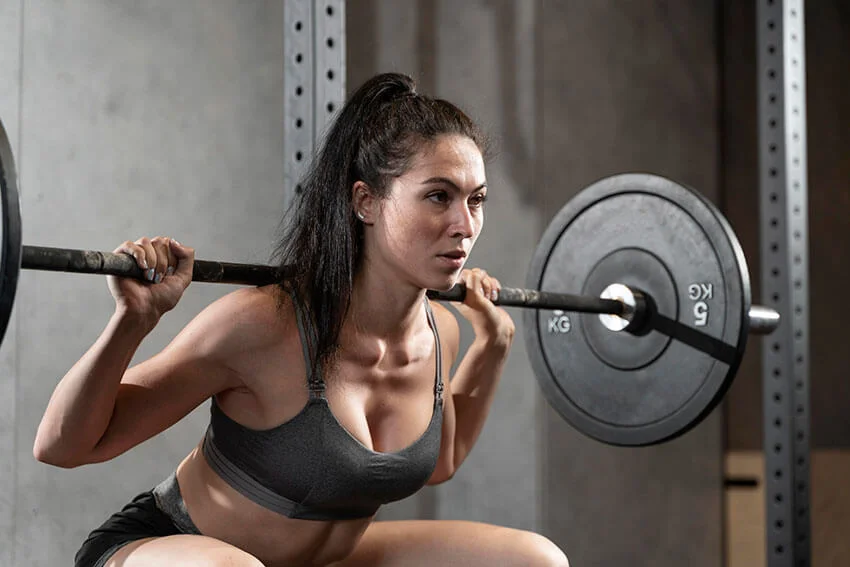
If after childbirth you experience urinary leaks, a feeling of heaviness, vaginal pressure, or discomfort during exertion, it is important to avoid certain prohibited exercises for a weakened pelvic floor or, at the very least, those that are highly discouraged.
These activities increase intra-abdominal pressure and push this musculature downward, worsening symptoms.
We are talking about classic abdominal exercises, lifting excessive weights, and high-impact sports such as jumping and running. Practicing CrossFit with a weak pelvic floor is also not recommended, and we will explain the reasons below.
How to Know if Exercise is Affecting Your Pelvic Floor
To determine if the type of exercise or sport you are doing is affecting your pelvic floor, observe how your body responds during the workout and after completing it.
If you feel pain, discomfort, or excessive pressure in the pelvic area while doing an exercise or after finishing it, it is probably best to stop and evaluate whether this is the right routine for you at this time.
In many cases, the problem is not the exercise itself, but how it is executed and how your body manages internal pressure during exertion. The same exercise can be tolerated well or worsen symptoms depending on these two factors.
Another common mistake when returning to training after childbirth is lifting more weight than your body can currently handle.
Remember that progress in your training should be based on the quality of movements, not on the force exerted.
As professionals in postpartum recovery, our main recommendation is to pay attention to your posture (activating the abdomen and pelvic floor) and focus on breathing, so that it aligns with the effort.
The golden rule of breathing is to exhale, meaning to release air during the contraction or effort phase and inhale during the preparation or relaxation phase of the musculature.
Signs That You Should Stop or Adapt Your Training
Your body reacts to training, and it is important to recognize the signals it sends you both while exercising and afterward.
Pain is one of the main indicators that something is not right. The pelvic floor should not hurt during exercise or after finishing it.
You should also review your training if you experience urinary leaks during exertion, when coughing or laughing, or if you feel pressure or heaviness in the pelvic area or any worsening of symptoms after training.
If you feel the musculature of the pelvic floor constantly tense, suffer from spasms or cramps, and/or have symptoms of prolapse, meaning a sensation of descent of the organs, you should consult a specialized professional and adapt your routine.
The bulging of the abdomen when performing certain exercises is one of the most common situations observed in consultations. In these cases, it is also advisable to stop and look for alternatives that allow you to work this musculature without generating so much pressure in that area.
If after several weeks of training you notice no improvement in control or strength, your body probably needs a different approach or exercises more suited to your current state.
High-Impact Exercises That Can Worsen Symptoms
First, it is important to indicate that not all high-impact exercises are bad for a weakened pelvic floor.
They are harmful when there is constant impact, such as jumping rope, burpees, racket sports, contact sports, and running, especially on hard surfaces.
In these cases, they can worsen the symptoms associated with a weakened pelvic floor.
These exercises strain the musculature, overload the bones and joints, and add pressure to an area, the pelvic region, that is not functioning as it should. The result is joint pain, inflammation, and slight urinary leaks.
With all this, we do not mean to say that if you have a weakened pelvic floor you cannot exercise. On the contrary, it is very important to keep moving, but with training adapted to the circumstances: adjusting intensity and focusing on technique.
Prohibited Exercises with a Weakened or Overloaded Pelvic Floor
That said, here are some general guidelines for exercises that are not recommended if you have a weakened or overloaded pelvic floor:
- Traditional or classic abdominal exercises: because they push the organs down towards the pelvic floor.
- Lifting excessive weights without good control of breathing.
- High-impact constant exercises/sports: jumping or running.
- Exercises with poor technique or execution.
Did you know that even hypopressive exercises, specifically indicated for postpartum recovery, can be harmful if not performed correctly? That’s why it is very important that your training is supervised by a professional until you master the technique.
Exercises That Are Generally Better Tolerated During Recovery
There are a series of exercises and sports specifically indicated for pelvic floor dysfunction and postpartum recovery:
- Low-impact cardiovascular exercises such as swimming or using an elliptical bike.
- Adapted yoga or pilates.
- Kegel exercises to regain muscle tone in the pelvic area.
- Practicing hypopressive exercises under supervision to work the abdominal corset without generating pressure.
All these exercises, when combined and well executed, will be key to your postpartum recovery.
However, we would like to clarify some misconceptions related to hypopressive exercises. These significantly improve the tone of the transverse abdominal muscle and posture but do not reduce waist size on their own. For this purpose, it will be necessary to combine them with other types of abdominal exercises that are not recommended after giving birth.
Another myth about this type of training is that apnea is the most important aspect of the exercise. While it is true that the breathing pattern is fundamental, the basis of the exercise is self-elongation and body control.
When to Seek Pelvic Floor Physiotherapy
Now that we have a general idea of what is beneficial when we train and know which exercises are prohibited with a weakened pelvic floor, let me tell you when it is necessary to make an appointment with a pelvic floor physiotherapy consultation.
When the symptoms mentioned above (urinary leaks, pain during sexual intercourse, pelvic pain, or prolapse) persist, it is advisable to seek the help of a professional.
Although they are common, it is important not to normalize them or ignore them. Your body is telling you that your pelvic floor is overloaded, weakened, or uncoordinated. And this has consequences in the short, medium, and long term.
How to Return to Training After Childbirth
After pregnancy and childbirth, it is normal to feel fear about returning to training or not being clear about which exercises you can do and which you should avoid during your recovery.
In consultations, one of the common questions you ask us is whether a woman in the midst of postpartum recovery can run, jump, or lift weights. Generally speaking, these are not the most recommended sports, but that will depend on her physical condition at this moment.
Not all women have the same needs or recover at the same pace. Therefore, before returning to training, it is essential to assess the state of the abdomen and pelvic floor.
To promote a safer and more effective recovery and avoid discomfort, it is best to perform supervised adapted exercises and gradually increase the intensity.
Even some exercises recommended during postpartum recovery can be counterproductive if not performed correctly.
That’s why, rather than trying to return quickly to previous training, it is important to prioritize technique, breathing, and adapt exercises to each phase of recovery.
If you need help to return to training safely after childbirth, the women's training service can help you adapt exercise to your recovery and current physical condition.