
Traumatic Birth: How to Recognize the Signs and Rebuild Yourself
Traumatic birth is a reality experienced by thousands of women in silence each year in France. Learn to recognize the signs and find ways to heal.


The traumatic birth is a reality that thousands of women experience silently each year in France. You return from the maternity ward with your baby in your arms, and everyone expects you to be happy, fulfilled, transformed by the magic of birth. But inside, it’s chaos. Images that replay in loops, nights haunted by flashbacks, that knot in your stomach when your birth is mentioned, and above all, that terrible feeling that no one wants to hear what you really went through.
If you are reading these lines with a tight heart, know one essential thing: your experience is legitimate. You are not exaggerating. You are not ungrateful. You carry something real, documented, and medically recognized. And most importantly, there are paths to feeling better. This article is for you, so that you finally feel heard.
What exactly is a traumatic birth?
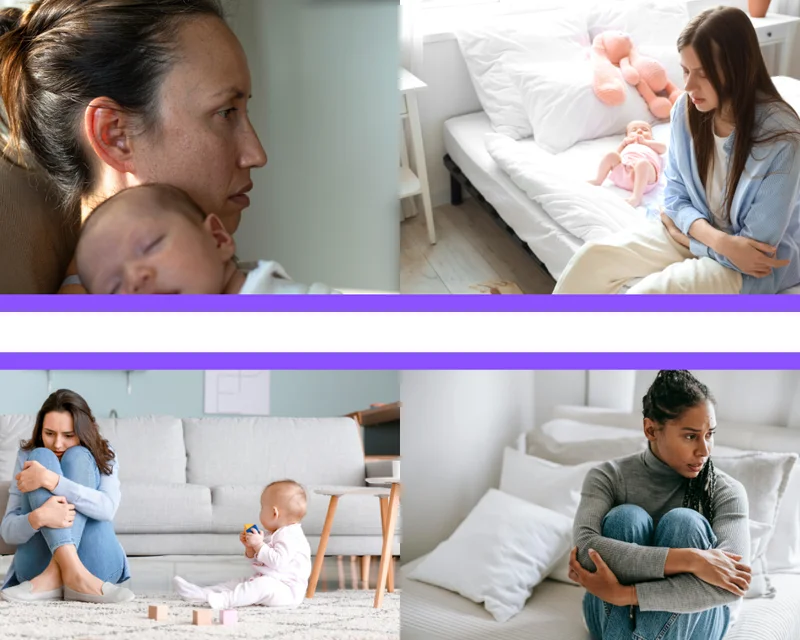
A traumatic birth is one from which you emerge with lasting psychological scars. It is not a weakness of character; it is not "in your head." It is a medically recognized disorder.
As explained by Maman Vogue, post-traumatic stress disorder (PTSD) is an anxiety disorder that typically develops after a very traumatic situation such as an accident, the violent death of a loved one, or a terrorist attack. But this stress can also develop following a difficult birth: this is what is known as post-traumatic stress disorder. In some situations, the origin is clear, such as in the case of an emergency intervention or even in the event of a catastrophe or the death of the baby, but sometimes it is more mundane circumstances that generate an intense feeling of fear, helplessness, or imminent death in the mother. Else Revue
It is important to emphasize: your birth does not need to have been "objectively catastrophic" to have traumatized you. What matters is what YOU experienced, felt, and perceived. No one can decide for you whether your birth was traumatic or not.
Traumatic birth in numbers: you are not alone

The taboo is immense, but the official statistics are staggering. According to the specialized site Profession Sage-Femme, 4% to 6% of women are traumatized by their birth. Travail-sante
But this figure may be underestimated according to international researchers. The site WeMoms reports a higher figure: about 9% of women experience what is called post-traumatic stress disorder (PTSD) after childbirth. Clicbienetre
And IFEMDR (French Institute of EMDR) confirms: data from the Netherlands regularly shows that about 10% of women who give birth have experienced a traumatic experience. ARS Bretagne
One in ten women. This means that among your friends, family, and colleagues, there is certainly someone who carries this weight in silence.
PTSD also affects fathers

Something that is often forgotten: your partner can also be traumatized by your birth. IFEMDR confirms this: it should be noted that birth-related PTSD can also occur in partners, for whom a meta-analysis has shown prevalence rates of 1.2%. ARS Bretagne
If you feel that your partner avoids talking about your birth, has nightmares, or is unusually anxious, he may also be affected.
Why can a birth become traumatic?
Understanding the causes can help you relieve guilt. The factors that transform a birth into trauma are numerous and often invisible to caregivers.
Factors related to the course of the birth
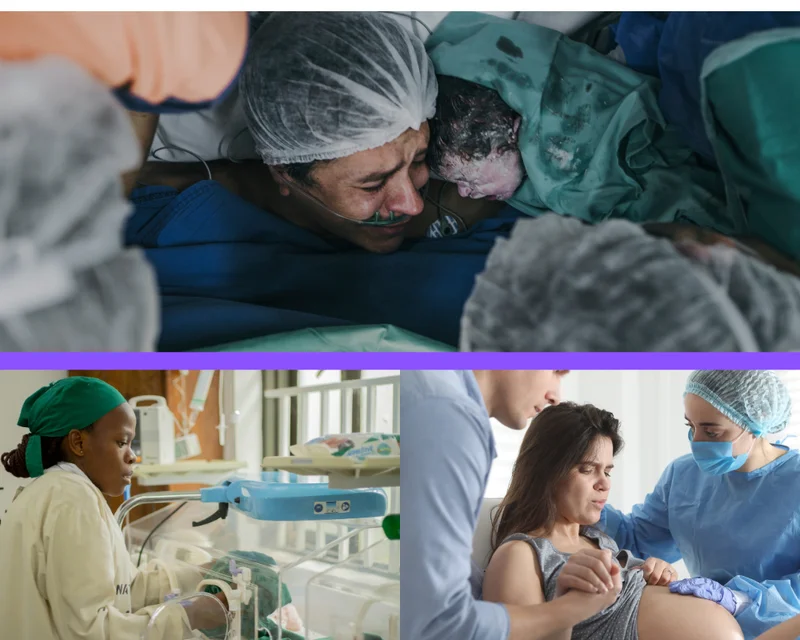
Psychologue.net lists the main causes: significant physical pain, difficult or impossible to manage, loss of control during childbirth, failure of a birth plan, a significant gap between how the woman imagined her birth and how she actually experienced it, the realization of invasive obstetric procedures. Docndoc
Here are the situations that most often recur in testimonies:
- Emergency cesarean unprepared
- Forceps, vacuum extraction, abdominal expression experienced as violent
- Induction against your will or poorly supported
- Episiotomy not discussed or performed without your consent
- Postpartum hemorrhage experienced in panic
- Baby in danger (lack of oxygen, resuscitation at birth)
- Immediate separation from your baby after birth
- Lack of pain relief or epidural that does not work
- Vaginal examination without consent or repetitive
Factors related to the relationship with caregivers

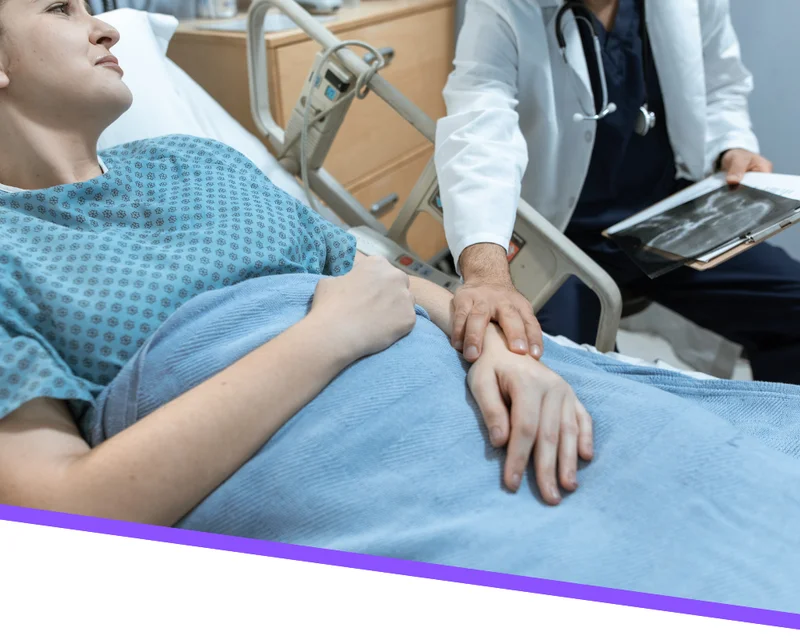
Often, it is not so much what happened medically but how it happened. Maman Vogue details these invisible wounds: difficult emotions: having been afraid, for your baby or for yourself; feeling of loss of control and helplessness; feeling of humiliation; shock, emotional distress. Else Revue
Here is what hurts the most deeply:
- Being treated as a body, not as a person
- Not being listened to when you reported pain or discomfort
- Being infantilized or reprimanded by the medical team
- Enduring humiliating words during childbirth
- Being left alone in critical moments
- Being touched without consent or explanation
- Hearing people talk about you in the third person as if you were not there
These wounds do not bleed, but they leave deep scars.
Personal factors that make you more vulnerable


Maman Vogue also specifies: more difficulty in going through an ordeal (miscarriage, premature baby, loss of a child); the unexpected nature of certain interventions (cesarean, induction, forceps, or invasive or unwanted routine); restricted mobility or physical constraints. Else Revue
If you have a personal history marked by trauma (sexual violence, assaults, serious accidents), you are more vulnerable to a medicalized birth. This is not a weakness; it is a clinical fact.
Signs that you have experienced a traumatic birth
How to distinguish classic baby blues from true post-traumatic stress? Here are the signs to recognize.
Flashbacks and intrusive thoughts

You relive your birth as if it were yesterday, even months later. Images pop up unexpectedly, in the supermarket line, while breastfeeding, while watching TV. You hear the voices again, you feel the physical sensations again.
WeMoms describes these symptoms: PTSD can manifest in several ways: flashbacks, nightmares, difficulty falling asleep, feelings of distress or panic attacks. Clicbienetre
Avoidance behaviors


You can no longer stand passing by the maternity ward where you gave birth. You change the subject when birth is mentioned. You refuse to watch births on TV. You no longer respond to messages asking, "How did it go?" You skip gynecological appointments. Avoidance is a protective mechanism, but in the long run, it cuts you off from your life.
Permanent hypervigilance
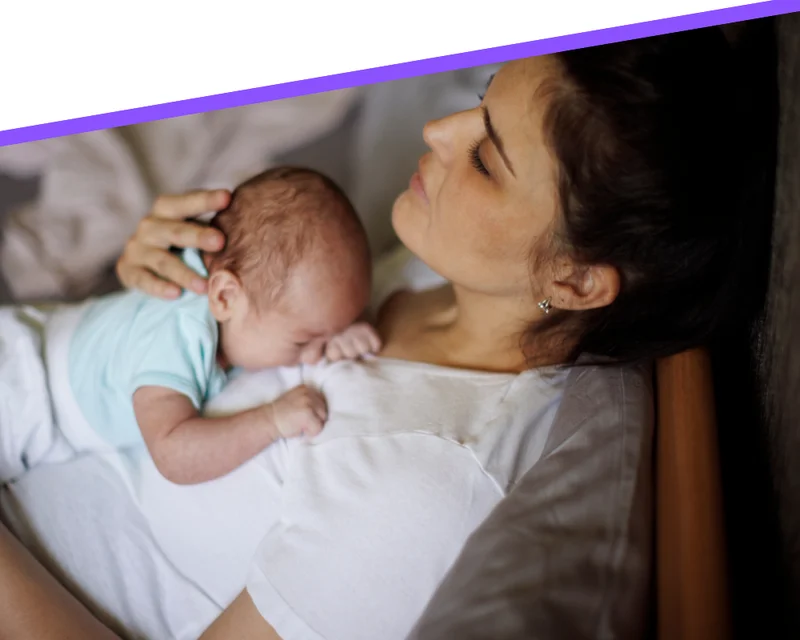

You jump at the slightest noise. You constantly check that your baby is breathing. You can no longer relax. You feel like something could happen to you at any moment. Your body remains in "alert" mode as if it fears the trauma will repeat itself.
Mood and thought changes
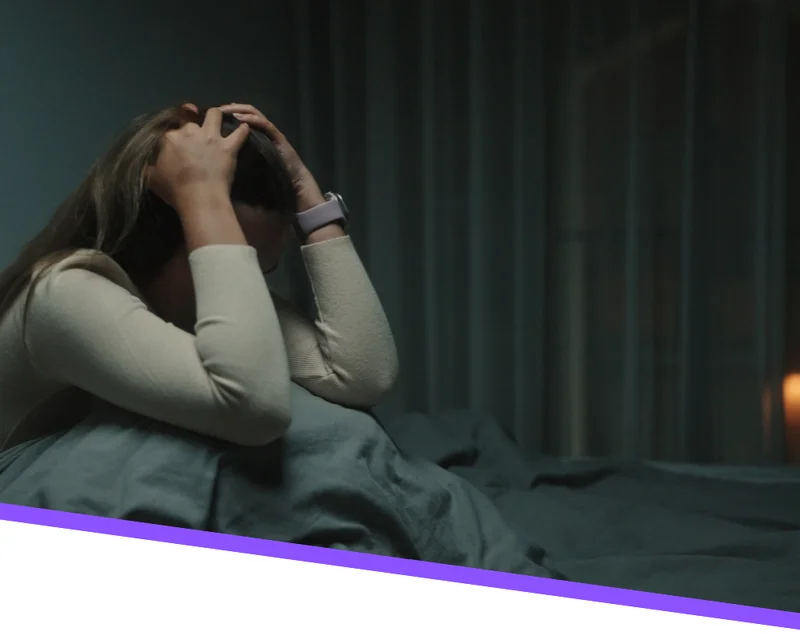

- Deep and persistent sadness
- Intense anger, sometimes unexpected
- Guilt ("I should have handled it better," "I am useless")
- Shame about what happened
- Feeling detached from your baby
- Loss of interest in activities you enjoyed before
- Difficulty experiencing positive emotions
Physical disorders


The body also carries the trauma: insomnia, nightmares, chronic pain, digestive disorders, palpitations, panic attacks with a feeling of suffocation. You may develop a true phobia of becoming pregnant again (secondary tokophobia).
Why does no one want to hear about your traumatic birth?
This is probably the most acute suffering: not only have you experienced something violent, but your surroundings refuse to hear it.
The cultural taboo in France around birth
Profession Sage-Femme analyzes this very well through the testimony of a founder of the After Birth Trauma site: there is a gap between the English-speaking world, where the subject is well-known – they talk about "birth trauma" – and France, where it is not discussed. We talk about maternal difficulties, postpartum depression, but not about post-traumatic stress related to childbirth. Travail-sante
In France, we have a culture that glorifies childbirth as the "most beautiful day in a woman's life." Therefore, saying that it went badly is to break a collective myth. And many people prefer to turn a blind eye rather than hear this disturbing truth.
The hurtful phrases
You have probably heard:
- "The main thing is that you and the baby are okay"
- "You will forget quickly, you’ll see"
- "I also had a cesarean, don’t make a drama out of it"
- "Other women have it worse than you"
- "At least your baby is healthy"
- "You should put it into perspective, you are a mom now"
- "Come on, the next one will go better"
These phrases, spoken with good intentions, are actually a form of denial that worsens your suffering. They tell you: "Your experience is not important, be quiet."
The protective mechanism of loved ones
Often, your loved ones refuse to hear because your story confronts them with their own fears. Your mother, sister, mother-in-law who have given birth: your testimony brings them back to their own shadows. Your pregnant friends: you scare them about their birth plans. Your partner: he often feels powerless and guilty for not having been able to protect you.
This collective silence is not proof that your trauma does not exist. It is just proof that French society is not yet ready to hear.
The good news is that solutions exist. And they work. You are not condemned to carry this weight for the rest of your life.
First step: putting words to your experience

The first step towards healing is to name what you are experiencing. The very act of reading this article and recognizing yourself in the symptoms is already a first step. You are not crazy; you are not ungrateful. You carry a recognized trauma.
Consulting a professional trained in postpartum PTSD

This is the key step. Not all psychologists are trained in the specifics of perinatal trauma. Here are the approaches that have proven effective according to IFEMDR and the journal Périnatalité:
EMDR (Eye Movement Desensitization and Reprocessing) EMDR (eye movement desensitization and reprocessing) is also gaining increasing interest for treating postpartum PTSD. It is a therapy recognized by the WHO and HAS that acts directly on traumatic memory. Newswire.ca
...