
What to Gift at a Funeral: Thoughtful Gestures and Guidelines
Navigating funeral gifts can be challenging. Discover appropriate offerings, from flowers to monetary contributions, and how to express condolences meaningfully.
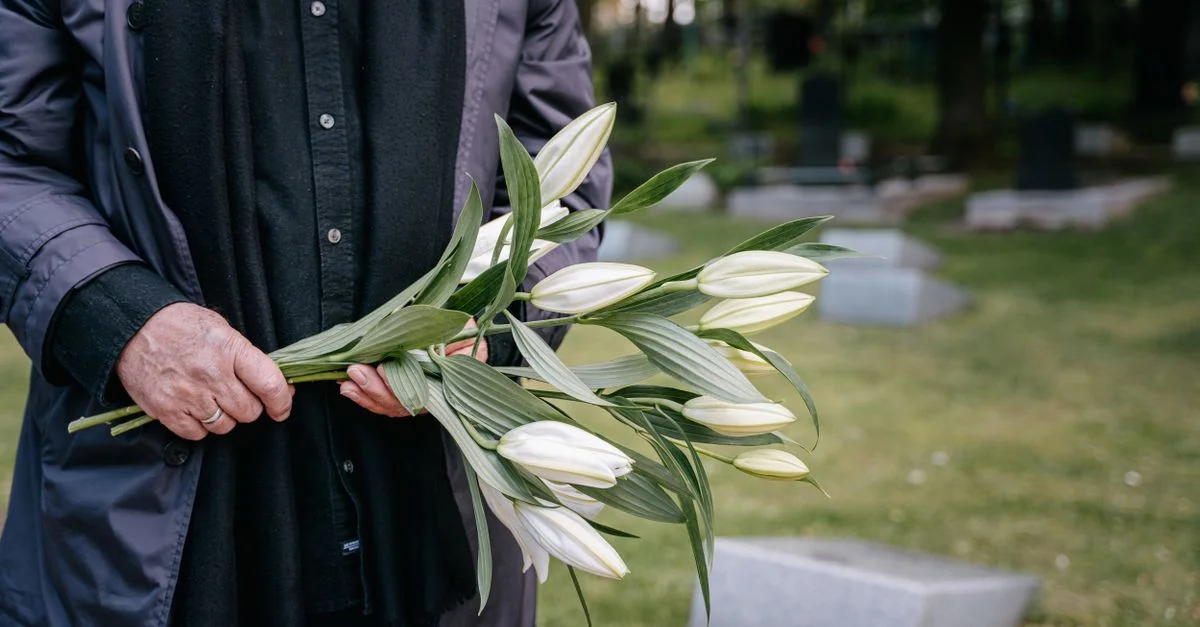
Choosing an appropriate gift for a funeral can be a delicate matter, particularly in Germany, where customary offerings often include simple floral arrangements, handwritten sympathy cards, or, in closer relationships, monetary gifts ranging from 20 to 100 euros. The choice of gesture and its value typically depend on the closeness to the deceased, the type of service, and the family's religious beliefs.
Key Considerations
- Common gifts include funeral flowers, a handwritten sympathy card, or a monetary contribution in an envelope.
- Recommended monetary ranges vary from 20 euros for colleagues to 150 euros for immediate family.
- For urn, sea, or tree burials, smaller floral arrangements or monetary donations are often more appropriate than large funeral wreaths.
- Monetary gifts should be discreetly enclosed in a sealed envelope along with the sympathy card.
- Gestures made weeks after the funeral can often provide more comfort than gifts given on the day itself.
Quick Guide to Funeral Gifts
To determine the most suitable gift, consider three guiding questions: How close was your relationship with the deceased or their family? What is the formality of the occasion? Did the family express a specific preference in the obituary? For acquaintances and colleagues, a simple floral arrangement with a handwritten card is usually sufficient. For closer relations, a monetary gift in a sealed envelope is appropriate. If the family has requested monetary contributions instead of flowers, that request should take precedence.
The Emotional Impact of Thoughtful Gestures
Psychologist William Worden describes mourning as an active process involving four tasks, from understanding the loss to finding a new direction. Tangible gestures, such as flowers or a handwritten card, support the initial phase of grief by transforming an abstract event into a visible ritual with emotional significance. Experienced funeral professionals in Mannheim report that simple, personal gestures often provide the most comfort. A few sincere words on paper, a small flower, or a gentle handshake can mean a lot.
Types of Funeral Flowers and Arrangements
Three main types of floral offerings have become customary. A bound bouquet priced between 20 and 40 euros is suitable for colleagues, neighbors, and more distant acquaintances. Floral arrangements costing between 40 and 80 euros are appropriate for friends and family. A funeral wreath, typically starting at 80 to 150 euros, is reserved for immediate family, godchildren, or an employer. When selecting flowers, a tone of understated elegance is recommended, with colors like white, cream, and muted shades of pink or green, complemented by white roses, lilies, or eustoma. The ribbon should feature the sender's name on the left and a dedication on the right.
Monetary Gifts: Etiquette and Recommendations
Monetary gifts are not considered disrespectful; in many regions, they are explicitly welcomed, especially when the family requests contributions "instead of flowers." The amount typically depends on the relationship with the deceased and regional customs.
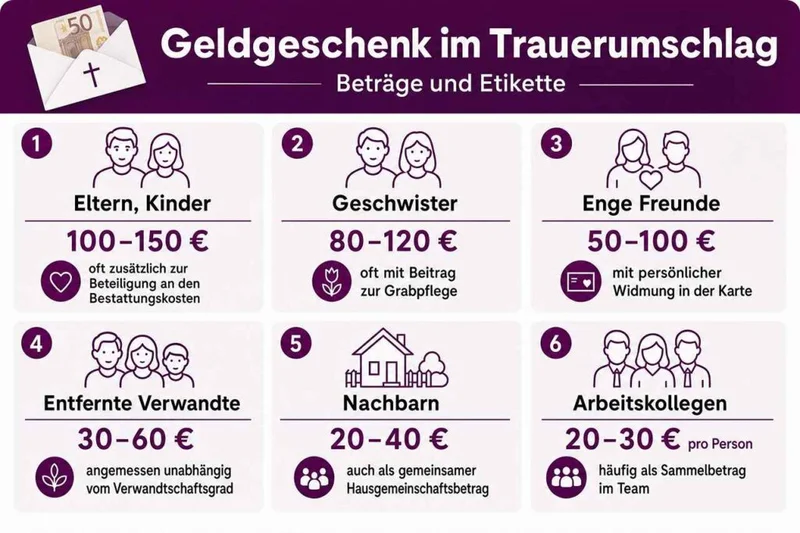
| Relationship | Recommended Range | Notes | |-------------------|-------------------|----------------------------------------------| | Parents, Children | 100–150 € | Often in addition to funeral cost contributions | | Siblings | 80–120 € | Often includes contributions for grave care | | Close Friends | 50–100 € | Include a personal note in the card | | Distant Relatives | 30–60 € | Appropriate regardless of family ties | | Neighbors | 20–40 € | Can also be a collective amount from the community | | Colleagues | 20–30 € per person | Often as a pooled contribution from the team | | Boss or Company | 50–150 € | Typically combined with a company wreath |
Use a white or subtly gray envelope for the monetary gift and include new, flat banknotes. Coins are considered inappropriate. Discreetly present the envelope to an adult family member at the entrance, place it in a condolence box, or send it by mail after the service. Handing it over at the gravesite is deemed inappropriate.

Crafting a Handwritten Sympathy Card
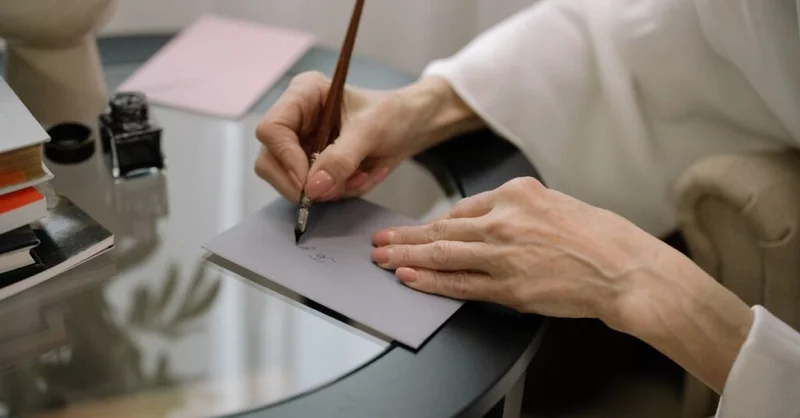
A handwritten sympathy card is a gesture that no one should skip. It should include a personal salutation, an expression of condolence, a specific memory, a clearly stated offer of assistance, and your signature. Avoid phrases like "in this difficult time" or advice on how the family should feel. A formal tone for colleagues might read:
"Dear Becker Family, the news of your husband's passing has deeply moved us. We remember him as a warm and humorous person and will cherish those memories. If we can assist you with errands or official matters, please let us know. Sincerely, the Lorenz Family."
For close friends, a more personal tone is appropriate:
"Dear Marie, I am thinking of you and your mother. I already miss her laughter at the kitchen table. I’ll call you at the end of the week, and if you need someone to sit in silence with you on Sunday, I’m here. With love, Anna."
Gifts Based on Burial Type
For traditional earth burials, funeral wreaths and arrangements remain common. For urn burials, smaller bouquets or a grave bowl are more fitting, as large wreaths may appear oversized at an ash burial site. In the case of a sea burial, a monetary donation is appropriate, or a later bouquet can be presented at the harbor. In memorial forests or tree burials, cut flowers and grave decorations are generally unwelcome. Here, a monetary donation or a keepsake for the family is fitting. For anonymous burials, a donation to an organization chosen by the bereaved is a beautiful gesture.
Religious and Cultural Variations
In both Catholic and Protestant funerals, flowers, wreaths, and cards are standard. However, at Muslim funerals, cut flowers and wreaths are uncommon. Attendees are expected to offer quiet presence, personal condolences, and a visit to the family, often bringing food. At Jewish funerals, neither flowers nor money are deemed suitable. Instead, a donation to a charitable organization and visiting during the shiva week is customary.
Post-Funeral Gestures
The hardest period often begins when everyone else has returned to their normal routines. A call three weeks later, an invitation to dinner two months after, or a brief message on the deceased's first anniversary can help maintain connections. Sending a card on the deceased's birthday shows they are not forgotten. Personal memorial gifts for later can provide comfort, such as a photo book, a grief journal, or personalized jewelry that helps create lasting memories. Practical support during this time is also essential. Offer specific assistance, like bringing groceries, picking up children, or accompanying them to official appointments.
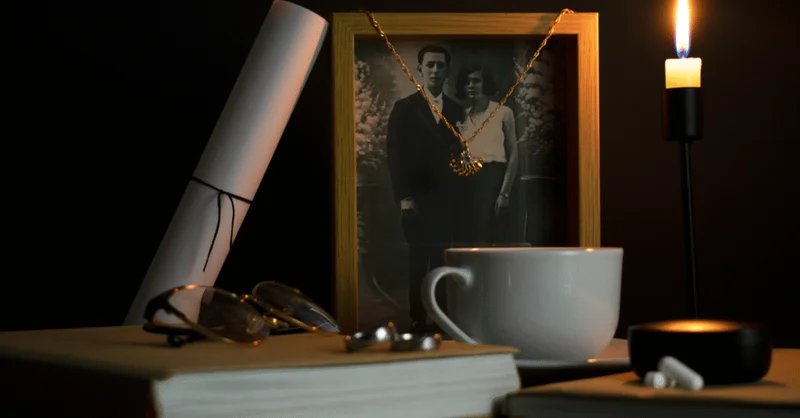
What to Avoid Giving at a Funeral
Being aware of common pitfalls can help prevent the impression of indifference or insensitivity. Here are some points to avoid:
- Strongly scented flowers in enclosed spaces. Intense fragrances can be overwhelming in the chapel.
- Coins or crumpled bills in the envelope. Monetary gifts should be presented in new, smooth banknotes.
- Novelty or humorous gifts. What may be charming in other contexts is inappropriate here.
- Arriving empty-handed due to uncertainty. A handwritten card alone is acceptable, but showing up with nothing is the least favorable option.
- Oversized wreaths for urn burials. Large arrangements can seem out of place at a small ash burial site.
Frequently Asked Questions About Funeral Gifts
Is it acceptable to attend a funeral empty-handed?
You should always bring or send a handwritten sympathy card. While attending without flowers or a monetary envelope is acceptable, showing up without any sign of condolence can appear distant.
What should I give if I cannot attend in person?
Send a handwritten card by mail to the bereaved family or the funeral home. A floral arrangement can be ordered from a local florist for delivery to the funeral hall, and many funeral homes also accept monetary envelopes after the event.
Is a monetary gift appropriate at a child’s funeral?
No. Monetary gifts are considered inappropriate for deceased children. Suitable gestures include a very personal card, a simple floral arrangement, or a donation to a children's hospice organization in the child's name.