
Tips for Tidying Up a Child's Room Without Conflict
Cleaning a child's room doesn't have to lead to conflict. Learn effective strategies that encourage kids to participate in tidying up while fostering responsibility and independence.
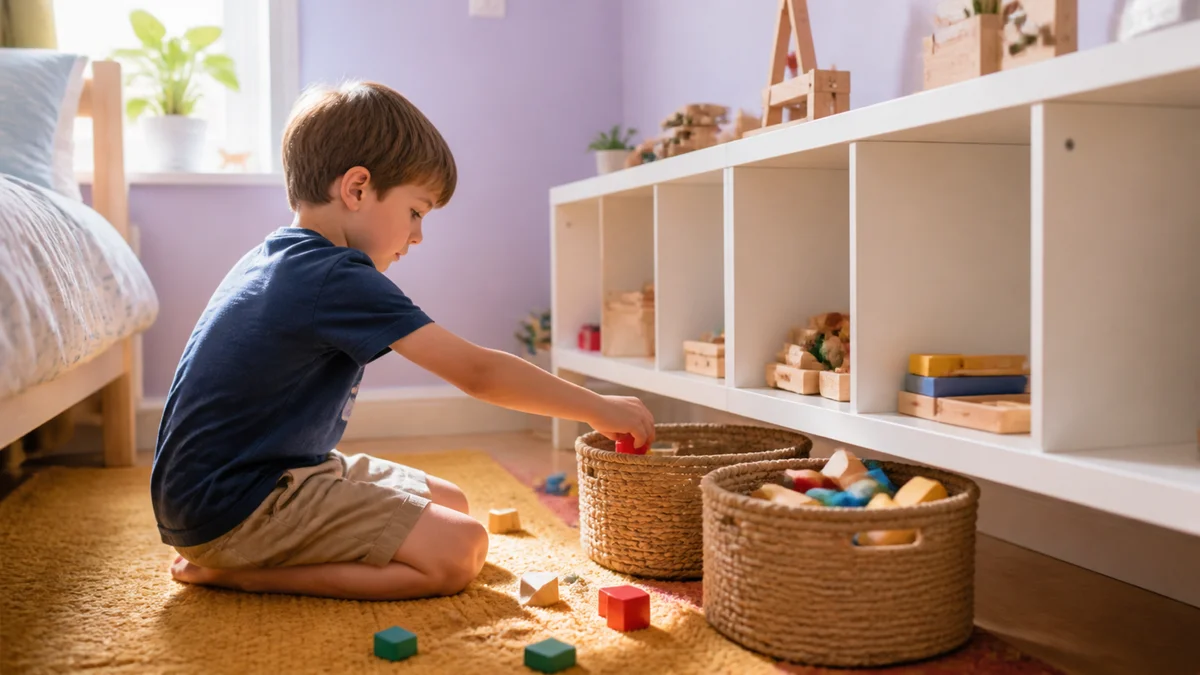
Creating a child's room is not about achieving a showroom aesthetic; it's a space meant for building, reading, painting, and playing. However, the challenge often arises when no one can remember where toys, clothes, or favorite books belong, leading to disagreements over tidying up. Instead of issuing stern commands, a more effective approach involves setting up a room that is comprehensible for the child and establishing a routine that is manageable enough to maintain.
This guide offers strategies for encouraging children to participate in cleaning their rooms without adult oversight or overwhelming them with chaos. The goal is not perfection, but to create clear spaces, appropriate steps, and fair support within family life.
Understanding the Difference in Cleaning for Children and Adults
When adults look at a messy room, they often see multiple tasks at once: putting laundry away, organizing books, sorting toys, taking out the trash, and making the bed. For a child, this can feel like an insurmountable mountain, especially after a long day at daycare, school, or an exciting afternoon.
Instead of a vague command like "Clean your room," children benefit from specific, visible tasks: "First, put all the books on the shelf" or "Collect the red blocks in this basket." This provides an achievable starting point. Once one area is tackled, the rest becomes easier to manage. This approach does not diminish responsibility; rather, it guides the child until they can independently follow the sequence.
Expectations should also align with the child's age. A preschooler can put away a toy and place socks in a drawer, while a school-aged child can sort items, clear their desk, and use a laundry basket. Not every child will be able to handle the same task at the same time. The key is to ensure that the next step remains clear and manageable.
Simplifying the Environment Before Establishing Routines
If a box is too heavy, a shelf is too high, or a closet is too cluttered, cleaning efforts may falter despite good intentions. It’s helpful to assess the room together from the child’s perspective. What is frequently used? What lacks a designated spot? What can be discarded because it is broken, too small, or no longer interesting? Reducing clutter does not stifle creativity; instead, it makes it easier to find beloved items and return them after play.
A few open containers for clear categories work well: one box for blocks, a basket for stuffed animals, a section for books, and a laundry basket for clothes. Transparent boxes or simple picture symbols can assist younger children. Ensure that the organization system is not more complicated than the play itself. If a child has to make five decisions before putting away a toy, they are likely to postpone the task.
A good test is to ask: Can the child reach the spot and return the item without assistance? If not, it’s better to change the location than the request. A low basket beside the bed is often more practical than an aesthetically pleasing, but unreachable drawer.
Tidying Up in Small Steps: A Functional Routine
Establishing a routine removes the need for negotiation around cleaning. It doesn’t need to be lengthy; ten minutes after playtime or a quick "room check" before dinner can suffice for many families. A consistent order is beneficial:
- Trash and dishes first: Empty wrappers, old scraps of paper, and glasses should be removed from the room.
- Collect laundry: All worn items go in the basket, while clean clothes are placed in a designated spot.
- Choose a play category: Tackle blocks first, then figures, or start with crayons—not everything at once.
- Clear surfaces: Desks, beds, or carpets should regain usable space.
- Wrap up briefly: Together, assess what is now easier than before.
Using a timer can be helpful if it serves as a guide rather than a threat. Some children prefer to clean to music, while others appreciate a small picture list. Try a method for a week before evaluating it. The routine can evolve; it doesn’t have to be perfect from the start.
How Parents Can Assist Without Taking Over
Support does not mean cleaning the room alone in the end. Stay briefly in the room to name the first step and assist only with decisions that are genuinely overwhelming. A statement like, "I’ll help you sort the first five books, and then you continue," is clearer than a frustrated, "I always help you."
The tone is also crucial. Shaming, comparisons with siblings, or comments like, "Your room is always a mess" rarely foster long-term motivation. Instead, describe what you see and what needs to happen next: "The scissors are on the floor. They belong in the craft box so no one trips on them." This is factual, shows the rationale, and allows the child to take action.
For those looking to distribute household tasks fairly, the article "Kids Helping at Home: Age-Appropriate Tasks" offers further insights. The child's room is a great place to practice responsibility, but it should not be the sole area where children bear family duties.
Common Pitfalls and Better Alternatives
Expecting Too Much at Once
Expecting a child to clean a room that has been messy for weeks in just ten minutes is unrealistic. Break it down into areas and plan for more time during the initial big cleanup. Afterwards, a small daily routine can help maintain order.
Using Cleaning as a Punishment
If cleaning only occurs after arguments, a child may associate tidiness with conflict. It’s better to choose a neutral time that fits into your daily routine. Tidying up should be a normal part of life, not a source of constant negotiation or drama.
Complicated Solutions for Every Item
An elaborate organization system may look good in pictures but can fail in practice if no one wants to use it. Three simple categories are more effective than ten decorative boxes. The setup can change as the child’s interests evolve.
Focusing Solely on the Outcome
Don’t just praise a perfectly clean room. Acknowledge the strategies used: "You collected all the markers first; that was smart." This helps the child learn skills that are beneficial in other situations: starting tasks, sorting, and finishing steps.
Establishing Simple, Agreeable Rules
Families don’t need a rule for every item. Two or three agreements are sufficient. For example: Leave a clear path to the door at night. Dishes go to the kitchen after meals. Craft supplies should be returned before the next project. Such rules affect safety and cohabitation without interfering with personal room design.
For many families, a short joint session on weekends works well: What items lack a home? Which box is too full? What should be sorted out? Integrating small tasks into existing routines can reduce the need for major cleanup efforts. More suggestions for simple, reliable rhythms can be found in our article "Stress-Free Family Life: 10 Simple Routines."
Addressing Persistent Refusal
A refusal to clean often has a reason. Perhaps the task is too large, the child is overtired, they don’t want to dismantle a creation, or they lack a reachable spot. Ask briefly instead of immediately imposing consequences: "What are you struggling with?" The solution may be small: taking a photo of the construction to continue later, adding another basket, or planning to tackle only the laundry today.
At the same time, parents must set boundaries. If toys block the hallway or items could be damaged, cleaning is necessary. Clearly state what needs to happen by when and stick to the agreement. The child must understand the consequence; arbitrary punishments do not aid in learning order. In cases of ongoing stress in family life, a conversation with a parenting or family counseling service can provide relief.
At What Age Can Children Start Cleaning Their Rooms?
Even young children can participate in simple tasks, like putting stuffed animals in a basket. As they grow older, they can manage more categories and plan parts of the process themselves. Accessible furniture, clear rules, and realistic expectations are crucial.
How Often Should a Child's Room Be Cleaned?
A brief daily round or cleaning after larger play sessions can prevent clutter from accumulating. Additionally, a weekly check can help sort clothes, papers, and items without designated spots. The ideal frequency depends on the child and the space.
What to Do When Toys Pile Up?
Sort together what is broken, incomplete, or long neglected. Not everything needs to be discarded immediately. A swap box, kept out of sight for a few weeks, can create space. If a child doesn’t miss the items, it will be easier to decide later whether to donate or pass them on.
Conclusion: A Good System is Simple Enough for Kids
Cleaning a child's room rarely succeeds through a single large effort. An accessible organization system, small clear steps, and a calm tone make a significant difference. When children understand where their belongings belong and adults provide appropriate support, what is often a daily conflict can transform into a skill that develops gradually.