Tick Safety for Kids: Essential Tips for Parents
After outdoor activities, it's essential for parents to conduct a tick check on their children. Learn how to safely remove ticks, monitor bite areas, and reduce risk effectively.
After a day spent playing in the garden, hiking in the woods, or enjoying a family outing, it’s crucial to conduct a quick tick check. Children, in particular, are often at risk of tick bites in areas that can easily be overlooked, such as at the hairline, behind the ears, in the folds of the knees, under the arms, or in the groin. Finding a tick is not a cause for panic; with calm and prompt action, parents can effectively manage the situation.
This article does not replace medical advice but summarizes what families can do immediately after discovering a tick, what signs to monitor in the following days, and how to reduce the risk in everyday life.
Conduct a Quick Check After Outdoor Activities
Establishing a consistent routine is more effective than worrying. After spending time in tall grass, bushes, or forests, remove clothing and examine the skin carefully, including the head and neck areas of children. Wearing light-colored, body-covering clothing and sturdy shoes makes ticks easier to spot. The BIÖG portal, kindergesundheit-info.de, recommends this thorough check after visits to potential tick habitats.
Make sure this isn’t a stressful inspection. A quick glance after showering or changing can become a normal part of summer routines. This practice allows children to learn to pay attention to their skin and alert adults if they notice anything unusual.
Remove Ticks Promptly
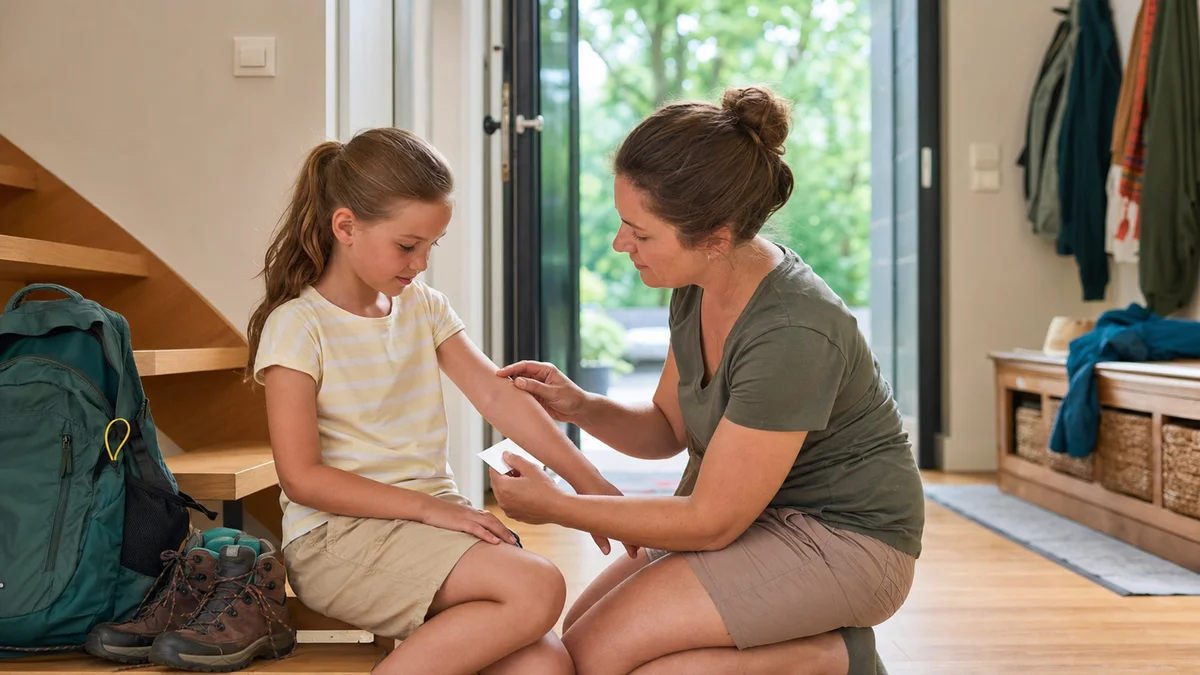
If a tick is found, it should be removed as soon as possible. A fine tweezers, tick card, or tick removal tool can be very helpful. Grasp the tick close to the skin, ideally near the head, and pull it out slowly and steadily. It is important not to squeeze the tick’s body during removal. Home remedies such as oil, glue, or nail polish should not be applied to the tick, as they can delay removal and irritate the tick.
If specialized tools are not available, it is better to carefully remove the tick with whatever is on hand rather than waiting. After removal, disinfect the bite area and wash your hands. If a small part of the tick remains in the skin or if the tick cannot be safely removed, seek assistance from a medical professional. The Federal Health Portal also explains why it is essential to grasp the tick close to the skin and avoid squeezing it.
Monitor the Bite Area Instead of Acting Prematurely
A small redness immediately after a tick bite can be a normal local reaction. If necessary, take a photo of the bite area with the date to track any changes. In the following days and weeks, watch for significant enlargements or ring-shaped redness, as well as general symptoms like fever, headaches, or fatigue. If these symptoms occur, the child should see a doctor. In cases of difficulty breathing, severe allergic reactions, or a noticeable decline in health, immediate medical attention is required.
Not every tick carries pathogens, and not every bite results in illness. Therefore, calm removal and attentive monitoring are more prudent than self-treatment based on speculation. Decisions regarding medications, vaccinations, and tests should be made in consultation with a healthcare professional.
What to Include in a Tick Removal Kit
For outings, a small kit is sufficient: a fine tweezers or tick card, skin disinfectant, band-aids, and a pen for quick notes. This way, there’s no need to search for a pharmacy. Before traveling, check that everything is clean, functional, and appropriate for children. This kit is not a substitute for a travel pharmacy but serves as a practical supplement.
Families camping or spending significant time outdoors can incorporate tick checks into their return routine. Our article on camping with children offers helpful tips for family outings, and for water activities, refer to our piece on safety in and around water.
Everyday Prevention
While it’s impossible to completely avoid ticks, the risk can be minimized. Stick to paths, avoid dense underbrush and tall grass when possible. When spending time in woods and meadows, wearing closed shoes, long lightweight clothing, and light-colored fabrics is beneficial. Repellents can be used as an additional measure but must always be age-appropriate and applied according to the manufacturer’s instructions. For infants and younger children, consulting a pharmacist or healthcare provider is advisable.
Pets can also bring ticks into the home. A quick check after walks helps protect the entire family. It is essential to remember that protective measures do not replace thorough checks but rather enhance their effectiveness.
FAQ
Should the Tick Be Kept?
Typically, it is not necessary to keep the tick. More important are the date, the body location, and monitoring the skin. If uncertain, a healthcare provider can clarify what information is needed.
Can a Child Continue Playing After a Tick Bite?
If the child feels well and the bite area is treated, there is usually no reason to interrupt their activities. Monitor the bite area and the child's overall condition and seek medical advice if any concerns arise.
When Is the Best Time for a Check?
Immediately after being in nature or at the latest when changing in the evening. Regular checks help ensure that this important task is not forgotten.
Stay Calm and Act Clearly
Discovering a tick during the summer can be unsettling for parents. However, by establishing a simple routine that includes checking for ticks, prompt removal, disinfection, and monitoring, families can maintain control over the situation. If noticeable symptoms or uncertainties arise, a pediatrician's office is the appropriate place for guidance.
After Removal: Keeping Track with a Simple Note
After removing a tick, briefly note the date and the location on the body. A photo can also aid in objectively tracking any changes. The goal is not to constantly monitor the area but to have precise information ready for any follow-up inquiries. Store this information in a place that is easily accessible in family life, such as a shared note or calendar.
When multiple adults care for the child, a calm handover is sufficient: When was the tick removed, where was the bite, and how is the child feeling? In daycare, summer programs, or at grandparents' homes, a detailed medical history is unnecessary. Clear and concise information prevents both confusion and the oversight of potential changes. The child can continue to play if they feel well and the bite area is taken care of.
Prevention That Fits into Family Life
Children should continue to explore fields, forests, and gardens. Therefore, protective measures must be practical and not overly stringent. Closed shoes, lightweight long clothing during outings, a tick removal tool in the backpack, and a quick check after changing clothes are usually more effective than strict prohibitions. By linking the check to a specific moment, such as showering after the playground or changing into pajamas at night, it becomes easier to remember.
Explain to children in an age-appropriate manner why these checks are important: Not because there are dangers lurking outside, but because it’s essential to take care of each other after a lovely day outdoors. This transforms a potentially stressful situation into a normal routine. For questions about appropriate preventative measures, local tick-borne disease vaccinations, or symptoms, the pediatrician's office is the right place to turn.