Heatwave: The "Fontanelle Test," a Detail to Spot on Your Baby's Face to Know if They Are Dehydrated During High Temperatures
When temperatures rise, infants are particularly vulnerable to dehydration. Fortunately, their bodies offer a discreet yet valuable warning signal: the fontanelle. Here’s how to monitor this little 'natural sensor' to protect your baby this summer.

When temperatures rise, infants are particularly vulnerable to dehydration. Fortunately, their bodies provide a discreet yet valuable warning signal: the fontanelle. Here’s how to monitor this little "natural sensor" to protect your baby this summer.
France has rarely experienced such heat in May. With temperatures reaching 28°C, 30°C, or even 35 or 38°C in some cities, everyone has been struggling for the past eight days. Beyond being uncomfortable, the heatwave also impacts our health. These high temperatures do not affect everyone in the same way. Elderly people, pregnant women, children, and infants are at a higher risk of suffering from a heat stroke or dehydration that can escalate into a severe form.
Therefore, parental vigilance is more crucial than ever in the face of the threat of dehydration in infants and children. While they may not always be able to express their thirst verbally, their bodies can communicate. Notably, through a lesser-known area of the head: the fontanelle.
What Exactly is the Fontanelle?
Also known as the "soft spot," the fontanelle is the soft and slightly pulsatile area felt at the top of a baby’s skull. It corresponds to the spaces between the skull bones that are not yet fully fused—a normal characteristic that allows the baby's head to pass more easily through the birth canal and promotes rapid brain growth during the first year of life.
The anterior fontanelle, the most well-known, is located at the top of the head and averages about 2.1 centimeters in diameter—roughly the size of a coin. It typically closes shortly after the child's first birthday.
A Sunken Fontanelle: The Sign That Should Raise Alarm for Your Baby
Under normal circumstances, the fontanelle should be level with the rest of the skull, slightly bulging or flat. According to pediatrician Dr. Brigitta Moresea from the Cleveland Clinic, baby fontanelles are good indicators of hydration status and neurological condition—like automatic pressure sensors.
Specifically, a sunken fontanelle, which dips in like the top of a golf tee, is often a sign of dehydration. It can appear when the child is ill and not receiving enough fluids. This is known as the "fontanelle test": by observing and gently touching this soft spot, parents can detect early signs of dehydration in their little one.
 Heatwave: The "Fontanelle Test," a Detail to Spot on Your Baby's Face to Know if They Are Dehydrated During High Temperatures
Other Signs of Dehydration to Watch For
The sunken fontanelle does not occur in isolation. According to Wee Care Pediatrics, infants in a state of dehydration may also exhibit a dry mouth, chapped lips, a lack of tears when crying, unusual fatigue, irritability or lethargy, a decrease in the number of wet diapers, and skin that does not return to its normal shape when pinched lightly.
Dr. Moresea adds to this list by noting that the baby may also appear sleepier than usual or particularly restless.
Why Are Babies More Vulnerable Than Adults?
Children lose water more rapidly than adults, primarily due to their larger body surface area relative to their size. They sweat, breathe, and urinate more proportionally, and obviously cannot ask for a drink.
During heatwave episodes, this vulnerability is amplified, especially if the infant is exposed to excessive heat—such as in a car, a poorly ventilated room, or in direct sunlight.
 Heatwave: The "Fontanelle Test," a Detail to Spot on Your Baby's Face to Know if They Are Dehydrated During High Temperatures
What to Do If the Fontanelle Appears Sunken?
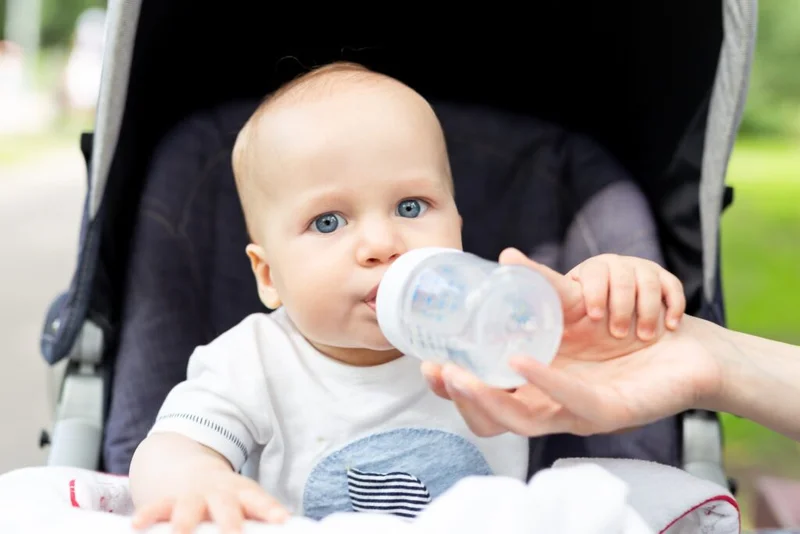
The first response is to encourage the baby to hydrate more, by offering additional bottles or more frequent breastfeeding. If the sunken appearance persists or if other concerning symptoms arise—fever, vomiting, extreme fatigue, or refusal to eat—it is essential to consult a doctor or pediatrician promptly.
Conversely, a bulging or swollen fontanelle may indicate a head injury or infection and requires urgent medical consultation.
Good Practices to Protect Your Baby from the Heat
To prevent any risk of baby dehydration in summer, a few simple actions can make a difference: regularly offer the breast or bottle, even without signs of hunger, avoid outings during the hottest hours (between 12 PM and 4 PM), dress the baby in loose and light clothing, and never leave them alone in a vehicle, even for a few minutes. In just ten minutes, the interior of a car can reach dangerous temperatures for a young child.
If you have any doubts about your baby's health during a heatwave, never hesitate to contact your pediatrician or call emergency services.