
The Art of Mindful Waiting: Supporting Your Child's Independence
Explore the concept of mindful waiting in parenting, a powerful tool that encourages children's autonomy and emotional resilience while fostering critical thinking and self-esteem.
Publication Date: August 2, 2026
By Carla Domínguez · Licensed Psychopedagogue and Positive Discipline Trainer
Witnessing your child hesitate before a high step, struggle with shoelaces, or attempt to fit a piece into a puzzle can trigger an almost instinctive urge to intervene. Parents often want to shield their children from frustration, time loss, and discomfort. However, there exists a subtle yet powerful educational tool in respectful pedagogy known as mindful waiting (or zugewandtes Abwarten), a concept from conscious parenting that encourages pausing.
Understanding Mindful Waiting
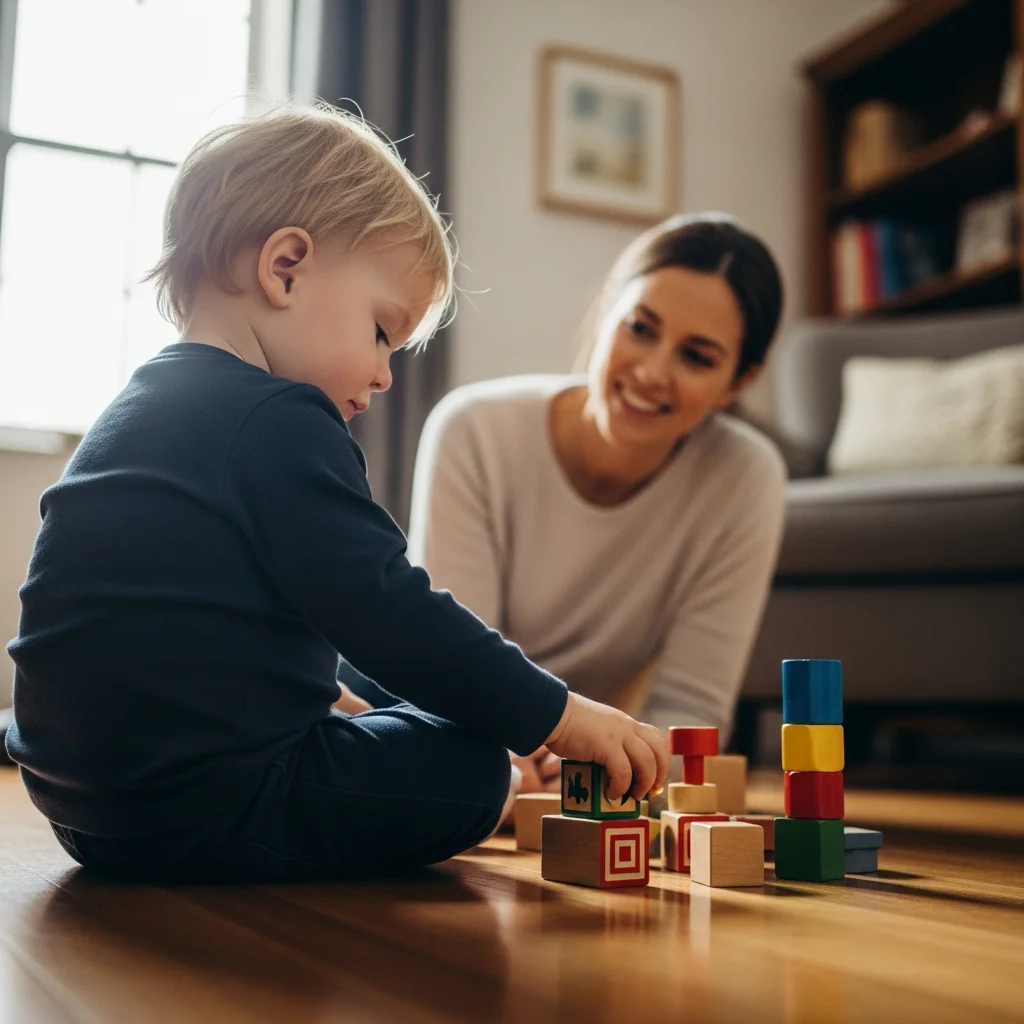
Mindful waiting does not mean ignoring your child or leaving them to fend for themselves under the mantra of "figure it out on your own." Instead, it involves being an active, physical, and emotional presence without interference. This means positioning yourself nearby, at their level, calmly observing, and communicating through body language a clear message: "I am here, I see you, I trust you can try this, and I will support you if you need me."
This approach requires adults to manage their own urgency and anxiety. When we rush in to solve a problem that a child could potentially resolve on their own with a bit of time, we inadvertently communicate a message: "You can't do this alone; I have to do it for you." In contrast, mindful waiting nurtures a child's self-esteem and sense of self-efficacy.
The Challenge of Resisting the Urge to Rescue
In my experience as a psychopedagogue, I often observe that parental hyperactivity stems not from a desire for control but from the fast pace of life and a low tolerance for a child's discomfort. We live in an era where silence, doubt, or pauses are often seen as failures or wasted time. For example, if a child takes three minutes to put on a coat, we may become anxious about being late.
Sometimes, our own fears are projected onto our children. We struggle to witness their frustration. Yet, frustration is a crucial emotion for brain development; learning to tolerate it in small, safe doses (like not being able to fit a toy together) prepares children for real-life challenges.
The Impact of Waiting on Child Development
Allowing your child to face a minor challenge while you silently accompany them without solving it can trigger essential developmental processes:
- Encourages Critical Thinking: The child is prompted to seek alternatives ("If it doesn't fit this way, I'll try turning it around").
- Builds Frustration Tolerance: They learn that making mistakes is not failure but part of the learning process.
- Strengthens Attachment Bonds: The child feels that their caregiver is available and a safe haven, rather than a barrier that undermines their autonomy.
- Fosters Genuine Self-Esteem: True confidence comes not from external praise but from recognizing their own achievements ("I did it by myself").
Practical Tips for Implementing Mindful Waiting at Home
Implementing this practice doesn't require complex techniques but rather a shift in perspective and a bit of self-control. Here are some simple steps to incorporate into your daily routine:
- Count to Ten Silently: When you notice your child struggling with a task, resist the urge to intervene immediately. Take a deep breath, mentally count to ten, and observe what they do. You may be surprised at how often they resolve the issue by the eighth count.
- Describe Instead of Solving: If your child asks for help or expresses frustration, articulate what is happening without doing the task for them. You might say, "I see that piece is hard to fit," or "You're trying to climb, and it feels a bit scary, doesn't it?"
- Offer Minimal Assistance: If they genuinely need support to avoid despair, refrain from completing the task for them. Provide scaffolding: hold the shoe while they thread the lace or support the base of a toy while they apply the final pressure.
- Validate Effort, Not Just Results: If they do not succeed after trying, acknowledge their persistence. "You've been working hard on this; it takes a lot of effort. If you like, we can take a break and try again later."
Accompanying children with calmness and the right distance is one of the most valuable gifts we can offer them on their journey toward autonomy. It is not about making everything easy for them, but about being present while they learn to navigate challenges themselves.
Sources
- Geborgen Wachsen