Learning to Ride a Bike with Children: Tips for Parents
Learning to ride a bike is a memorable moment for families. Discover tips for parents on how to support their children in this journey, from recognizing readiness to practicing safely.
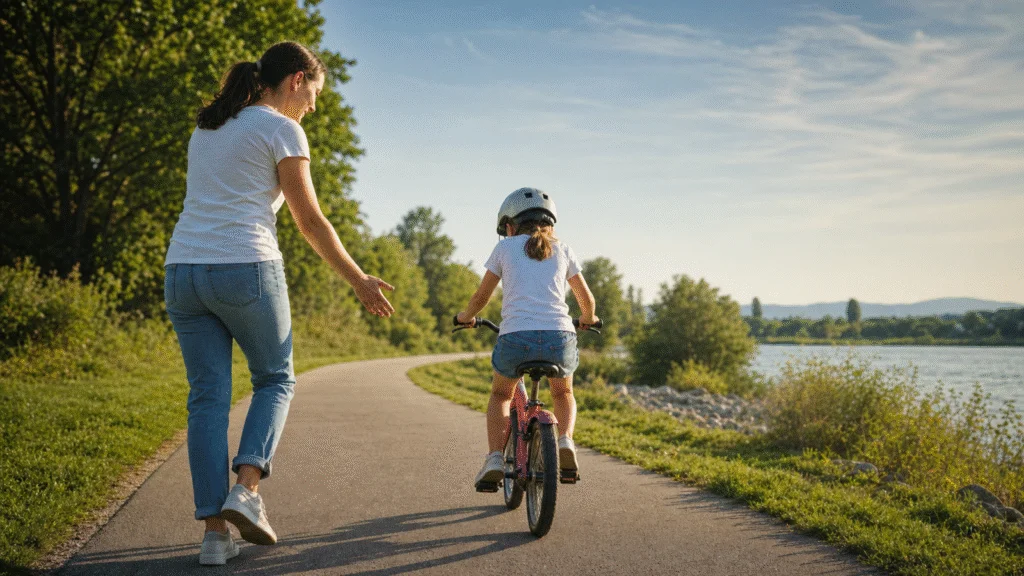
The moment a child pedals their first few meters alone on a bicycle is a cherished memory for many families. This experience often unfolds amidst a mix of pride, concentration, and a few wobbly turns, and it typically takes more than just one afternoon to master. Each child learns to ride at their own pace; some are eager to start early, while others may need more time to build confidence in balancing, braking, and the new sensation of speed.
A successful start does not come from pressure or excessive practice hours. Instead, it hinges on selecting the right bike, finding a calm location, setting achievable goals, and having supportive adults who encourage without constantly intervening. This guide aims to assist you in planning the initial practice sessions effectively, allowing for a relaxed progression from rolling to mastering safe braking routines.
Recognizing the Right Time for Your Child
There is no specific age by which a child must learn to ride a bike. Pay attention to cues: Does the child show interest? Can they confidently steer a balance bike or scooter? Are they willing to try small speeds? If frustration sets in after a few minutes, it’s perfectly fine to end the session. Taking a break is not a setback; it helps maintain the joy of learning.
Observe what movements come easily to your child. Can they start rolling, lift both feet briefly, look ahead, and navigate a small curve? If so, they already have some essential skills. If not, playful balance exercises using a balance bike, scooter, or a small obstacle course can be more beneficial than lengthy explanations at the bicycle.
Proper Bike Adjustment
Using a bike that is too large or heavy can make the initial experience unnecessarily challenging. The child should be able to dismount safely and control the bike while standing. Ensure that the saddle, handlebars, and brake levers are easily reachable. Additionally, check the tires, brakes, chain, and reflectors before heading out. If you have any doubts about the bike's condition, have it inspected at a bike shop.
A well-fitting helmet is also essential. In Austria, children under twelve are required by law to wear a helmet when cycling, and the supervising adult is responsible for this. For current guidelines regarding children in cycling traffic, refer to oesterreich.gv.at. Regardless of legal requirements, wearing a helmet should be a standard practice for every training session.
The Importance of the Practice Location
Start in a safe area away from traffic: a vacant, flat space, a quiet paved path, or a wide area free from cars, steep slopes, and many pedestrians. A slight downhill slope can facilitate rolling but should not be so steep that braking becomes stressful. Avoid wet leaves, gravel, and narrow paths while the child is still uncertain.
Explore the area together. Where can they stop? Where can they turn? Where is the safe boundary? When children are familiar with the location, they can focus more on their riding. Navigating the road will be a separate learning phase. Initially, the focus should be solely on balance, steering, and braking.
Starting with Balance Instead of Constant Pushing
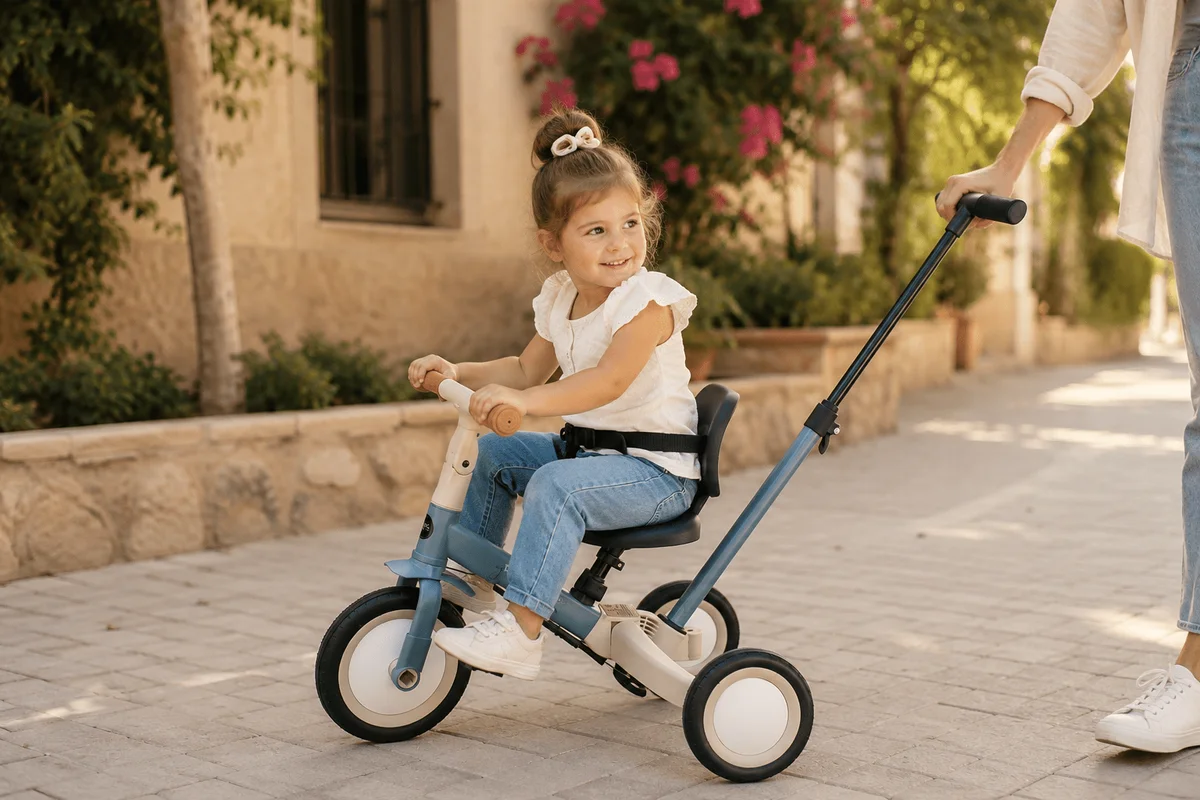
Many children benefit from practicing rolling first. When pushing off, they should always be able to place their feet back on the ground. As balance improves, they can progress to short gliding phases. Parents can walk alongside or stabilize by holding onto the child's back or clothing, not the handlebars, to help maintain their sense of movement.
Set small goals: roll to the next marker, lift both feet briefly, look straight ahead, and come to a controlled stop. Provide specific feedback on what they did well, such as, “You looked ahead and rolled calmly.” This is more helpful than vague praise like “Great job,” as it helps the child understand what they can replicate.
Early and Playful Braking Practice
Before embarking on longer rides, children must become familiar with stopping. Start by demonstrating how the brakes work while stationary. Then practice at very slow speeds: listening for a signal, keeping both hands on the handlebars, and braking gently before dismounting. Cones, chalk lines, or a piece of paper on the ground can serve as playful stopping points.
Stick to one instruction per attempt. Saying “Now brake slowly” is clearer than giving multiple instructions at once. If the child brakes abruptly or hastily puts their feet down, it’s not a failure. Repeat the exercise on the same short stretch until they feel more at ease. Learning to start safely deserves as much attention as riding itself.
Practicing Turns, Looking Ahead, and Being Considerate
Children who only ride straight may feel confident but need to tackle turns next. Create wide arcs around an object, follow a drawn line, or practice making large eights. Remind the child to look where they want to go; looking ahead aids in maintaining balance and orientation.
Once the basics are solid, practice being aware of others in a clear environment: riding slowly past others, maintaining distance, stopping in time, and making themselves known. The KFV provides a training guide for parents and children with the initiative “Kinder radelt!” For road traffic, it’s essential that both the child and adults realistically assess their skills before transitioning from the practice area.
Helpful Phrases for Parents
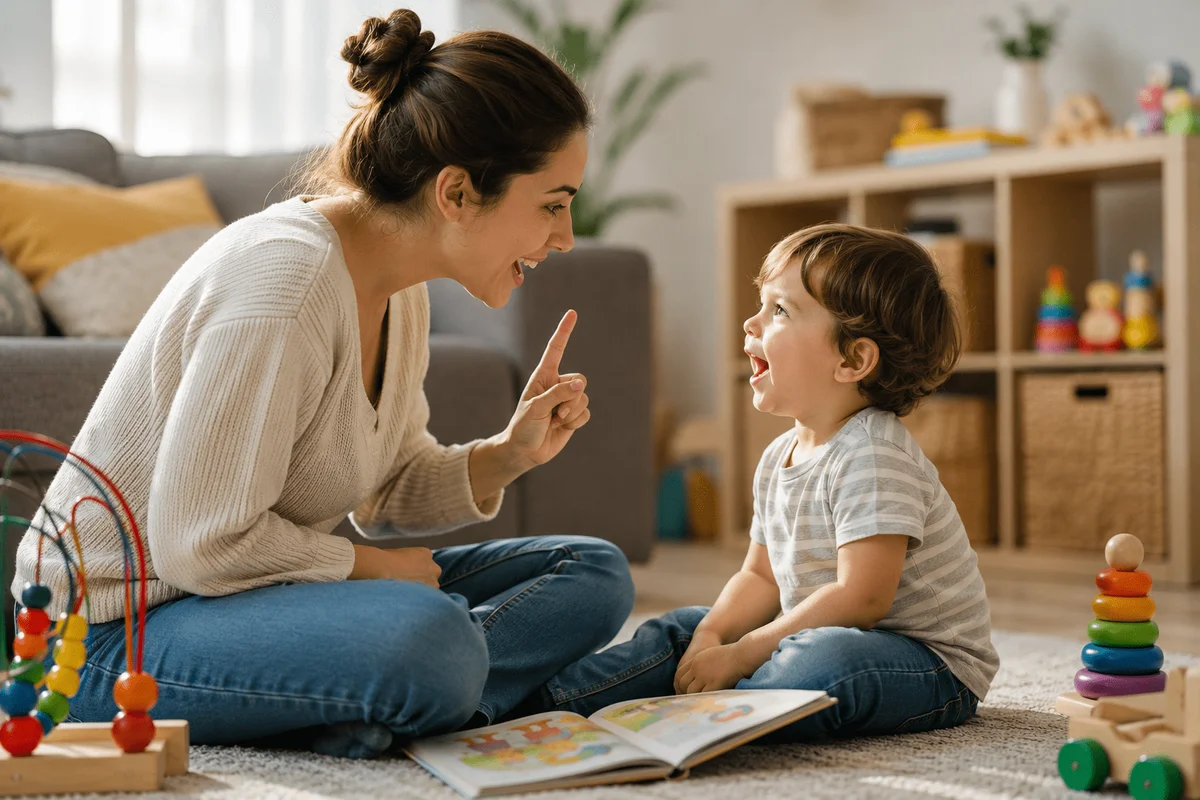
Children are often very sensitive to tone when learning. Keep your instructions calm and concise. Good phrases include: “Let’s try just until the tree.” “You can stop anytime.” “I’ll walk beside you.” “Today we’re just practicing braking.” Avoid statements like “You can do this already” or “Look, others are going much faster.” Comparisons can quickly turn a learning moment into a test.
If you feel nervous, alternate roles or plan a break. Some children benefit from having a companion who comments little and simply walks alongside. The adult’s role is not to prevent every wobble but to provide a safe environment.
Practicing in Small, Repeatable Sessions
Twenty productive minutes can be more effective than a long session that leads to exhaustion. Aim to conclude with a successful exercise: a successful brake, a short loop, or a brave attempt. This ensures a positive memory. The next time, you can build on that success instead of starting all over again.
Plan bike time as a family activity, not a chore. Perhaps you can combine the practice ride with a picnic, a trip to the playground, or a short break by the water. Our article on increasing movement in family life offers ideas for incorporating activity into your day without pressure.
Transitioning to Road Traffic
Public roads present different challenges compared to practice areas. Traffic signs, other road users, intersections, and parked cars require experience and attention. Plan this transition thoughtfully and not on the same day as the first free rides. Start with very calm, familiar routes and discuss beforehand what you will practice.
In Austria, children are generally allowed to ride alone by age twelve; however, with a cycling license, it can be earlier under certain conditions. The current regulations and exceptions are outlined by the Republic of Austria's information services. When making individual decisions, riding ability, attention, route, and supervision are more significant than a specific age.
Connecting Learning to Urban Safety
Once a child has mastered the basics, you can enter the next phase with short joint rides. Our article on safe cycling as a family in the city complements the learning steps with practical advice for navigating traffic. It remains crucial that practice and equipment match the child and the route.
Checklist for the First Practice Session
- Check the bike and brakes in advance.
- Ensure the helmet is properly fitted and secured.
- Choose a calm, flat practice area.
- Set only one learning goal per session.
- Plan short breaks and stop if frustration arises.
- Start with rolling and braking, then progress to turns and longer rides.
- Prepare separately for the transition to road traffic.
Conclusion: Confidence Grows Meter by Meter
Learning to ride a bike is not about speed or comparisons. With the right bike, a safe practice area, and short, repeated sessions, a child gradually develops balance, control, and enjoyment. Parents best support this process by setting clear, small goals, providing reliable safety, and allowing for breaks. Thus, what begins as a shaky start will evolve into a confident ride.
FAQ
How long does it take for a child to learn to ride a bike?
This varies significantly. Some children need only a few practice sessions, while others may require several weeks or extended breaks. The key is to keep the child motivated and practicing in a safe environment.
Are training wheels necessary?
Many children find it easier to learn balance through balance bike or scooter exercises. Whether training wheels are beneficial depends on the child; what matters is practicing balance and braking calmly.
When can a child ride alone in traffic?
This depends on age, cycling license, and current regulations in Austria. Check the latest information at oesterreich.gv.at and always consider riding ability and the specific route.