Preparing for a School Trip: A Parent's Guide
Preparing for a school trip can be a daunting task for parents. This guide offers practical tips and a comprehensive packing list to ensure a smooth experience for both parents and children.
For many children, a school trip marks their first significant adventure away from parents, featuring new rooms, shared meals, a packed schedule, and perhaps their first experience of spending several nights away from home. The mix of excitement and anticipation often comes with questions about appropriate clothing, feelings of homesickness, or the worry of forgetting a favorite cuddly toy. With proper preparation, packing can transition from a last-minute scramble to a smooth process, allowing children to embark on their journey without the burden of carrying everything alone.
This guide aims to assist parents in preparing for a school trip with ease. It combines a practical packing list with tips on communication, fostering independence, and handling farewells. It’s essential to prioritize the school or teacher’s list, as the destination, weather, accommodation, duration, and itinerary will dictate what truly needs to be packed.
Start Early: What Parents Should Clarify Before Packing
Preparation should ideally begin well before the night before departure. Once the parent letter arrives, it’s beneficial to review it together with the child. Highlight departure and return times, meeting points, contact information, the planned itinerary, any special equipment needed, and submission deadlines. Some schools may require a consent form, allergy information, or proof for specific activities. These documents should be kept in a designated spot, rather than tossed haphazardly among socks.
Additionally, inquire about practical details: Is bedding provided at the accommodation? Are towels included? Will there be hiking, swimming, or public transport involved? Are children allowed to bring a mobile phone, and when is it appropriate to use it? The class teacher should provide definitive answers; well-meaning guesses can often lead to a heavier suitcase.
For children, it can be helpful to explain the school trip as a manageable sequence: arriving, settling into rooms, activities, evening routines, sleeping, and returning home. Knowing what to expect can alleviate anxiety and prevent the imagination from filling in uncertainties. For the start of the new school year, our comprehensive checklist can assist with organizing documents and establishing reliable morning routines.
The Packing List for the School Trip: Think in Categories
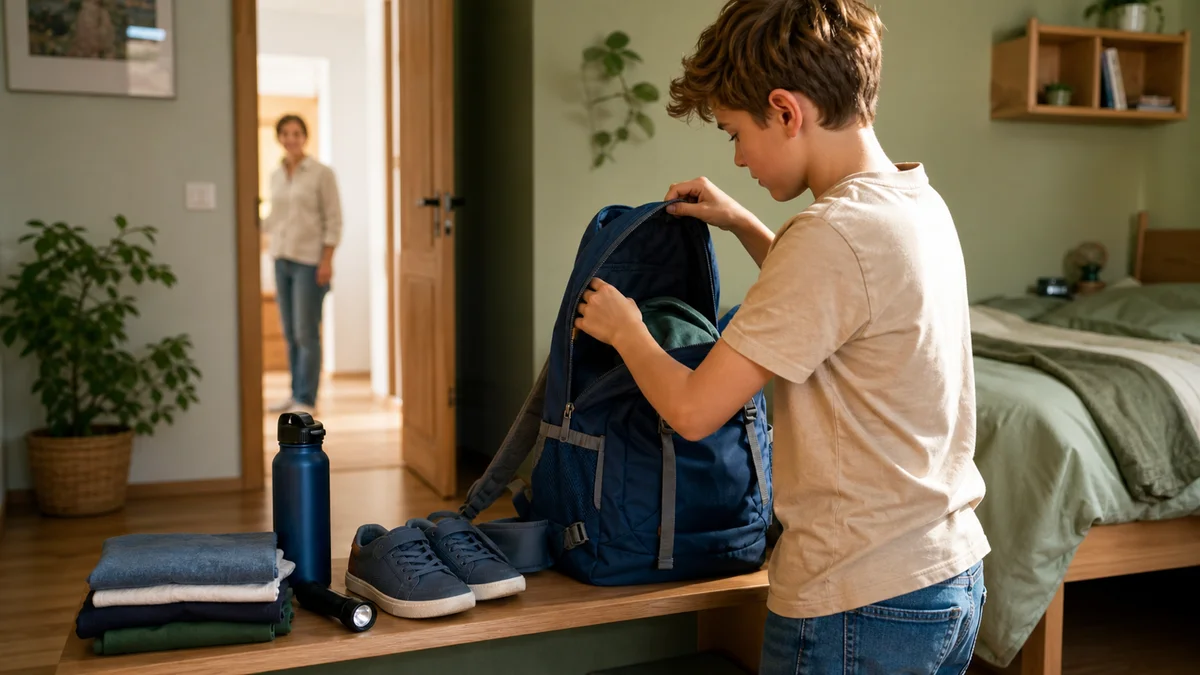
The most effective packing list is not overly lengthy but tailored to the trip. Pack together and group similar items into small sections. This way, the child can see where everything is and can later check on their own. For younger children, using notes with simple symbols or a photo of the open suitcase can be helpful. For multi-day trips, these categories serve as a good starting point.
Clothing for Activities and Weather
- Underwear and socks for each day plus an extra pair
- Comfortable tops, a pair of long pants, and a weatherproof layer
- Pajamas and slippers, if desired
- Sturdy, broken-in shoes; sandals or sports shoes if necessary
- Rain jacket or light rain pants, sun hat, and depending on the destination, swimwear
Newly purchased shoes or unfamiliar jackets should not be worn for the first time on a school trip. Comfort and recognizability are more beneficial than fashion. Pack clothing that the child can put on and take off independently. Very delicate favorites are better left at home to avoid stains overshadowing the day.
What to Include in the Toiletry Bag
- Toothbrush, toothpaste, brush or comb
- Small shower gel, if needed, and a towel if one is not provided
- Sunscreen and lip balm, especially if the itinerary includes significant outdoor time
- Glasses or contact lens supplies, if necessary
- Personal hygiene items in sufficient quantity
Label containers discreetly with names or small symbols. Similar toiletry bags can quickly become indistinguishable in a shared bathroom. Liquids should be placed in a tightly sealed bag to keep spare clothing dry in case of leaks.
On the Go, Sleeping, and Comfort Items
- A refillable water bottle and a small snack for the journey
- A small daypack, if recommended by the school
- Tissues and possibly a small cloth bag for dirty laundry
- A familiar small item, such as a cuddly toy, a photo, or a book
- A flashlight only if specified in the parent letter
Less is often more. Expensive technology, large quantities of candy, or items that could cause disputes are unnecessary for a successful trip. If money for ice cream or a small souvenir is permitted, provide a pre-discussed amount in a labeled wallet or small bag. The child should understand its intended use and know it won't be replaced if spent on the first day.
Discussing Medications, Allergies, and Special Needs Safely
All medically relevant information should be communicated early in a confidential conversation with the class teacher. Understand how medications will be handed over, stored, and administered. Do not simply toss them into the suitcase. The teacher needs to know what medication is required when and what written information the school requires. The same applies to allergies, chronic conditions, special dietary needs, or an emergency plan: clear, current information is more critical than lengthy explanations on departure day.
Children should also be informed, in an age-appropriate manner, about what they need to keep in mind: Who should they speak to if they feel unwell? Where is their inhaler or glasses? Which snacks are unsuitable for them? This is not about instilling fear but rather a small exercise in self-care. For medical inquiries and specific organization, the school’s guidelines are paramount; if in doubt, clarify with the treating practice and the class teacher.
Practicing Independence Before the Trip
A school trip is easier to navigate if a child has practiced a few everyday tasks at home. Perfection is not necessary. It’s useful to practice opening and closing the suitcase, placing dirty clothes in a bag, preparing clothing for the next day, and remembering their personal routine while showering. If needed, practice how to fit a rain jacket into the backpack or how the child can find their water bottle.
For those spending multiple nights away from parents for the first time, a small overnight trial can be beneficial. This could be with trusted friends or relatives—without performance pressure and with a clear Plan B. In our article on a child’s first sleepover at a friend’s house, we offer parents ideas on how to take homesickness seriously while still instilling trust in the child. While a school trip is different, the underlying message remains the same: it’s okay to have mixed feelings, and help is available.
Farewells and Contact: Agree on a Few Reliable Points
Many parents wish to hear from their child several times a day to ensure everything is well. However, for children, this can mean constantly shifting their focus between the trip and home. It’s better to establish a clear, school-compliant agreement: perhaps the child sends a short message in the evening, the class communicates through a designated channel, or there may be no personal phone calls at all. What matters is that both sides know what to expect.
When saying goodbye, express confidence rather than pressure. A statement like "You must enjoy every moment" can feel overwhelming for a nervous child. More helpful is: "You are allowed to have fun, you can miss me, and you can reach out to the teacher if you need anything." A small photo, a brief note in the suitcase, or an agreed-upon ritual can help maintain connection without dominating the trip.
What Parents Should Leave at Home
The desire to be prepared for every eventuality can quickly lead to overstuffed luggage. Leave behind large suitcases, irreplaceable valuables, extensive game collections, and outfits for multiple scenarios. Ideally, a child should be able to carry their suitcase or backpack a bit and have a clear view of its contents. Overly detailed daily plans, constant check-in calls, or a "just-in-case kit" for every little issue inadvertently convey the message that the child might not manage the trip.
Instead, a simple checklist at the door is practical: documents, luggage, water bottle, keys if necessary, and a farewell. This way, there’s time in the morning for a calm photo or hug, making the start feel like an adventure.
How Much Clothing Does a Child Need for a School Trip?
Base your packing on the duration, weather, and itinerary outlined in the parent letter. Generally, comfortable clothing for each day plus a spare set is advisable. Multiple heavy “maybe” outfits can clutter the suitcase unnecessarily. Layering can better accommodate weather changes than packing many individual pieces.
What Helps with Homesickness on a School Trip?
Homesickness is not a sign that the trip is failing. Discuss potential feelings beforehand, a familiar item, and the adults present. The class teacher is the first point of contact. Parents can best assist by remaining calm, offering a listening ear, and trusting the child to take the next small step.
Should a Child Bring a Mobile Phone?
This decision rests with the school. If a phone is permitted, establish rules regarding storage, charging, and communication with home. A device should not replace supervision by teachers and must not disrupt the group. Adhere to the guidelines in the parent letter, even if other families choose differently.
Conclusion: Well Prepared, Not Overpacked
Preparing for a school trip primarily involves sorting together, taking the school’s information seriously, and trusting the child to become a bit more independent. A well-organized suitcase, clearly discussed specifics, and a calm farewell provide reassurance. If not every detail goes perfectly, that’s not a problem—often, the small improvisations become the cherished memories children love to recount later.