
Postpartum Acne: Causes and Treatment Options
Postpartum acne is common and often linked to hormonal changes after childbirth. This article explores its causes, duration, and treatment options, especially for breastfeeding mothers.
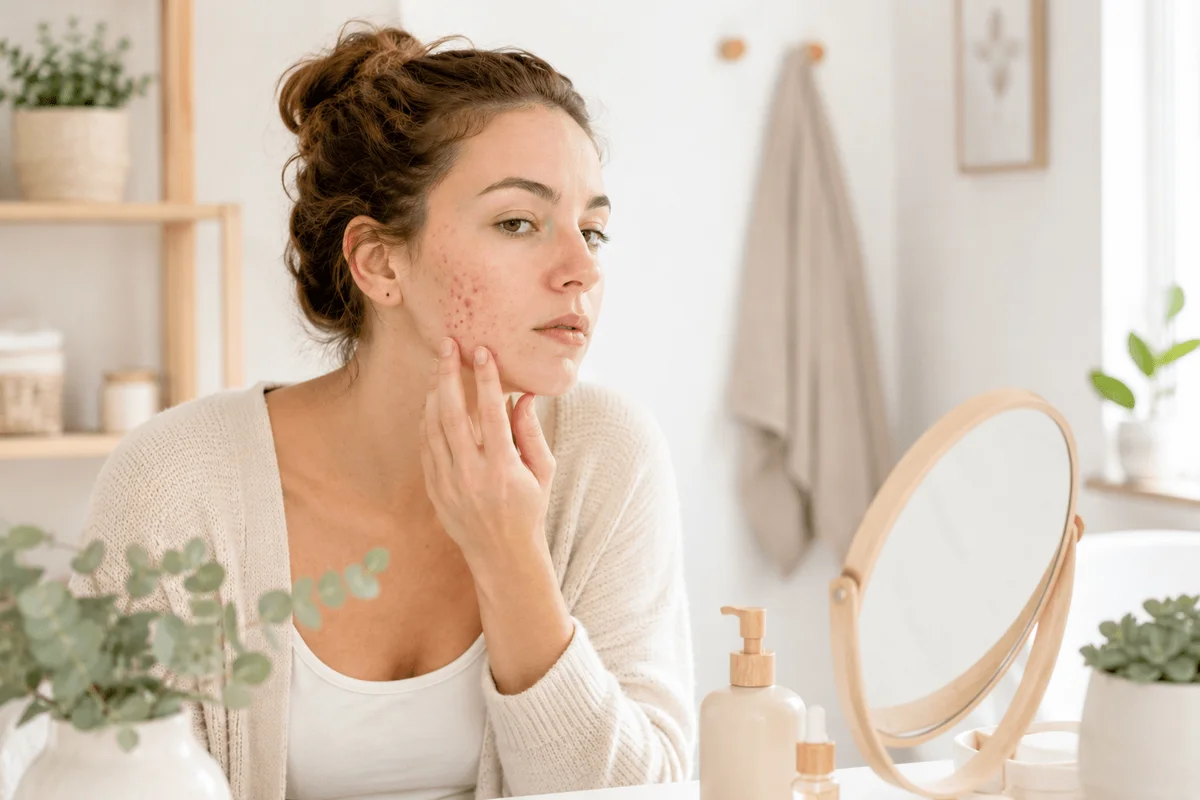
After giving birth, many women may notice the emergence of acne, even if their skin was clear during pregnancy. This condition, known as postpartum acne, is quite common and is often linked to the hormonal fluctuations that occur after childbirth.
Acne can manifest on the face, particularly around the jawline and chin, but it may also appear on the chest, back, or other areas. While some women find that their acne diminishes as their hormonal balance is restored, others may experience persistent breakouts for a longer duration.
Fortunately, there are steps that can be taken to care for the skin and improve its appearance. However, for breastfeeding mothers, it's essential to be cautious about the products and treatments applied to the skin.
In this article, we will explore why acne occurs after childbirth, how long it may last, and what treatments are advisable, particularly for those who are breastfeeding.
Important: This article is for informational purposes only and does not replace the advice of a dermatologist, doctor, or pharmacist. If you are pregnant, breastfeeding, or have questions about a specific treatment, consult a healthcare professional.
Understanding Postpartum Acne
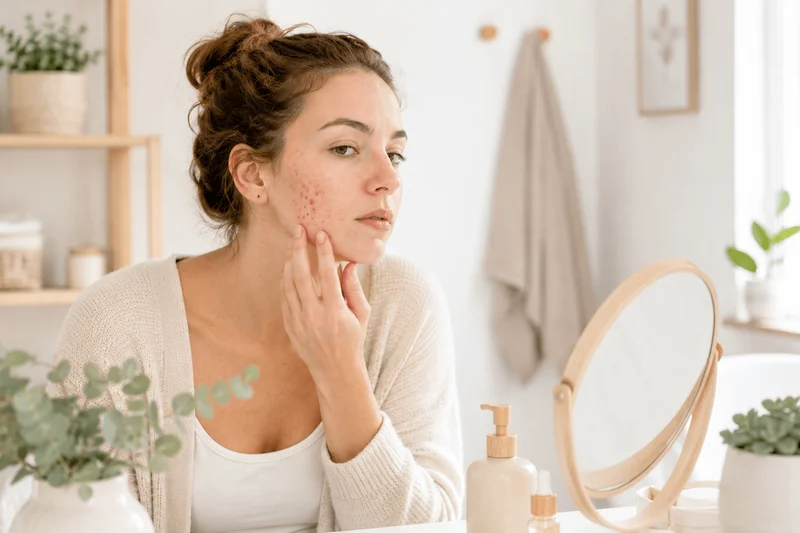
Postpartum acne refers to the emergence or worsening of acne lesions following childbirth. This can involve acne that was already present before or during pregnancy, or it may arise for the first time in the weeks or months after giving birth.
Symptoms can include:
- Blackheads or open comedones
- Whiteheads or closed comedones
- Small pimples
- Inflamed and reddened lesions
- Deeper, painful pimples in more severe cases
Many women notice changes primarily on the lower part of the face, especially around the jaw, chin, and cheeks, but acne can also develop on the forehead, back, chest, or other areas.
Not every woman experiences postpartum acne. The skin's response is influenced by hormonal factors, individual predisposition, and other aspects related to skin condition.
Causes of Postpartum Acne
The primary reason for postpartum acne lies in the hormonal changes that occur during pregnancy and after the baby is born.
During pregnancy, hormone levels fluctuate significantly. After childbirth, the body undergoes a readjustment period, and hormone levels change once again.
These fluctuations can affect the sebaceous glands, leading to increased oil production. An excess of oil, combined with dead skin cells and other factors, can clog pores and result in acne lesions.
Hormonal Changes Post-Delivery
The decline and reorganization of hormones after childbirth can impact the skin.
Estrogen and progesterone levels undergo significant changes, and for some women, this new hormonal environment may trigger breakouts. This is why a woman who had clear skin during pregnancy might notice a deterioration after giving birth.
Does Breastfeeding Affect Postpartum Acne?
Breastfeeding creates a unique hormonal environment, but it does not directly cause acne.
The body continues to experience hormonal changes in the postpartum period, and each woman may respond differently. Therefore, there is no specific timeline for when postpartum acne will appear, nor is there a uniform duration for all women.
Stress, Sleep Deprivation, and Routine Changes
The arrival of a newborn often brings significant changes in sleep, stress levels, and daily routines.
Lack of sleep, increased fatigue, and less time for skincare may not directly cause postpartum acne, but they can influence the overall condition of the skin and make it harder to maintain a consistent skincare routine.
Many mothers can relate to the challenge of finding a few quiet moments to wash their face after having a baby. Hence, a simple and consistent routine may be more practical than an elaborate ten-step regimen.
When Does Postpartum Acne Appear?
Postpartum acne can manifest at various times.
Some women may notice breakouts in the first few weeks after giving birth, while others might develop them several months later. Additionally, existing acne may temporarily worsen after the baby is born.
Consequently, there is no definitive rule stating that postpartum acne will appear exactly two weeks, one month, or three months post-delivery. If you notice breakouts after giving birth that you did not have before, hormonal changes during the postpartum period could be a contributing factor.
Duration of Postpartum Acne
One of the most pressing questions many women have is: Does postpartum acne resolve on its own?
In some cases, it may improve gradually as hormonal levels stabilize, but there is no set duration that applies to all women.
Some may experience a brief episode, while others continue to have flare-ups for months. Factors such as the type of acne, personal predisposition, and previous acne history can all play a role.
If the acne is persistent, severe, painful, or leaves marks or scars, waiting for it to resolve on its own may not be necessary. A dermatologist can assess the situation and recommend an appropriate treatment plan.
Treating Postpartum Acne
Treatment will depend on the severity of the acne and individual circumstances. Treating a few occasional pimples is different from addressing inflammatory acne or deep lesions. Here are some starting points to consider:
1. Gently Cleanse the Skin
Wash your face with a gentle cleanser suitable for your skin type.
There's no need to use harsh products or wash your face multiple times a day. Over-cleansing can irritate the skin and make your routine counterproductive. Avoid scrubbing intensely on areas with breakouts.
2. Don't Forget to Moisturize
Having oily or acne-prone skin does not mean it doesn't need hydration.
A suitable moisturizer can help maintain the skin barrier and improve tolerance to certain treatments. Look for products formulated for acne-prone skin, and consult a professional if you have questions.
3. Use Sunscreen
Sun protection is crucial, even if you have acne.
Moreover, some breakouts may leave dark marks after they resolve, especially with sun exposure. Daily use of an appropriate sunscreen can help protect the skin and reduce the risk of darkening those marks.
4. Avoid Picking at Pimples
This can be a tough one to resist.
However, squeezing, scratching, or attempting to pop pimples can increase inflammation and lead to scarring. Although it may seem like you're speeding up the healing process, it often has the opposite effect.
5. Don't Introduce Too Many Active Ingredients at Once
When breakouts occur, it can be tempting to buy multiple products and use them all at once.
Acids, exfoliants, masks, serums, and specific treatments can end up irritating already sensitive skin. It's better to introduce products gradually and observe how your skin responds.
What Can Be Used for Postpartum Acne While Breastfeeding?
This is a critical question for many mothers.
When breastfeeding, it's important to choose an acne treatment not only based on its effectiveness but also to consider the active ingredients, concentration, method of application, and potential contact with the baby.
Some topical treatments have very low systemic absorption and can be considered low-risk under certain circumstances, but this does not mean that all products are suitable for all women.
If you are breastfeeding and wish to begin an acne treatment, it's best to consult a doctor, dermatologist, or pharmacist.
Azelaic Acid During Breastfeeding
Azelaic acid can be a beneficial ingredient for acne-prone skin.
According to LactMed, it presents a low risk during breastfeeding due to its low absorption, although it is advised to avoid applying it on the breast or areas that may come into direct contact with the baby.
This does not mean you should start using any product containing azelaic acid without guidance. The specific product and its concentration should be evaluated.
Salicylic Acid During Breastfeeding
Salicylic acid is commonly found in products for acne-prone skin.
Topical application of salicylic acid in small areas is considered low risk during breastfeeding, as significant absorption is unlikely under these conditions. However, it should not be applied to areas that may come into direct contact with the baby, especially on the breast.
If you are using a product with salicylic acid and have questions about its concentration or frequency of use, consult a healthcare professional.
Benzoyl Peroxide During Breastfeeding
Benzoyl peroxide is another active ingredient used to treat acne. Information from e-lactancia indicates that its absorption after topical application is limited, categorizing it as low risk during breastfeeding.
As with other topical treatments, it should be avoided in areas where the baby may come into contact with the product.
What About Retinol During Breastfeeding?
It is important to differentiate between pregnancy and breastfeeding.
Topical retinoids are contraindicated during pregnancy and when trying to conceive. During breastfeeding, recommendations may differ and should be assessed on an individual basis.
Therefore, if you are breastfeeding and considering using retinol or any retinoid for acne treatment, do not introduce it without prior consultation with a healthcare professional. Additionally, there are various types of retinoids and different concentrations, so not all products are equivalent.
Simple Skincare Routine for Acne After Childbirth
If you've just had a baby, you likely don't want to complicate your skincare regimen. A straightforward routine could be structured as follows:
Morning
1. Gentle Cleansing
Wash your face with a product suitable for your skin type.
2. Treatment
If your dermatologist or pharmacist has recommended a specific active ingredient, this is the time to apply it according to their instructions.
3. Hydration
Use a lightweight moisturizer that suits your skin.
4. Sunscreen
Finish with an appropriate sunblock.
Night
1. Cleansing
Remove makeup, sunscreen, and accumulated dirt from the day.
2. Treatment
Apply the product recommended for your type of acne.
3. Hydration
Help keep your skin comfortable and maintain its barrier.
And remember: more products do not necessarily mean better results.
What NOT to Do If You Have Postpartum Acne
When breakouts occur after pregnancy, various unsolicited advice may surface online. Some of this advice should be disregarded.
Do Not Squeeze Pimples
While it may be tempting, squeezing can worsen inflammation and lead to scarring. Instead, focus on proper care and treatment as recommended by professionals.