How to Stimulate Language Development in a 2-Year-Old: Effective Games, Activities, and Tips
Discover effective ways to stimulate the language development of your 2-year-old with practical activities, games, and helpful tips.
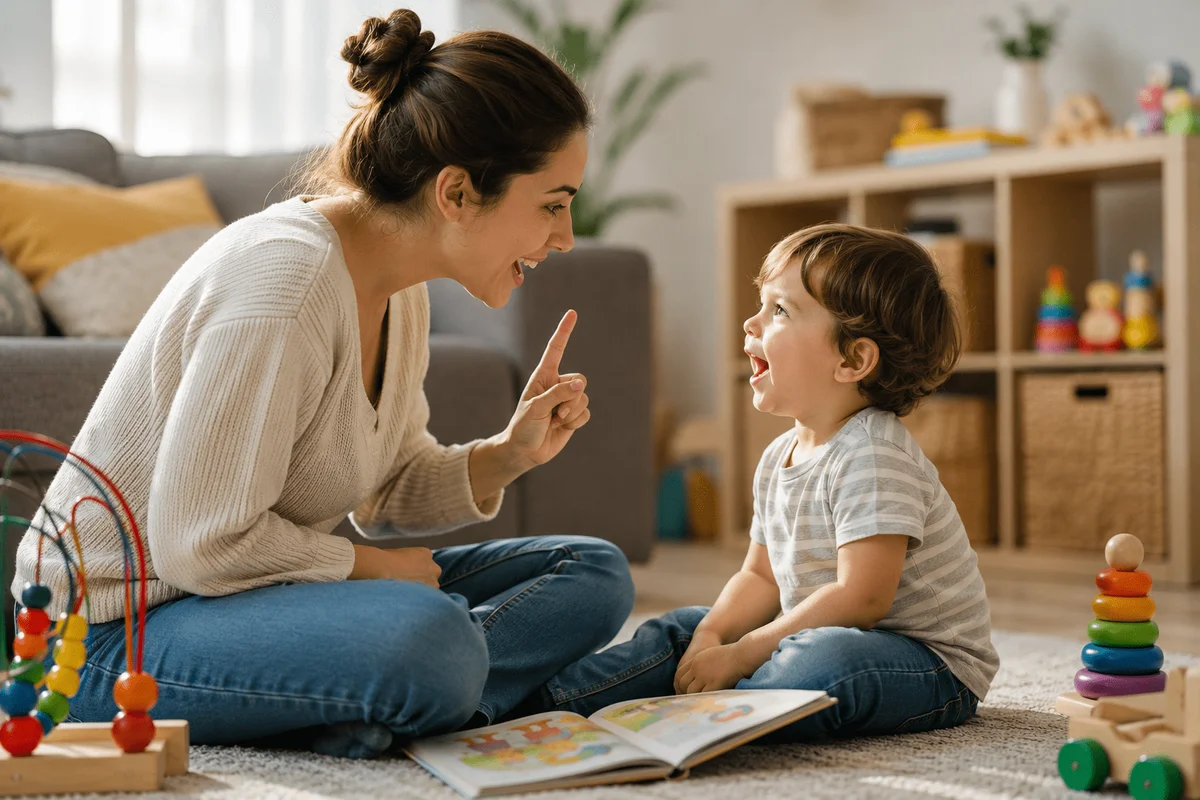
Hearing a child's first words is a milestone that brings immense joy to families. However, as children reach the age of two, parents often find themselves questioning their child's language skills: Is my child speaking enough? Is it normal for them to use few words? What can I do to help them communicate better?
If you are seeking ways to stimulate the language of a 2-year-old, the first message to convey is one of reassurance. Every child develops at their own pace, and there is significant variability in language acquisition during this stage. It's common to compare progress with peers, but each child has their own rhythm.
While some toddlers may engage in simple conversations, others might still use very short phrases or prefer to communicate through gestures. These differences can be part of normal development, as long as language continues to evolve gradually.
The good news is that stimulating language doesn't require complicated exercises. In fact, some of the best opportunities to encourage language development arise from everyday activities: during breakfast, at the park, while reading a story, or even during grocery shopping.
This guide provides practical activities, games, and tips backed by common recommendations in child development to help your child expand their vocabulary, improve comprehension, and enjoy communicating.
Additionally, we will explore what situations are considered typical at two years old, which signs to observe, and when it might be advisable to consult a professional.
For a comprehensive view of the expected milestones during this stage, we recommend reading our guide on developmental milestones at 2 years, which details the evolution of language, motor skills, play, and autonomy between 24 and 35 months.
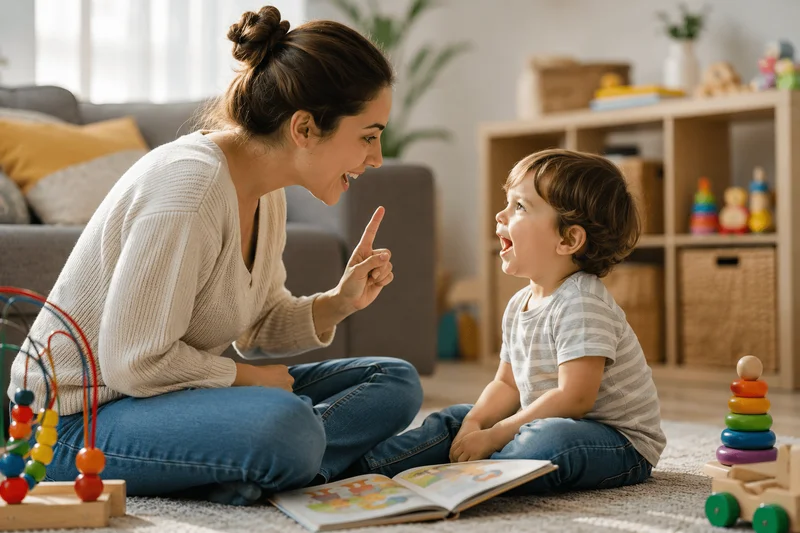
What Should a 2-Year-Old's Speech Look Like?
This question often weighs heavily on the minds of families.
The answer is that there is no specific number of words or exact skill that all children must achieve on their second birthday. Language development is a continuous process, and each child progresses at their own pace.
However, at this age, there are common milestones that many children reach:
- They understand simple instructions, such as "bring your shoes" or "let's wash our hands."
- They use two or three-word phrases to express their needs.
- They name people, objects, and actions that are part of their daily routines.
- They point to images when asked about them in a story.
- They begin to ask simple questions like "what is it?" or "where is it?"
- They enjoy imitating new words and repeating songs.
It's important to remember that understanding language typically develops before the ability to speak it. Many children comprehend much more than they can verbally express.
Thus, when assessing language development, we should consider not only the words they say but also aspects such as:
- Whether they understand what is being explained to them.
- If they attempt to communicate in any way.
- If they point to share interests.
- If they respond when called by their name.
- If they maintain eye contact during interactions.
All these elements are part of communicative development.
Language Development Between 24 and 35 Months
During the third year of life, progress can be rapid. It is common for vocabulary to increase almost weekly, and for phrases to become longer and more complex.
As children approach three years old, many are able to:
- Share small experiences.
- Ask questions frequently.
- Express likes and dislikes.
- Name colors, animals, and everyday objects.
- Participate in very simple conversations.
However, they may still make pronunciation errors or use incorrect grammatical structures. This is part of the learning process and typically corrects itself over time.
Is It Normal for My 2-Year-Old to Speak Little?
This is one of the most common queries regarding child development and one that often causes concern. The short answer is: it depends.
Speaking little does not necessarily indicate a delay in language development.
Some children begin to speak later but experience significant progress just a few months later. Others are very observant, understand their surroundings well, and prefer to communicate through gestures before they start speaking.
The key is to evaluate their overall development, not just the number of words they use.
For instance, a child who understands instructions, points to what interests them, maintains eye contact, plays with others, and attempts to communicate in various ways typically shows positive signs, even if they still use few words.
Conversely, if a child speaks little and also struggles to understand language, shows little intent to communicate, or stops using previously learned words, it is advisable to consult a pediatrician to assess the situation.
Factors Influencing Language Development
Every child has a unique story, and various factors can affect the speed at which they develop speech.
Among the most common influences are:
Family Environment
Children learn to speak by listening to others. The more opportunities they have to converse, listen to stories, sing songs, or engage in family routines, the more linguistic experiences they accumulate.
It is not about constantly talking to them but rather maintaining quality interactions, age-appropriate conversations, and allowing space for them to participate.
Play
Play is the primary driver of learning during early childhood.
While playing, children learn new words, develop imagination, practice conversational turns, and discover how to use language to solve small problems.
Thus, spending time on shared play is often more beneficial than trying to set up specific exercises.
Symbolic play is particularly important, as it allows children to creatively navigate conversations, whether alone or with others.
Reading
Reading stories from an early age is one of the most effective strategies for enriching vocabulary.
There is no need to finish the story or read every page; what matters is pausing to discuss illustrations, asking questions, naming objects, and allowing the child to participate by pointing or completing simple words.
If you are looking for age-appropriate stories, I can provide a guide to help you find the most suitable ones. When children can empathize with characters in similar situations, it is truly enriching. In our home, we incorporate this type of reading weekly, alternating with different stories, such as those about a new sibling, potty training, or returning to school.
Screens
Pediatric recommendations generally agree that language learning primarily occurs through interaction with others, not through screens. While some content may seem educational, no app or video can replace real conversation.
Talking, playing, and spending time with adults remains the best way to encourage language development.
How Does a 2-Year-Old Learn to Speak?
To effectively stimulate language, it is important to first understand how it develops.
Many adults believe that learning to speak involves merely memorizing words, but the process is much more complex.
Before a child can form a sentence, they must develop several skills:
- Listen attentively to the sounds around them.
- Understand the meanings of words.
- Associate each word with an object, action, or emotion.
- Recall it when needed.
- Coordinate lip, tongue, and jaw movements to pronounce it.
- Use it appropriately in conversation.
Thus, language builds gradually through countless small daily interactions.
Every conversation during meals, each bedtime story, and every walk in the park presents an opportunity for continued learning.
Common Mistakes When Trying to Stimulate Language
With the best intentions, many families make small mistakes that can hinder a child's active participation in conversation.
The most common pitfalls include:
Speaking for Them Constantly
When we anticipate all their needs or respond before they have a chance to express themselves, we reduce their opportunities to practice language.
It is better to wait a few seconds and give them time to attempt to communicate what they need.
Correcting Every Word
If we constantly interrupt to correct pronunciation, conversations can become frustrating.
The best approach is to repeat the word correctly in a natural way, without insisting that they repeat it multiple times.
Example:
- Child: "Mia gua."
- Adult: "Yes, you want more water. I'll get you more water."
This way, they hear the correct model without feeling that they have made a mistake.
Asking Too Many Questions in a Row
When a child receives a barrage of questions, they may feel as if they are being evaluated.
Instead of an interrogation, it often works better to comment on what is happening and leave space for them to contribute whenever they wish.
Summary Table: What to Expect from Language at 2 Years
| Aspect | Typical at This Age | |---------------|----------------------------------------------------------| | Understanding | Understands simple instructions and many everyday words. | | Expression | Uses phrases of two or more words and gradually expands vocabulary. | | Communication | Points, asks questions, imitates, and seeks to interact with others. | | Pronunciation | It is normal to still make errors with some sounds. | | Learning | Especially benefits from play, reading, and everyday conversations. |
15 Activities to Stimulate a 2-Year-Old's Language
There is no need to buy special materials or turn every moment into a lesson. Children primarily learn to speak through interactions with those around them.
The following activities can easily be incorporated into daily life and help enrich vocabulary, improve comprehension, and foster communication naturally.
1. Read Stories Daily
Shared reading is one of the most effective tools for promoting language development.
Rather than reading the text from start to finish, it is more important to discuss the illustrations.
You can ask simple questions such as:
- Where is the dog?
- What is the child doing?
- What color is the car?
You can also point to objects, name them, and wait a few seconds for your child to try to respond.
What Does This Stimulate?
- Vocabulary.
- Comprehension.
- Attention.
- Memory.
- Conversation.
2. Talk During Daily Routines
The best moments to stimulate language often occur during everyday activities. While preparing breakfast, you can describe what is happening:
- "Now we are going to cut the banana."
- "The milk is warm."
- "Let's put the glass on the table."
These types of conversations help children relate words to real actions.
It's not necessary to speak constantly; the key is to use simple phrases and leave time for them to participate.
What Does This Stimulate?
- Vocabulary.
- Comprehension.
- Participation.
3. Engage in Play Together
Playing together is crucial for language development. During play, children learn new words, practice conversation, and express themselves creatively.
Encouraging imaginative play can lead to rich language experiences without the need for structured exercises.
4. Use Everyday Objects
Incorporate everyday objects into conversations. For example, while shopping, you can name fruits and vegetables, describing their colors and shapes.
5. Sing Songs
Singing songs together can enhance language skills. Familiar tunes and repetitive lyrics help children remember words and phrases more easily.
6. Encourage Imitation
Encourage your child to imitate sounds and words. This playful interaction can boost their confidence in verbal expression.
7. Create a Language-Rich Environment
Surround your child with books, songs, and conversations. The more they are exposed to language, the more they will learn.
8. Use Visual Aids
Utilize pictures and visual aids to help your child connect words with meanings. This can be particularly effective in enhancing vocabulary.
9. Be Patient
Allow your child the time they need to express themselves. Patience is key in encouraging their verbal attempts.
10. Celebrate Their Efforts
Acknowledge and celebrate your child’s attempts to communicate, regardless of how small. This positive reinforcement encourages them to keep trying.
11. Share Experiences
Talk about daily experiences, such as trips to the park or visits to family. Sharing these moments can enhance their understanding and vocabulary.
12. Ask Open-Ended Questions
Instead of yes/no questions, ask open-ended questions that require more than a one-word answer. This encourages more elaborate responses.
13. Use Repetition
Repetition helps reinforce language learning. Repeat words and phrases in different contexts to help your child remember them.
14. Limit Screen Time
Encourage more face-to-face interactions rather than screen time. Real conversations are vital for language development.
15. Be a Role Model
Model good language use. Speak clearly and expressively, providing a good example for your child to follow.
By incorporating these activities into daily life, you can create a rich environment that fosters language development in your 2-year-old, ensuring they feel supported and encouraged in their journey to communicate.