How to Choose the Right Pregnancy Pillow: 7 Essential Criteria
Choosing a pregnancy pillow involves considering various factors beyond just shape and price. Discover the seven essential criteria to find the perfect pillow for comfort during pregnancy and beyond.
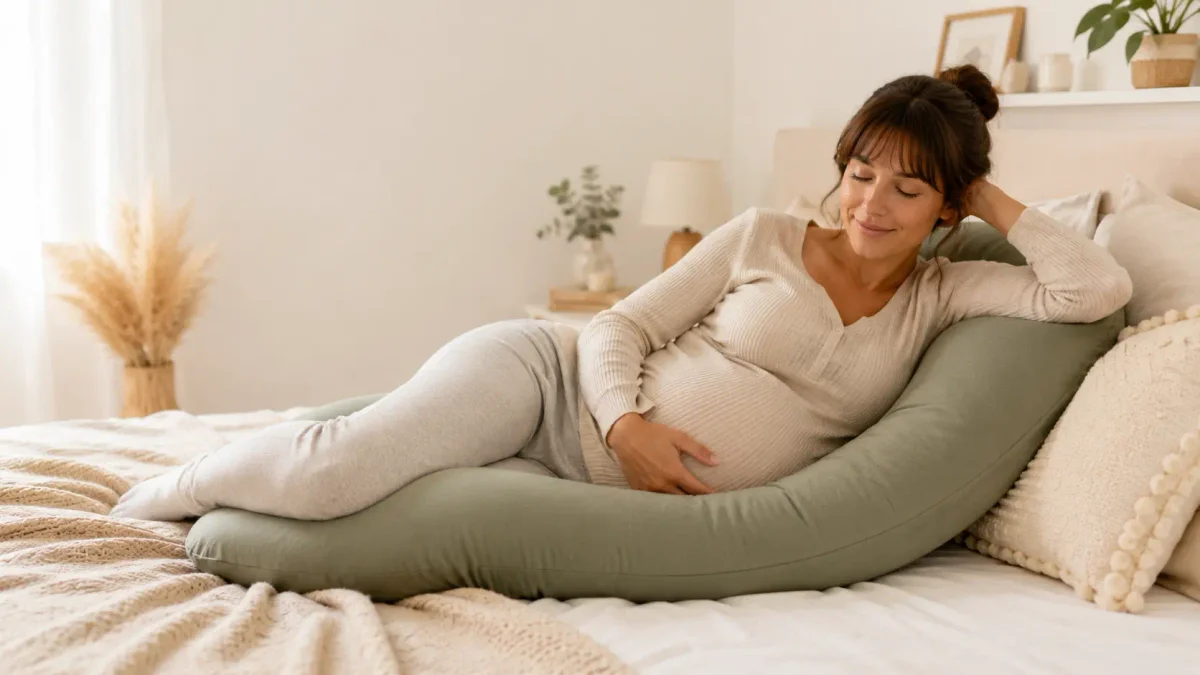
Selecting a pregnancy pillow may seem straightforward, but the reality is that there are countless models, sizes, and shapes available.
Before my first pregnancy, I thought a pregnancy pillow was just a pillow. Looking back, I realized that certain criteria significantly impacted my comfort more than others. Contrary to popular belief, the shape isn’t the only factor that makes a difference.
In this guide, I will outline the seven key criteria that truly matter when choosing a comfortable pregnancy pillow, helping you avoid common mistakes and find a model that you can continue to use even after your baby arrives.
⚡ If You're in a Hurry
If you only remember the essentials before buying a pregnancy pillow, here are the four most important points: ✅ Check the firmness level: a pillow that’s too soft loses its usefulness quickly; ✅ Choose a filling that suits the comfort you desire; ✅ Consider the size: an overly large model may not always be practical for daily use; ✅ Opt for a pillow that will also be useful after birth, especially for breastfeeding and postpartum recovery.
Why Is It So Difficult to Choose a Pregnancy Pillow?
When you start looking for a pregnancy pillow, you quickly face a multitude of options: U-shaped, C-shaped, I-shaped, XXL, compact, microbead, foam, and more.
As a result, you might feel overwhelmed by the idea that there is a perfect model out there, while in reality, the best pillow is one that meets your specific needs.
You may wonder if it’s the right time to invest in a pregnancy pillow. There’s no “ideal” month; it largely depends on the first signs your body gives you. I elaborate on this in my article about when to start using a pregnancy pillow.
For my second pregnancy, I didn’t start from scratch. After my first experience with a pillow that I found too soft, I knew my top priority: I wanted a model that provided better support.
In hindsight, I realize I was also correct about other aspects without fully understanding them at the time. For instance, the pillow size turned out to be ideal for my daily use. I never expected to use it so much after giving birth. Now, it serves me well for breastfeeding and alleviating back pain when I need to remain semi-reclined with my baby.
The good news is that you don’t have to spend hours comparing every model. Once you know the criteria that genuinely affect your comfort, finding a pregnancy pillow that will support you during pregnancy and beyond becomes much easier.
The 7 Criteria That Will Make a Real Difference in Your Daily Life
When comparing various pregnancy pillows, it’s easy to focus on their shape or price first.
However, after experiencing two pregnancies, I realized that these aren’t necessarily the criteria that had the most significant impact on my comfort.
Here are the seven factors I would consider today before purchasing a pregnancy pillow.
1. Firmness: The Priority Criterion
If there’s only one piece of advice to take from this guide, it’s this: don’t underestimate the firmness of the pillow.
Before my second pregnancy, this was my primary selection criterion. During my first pregnancy, I used a model that I ultimately found too soft. It flattened easily, and I often felt a lack of support, particularly around my belly and legs.
For my second pregnancy, I wanted a firmer pillow. Looking back, this clearly made the biggest difference in my comfort.
However, be cautious: a very firm pillow may not suit everyone. The goal is to find a good balance between support and comfort, without the sensation of lying on something rigid.
💡 Key Takeaway
Before purchasing, check the firmness level indicated by the manufacturer. A pillow that offers good support will generally be more comfortable over time than one that flattens quickly.
2. Filling: Directly Influences Comfort
The filling is what gives the pillow its feel.
Models are typically filled with microbeads, foam, or synthetic fibers, each providing a different sensation.
For instance, microbeads conform easily to body shapes and allow you to reposition the pillow as needed. Other fillings may offer more uniform support but can be less adaptable.
Beyond the material itself, also pay attention to the quality of the filling. Two pillows filled with microbeads can feel very different depending on the density or fineness of the beads used.
💡 Key Takeaway
Don’t just focus on the pillow’s shape; also inquire about its filling. This will largely determine the comfort, support, and longevity of the pillow.
3. Size: A Detail Often Overlooked
Before buying my pillow, I didn’t really consider its size.
In hindsight, I realize that an overly large model probably wouldn’t have suited me.
I appreciated being able to sleep comfortably without feeling like the pillow was taking up the entire bed. Additionally, when I wanted to use it on the couch or move it around the house, a reasonable size was much more practical.
Conversely, some expectant mothers prefer an XXL model for complete coverage.
There’s no right or wrong choice; it all depends on your habits, body type, and the space you have available.
💡 Key Takeaway
Choose a size that fits your space and sleeping habits. A larger pillow isn’t necessarily more comfortable if it becomes cumbersome in daily use.
4. Choose a Pillow That Will Be Useful After Birth
When I bought my pregnancy pillow, I primarily thought about the months leading up to delivery.
I didn’t yet realize how much I would continue to use it once the baby arrived.
In hindsight, this is probably the criterion I underestimated the most.
During the first weeks, I often kept my pillow in its long form. It helped me stay comfortably positioned when I needed to sleep semi-reclined with my baby against me.
As the weeks went by, I began using the C-shaped cover more frequently. I found it particularly handy for nursing on the couch or in a chair. It supported my arms and shoulders during breastfeeding, which made a significant difference when feedings occurred multiple times a day.
Even now, I sometimes use my pillow to support my back when sitting for extended periods or to place my baby beside me for a moment, always under my watchful eye.
This is why I always recommend choosing a model that will be useful not just during pregnancy but also during the postpartum period. It’s an investment you’ll likely use far longer than you expect.
💡 Key Takeaway
If you want to invest in a pillow that will last, prioritize a model that you can continue to use during breastfeeding or postpartum recovery.
5. Shape: Important but Not Always Decisive
Manufacturers often highlight the shape of their pillows: U, C, I, or J shapes.
This is indeed a factor to consider, but I believe we sometimes place too much emphasis on it.
In reality, the best shape depends largely on your sleeping style and what you expect from your pillow.
For example:
- A model in I is often more compact and takes up less space in bed;
- A C model strikes a good balance between support and bulk;
- A U model envelops the body more but requires more space.
Personally, what mattered most to me wasn’t so much the shape but the comfort and support once the pillow was placed between my legs or under my belly.
In other words, don’t choose a shape just because it’s trendy. Opt for the one that truly fits your usage.
💡 Key Takeaway
Select the shape that aligns with your sleeping habits, but don’t consider it the primary criterion. Good support often makes a greater difference than a fashionable shape.
6. Maintenance: An Often Overlooked Factor
Initially, we focus mainly on comfort.
However, a pregnancy pillow often accompanies you for several months, sometimes even over a year if you use it during breastfeeding.
Thus, it’s essential to check a few straightforward points:
- Is the cover removable?
- Is it machine washable?
- Is it easy to put the cover back on after washing?
- Can the filling be replenished if the pillow loses some volume over time?
These small details may seem secondary at the time of purchase, but they quickly make a difference when the pillow is used daily.
💡 Key Takeaway
Before ordering, ensure that the cover is easy to remove and machine washable. This small detail will really simplify your daily life.
7. Budget: Look at the Quality-Price Ratio, Not Just the Price
There are pregnancy pillows at all price points.
While it may be tempting to choose the cheapest model, I believe this isn’t always the best strategy.
If your pillow supports you through several months of pregnancy, then during breastfeeding and postpartum, a few extra euros become relatively insignificant compared to the duration of use.
Conversely, an uncomfortable pillow that loses its support quickly may end up at the back of a closet.
In my opinion, it’s better to invest in a model that genuinely meets your needs rather than choosing based solely on the displayed price.
💡 Key Takeaway
Compare the quality-price ratio rather than just the price alone. A pillow used during pregnancy and afterward is worth a thoughtful investment.