Choosing Between a Tricycle and a Balance Bike for Your Child
Explore the differences between tricycles and balance bikes for your child. Learn which option is best based on age, skills, and developmental needs.
When considering your child’s first wheeled vehicle, you may find yourself weighing the options between a tricycle and a balance bike. While both serve as excellent introductions to mobility, they cater to different developmental needs and skills.
Understanding the Basics
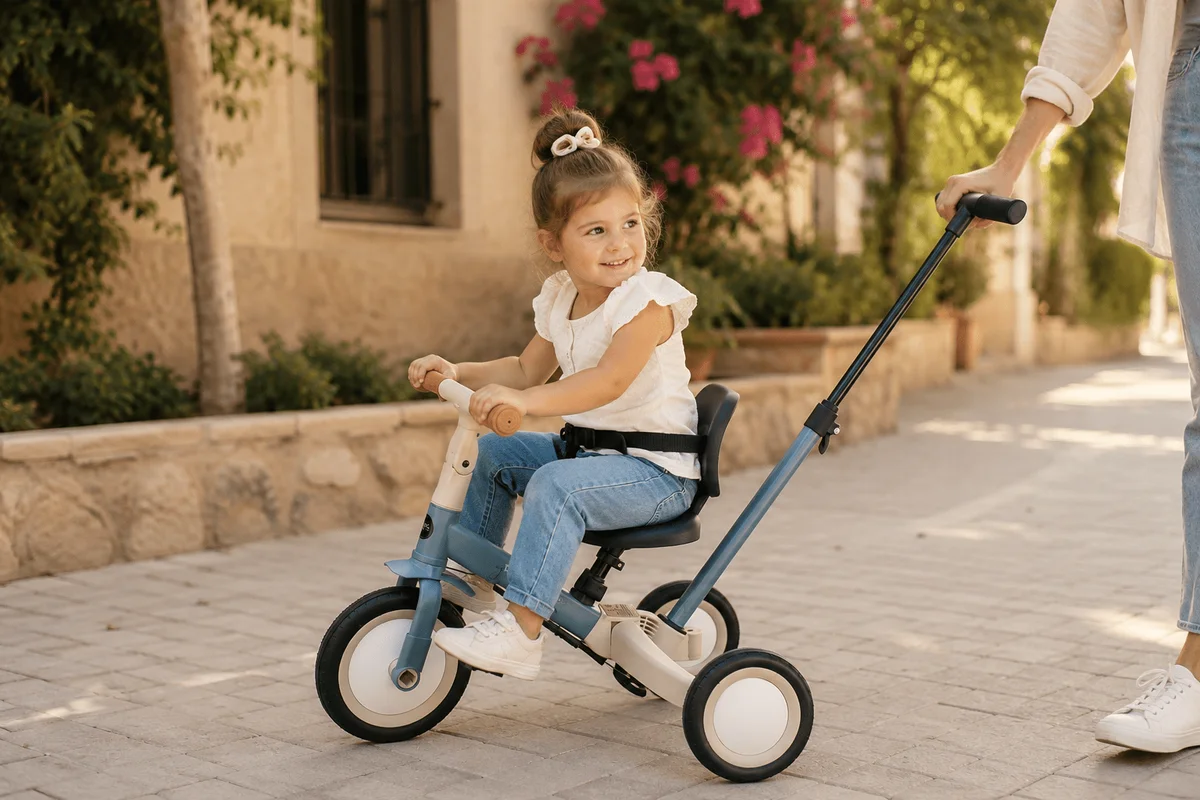
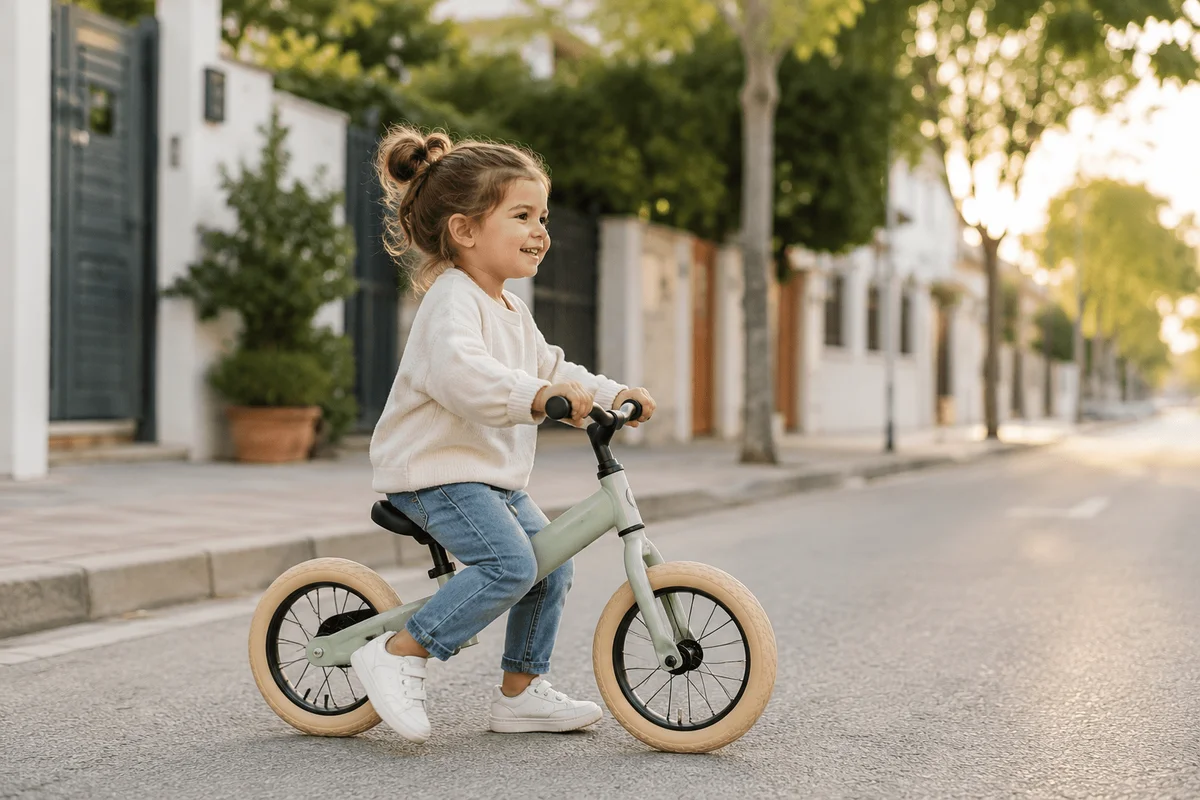
A tricycle provides enhanced stability with its three wheels, making it suitable for younger children. Many models are designed to be used with parental assistance, featuring a handle, backrest, and harness. In contrast, a balance bike eliminates pedals, encouraging children to learn to balance on two wheels progressively.
So, which one is the better choice: a tricycle or a balance bike? The answer largely depends on your child's age, motor development, height, and what you hope to achieve with the vehicle. This guide will clarify the differences to assist you in making a more informed decision.
Key Differences Between Tricycles and Balance Bikes
| Feature | Tricycle | Balance Bike | |-------------------------------|---------------------------|-------------------------| | Number of Wheels | 3 | 2 | | Pedals | Yes | No | | Stability | ⭐⭐⭐⭐⭐ | ⭐⭐⭐ | | Works on Balance | ⭐⭐⭐ | ⭐⭐⭐⭐⭐ | | Initial Autonomy | Medium | High | | Parental Handle Available | Yes, in many models | Typically not | | Pedaling | Yes | No | | Preparation for Bicycle | Good | ⭐⭐⭐⭐⭐ | | Recommended Starting Age | Varies by model | Typically from when the child walks confidently | | Transportability | Lower | Higher | | Best For | First rides and transitioning to pedaling | Balance and preparation for a bicycle |
How Each Vehicle Works
The fundamental difference lies in what children must learn to propel themselves. A tricycle’s three wheels provide a stable base, allowing children to focus first on steering and later on pedaling. Conversely, a balance bike requires children to push off with their feet, honing their ability to balance on two wheels from the start.
These vehicles do not necessarily compete with one another; rather, they can play complementary roles at different stages of a child's development.
Advantages of Tricycles
Tricycles, especially those designed for evolving use, offer significant benefits:
- Greater Stability: The three-wheel design reassures young children as they learn to navigate.
- Introduction to Pedaling: They help children develop coordination between their legs and arms while learning to steer.
- Parental Assistance: Many models allow adults to guide the tricycle until the child gains enough independence.
- Multi-Stage Use: A well-designed tricycle can adapt from a fully equipped model to a simpler version as the child grows.
- Ideal for Young Children: Tricycles are particularly suitable for those who lack the balance or confidence to use a two-wheeled bike.
Benefits of Balance Bikes
Balance bikes operate quite differently, focusing on:
- Balance Development: This is arguably their most significant advantage, teaching children to maintain balance while moving.
- Encouraging Independence: Unlike tricycles with parental handles, balance bikes give children direct control.
- Lightweight and Portable: Typically, balance bikes are easier to carry and transport than many tricycles.
- Facilitating Transition to Bicycles: Mastering balance simplifies the move to a traditional bike later on.
- No Need for Initial Pedaling: Children can focus on balance, steering, and speed control before learning to pedal.
Recommendations by Age
For a 1-Year-Old
For a child around one year old, a tricycle designed for their age is generally the better option. Many children at this age are still developing the balance needed for safe movement on two wheels. Evolutionary tricycles often come equipped for parental guidance and can be used starting around 10-12 months, depending on the model.
For a 2-Year-Old
At two years old, the decision becomes more nuanced. If the child walks confidently and exhibits good balance, a balance bike could be an excellent choice. However, if they still seek stability or prefer parental control, a tricycle remains a suitable option. Thus:
- 2-Year-Old Needing Stability → Tricycle
- 2-Year-Old with Good Balance → Balance Bike
For a 3-Year-Old
By age three, balance bikes tend to take precedence. Most children can propel themselves, lift their feet for short distances, and steer effectively at this stage. If the goal is to prepare for a conventional bike, a balance bike is particularly advantageous. Nonetheless, tricycles can still be fun for those who enjoy pedaling or for models that offer extended use.
Conclusion: Which Vehicle to Choose?
To summarize:
- From 1 Year: Opt for a tricycle, especially one with parental controls.
- Around 2 Years: Assess the child's development; a balance bike for those with good balance, a tricycle for those needing stability.
- From 3 Years: A balance bike is preferable if the goal is to transition to a regular bicycle.
Developmental Benefits
Tricycle
Focuses on:
- Motor coordination
- Coordination of arms and legs
- Pedaling skills
- Steering ability
- Spatial awareness
- Gradual independence
Balance Bike
Emphasizes:
- Balance
- Coordination
- Body control
- Steering
- Speed management
- Confidence
- Preparation for biking
The primary distinction is that balance bikes center on balance, while tricycles introduce pedaling and stability first.
Safety Considerations
When evaluating safety, it’s essential not to label one as universally “safer” than the other. Tricycles provide more static stability, but they are not without risks. Balance bikes require more control from the child, fostering balance development. Regardless of the choice, ensure:
- The model fits the child's age and size.
- Manufacturer recommendations are followed.
- Helmets are worn when necessary.
- Riding occurs on safe surfaces away from traffic.
- Children are always supervised.
Combining Options
Choosing a tricycle that can convert into a balance bike can be an intriguing option. Many evolutionary tricycles allow for a transition from being parent-assisted to a standalone tricycle, and eventually to a balance bike. This flexibility can provide a comprehensive learning experience:
- Parental Control Tricycle → Autonomous Tricycle → Balance Bike → Pedal Bike
However, it’s crucial to evaluate the actual configurations of each model, as not all “4-in-1” or “8-in-1” products offer equally effective stages.
Final Thoughts
If your child is around one year old, a suitable evolutionary tricycle is recommended, especially one with features for parental control. For two-year-olds, consider their skills: if they have good balance, a balance bike might be perfect; otherwise, stick with the tricycle. By age three, focus on balance bikes if the aim is to prepare for traditional biking. Ultimately, both vehicles can complement each other and be used at different developmental stages, providing a seamless transition for your child’s riding journey.