When to Start Using a Pregnancy Pillow: Signs to Watch For
Wondering when to start using a pregnancy pillow? Discover the signs indicating it's time, based on your trimester, and learn why it remains useful after childbirth.
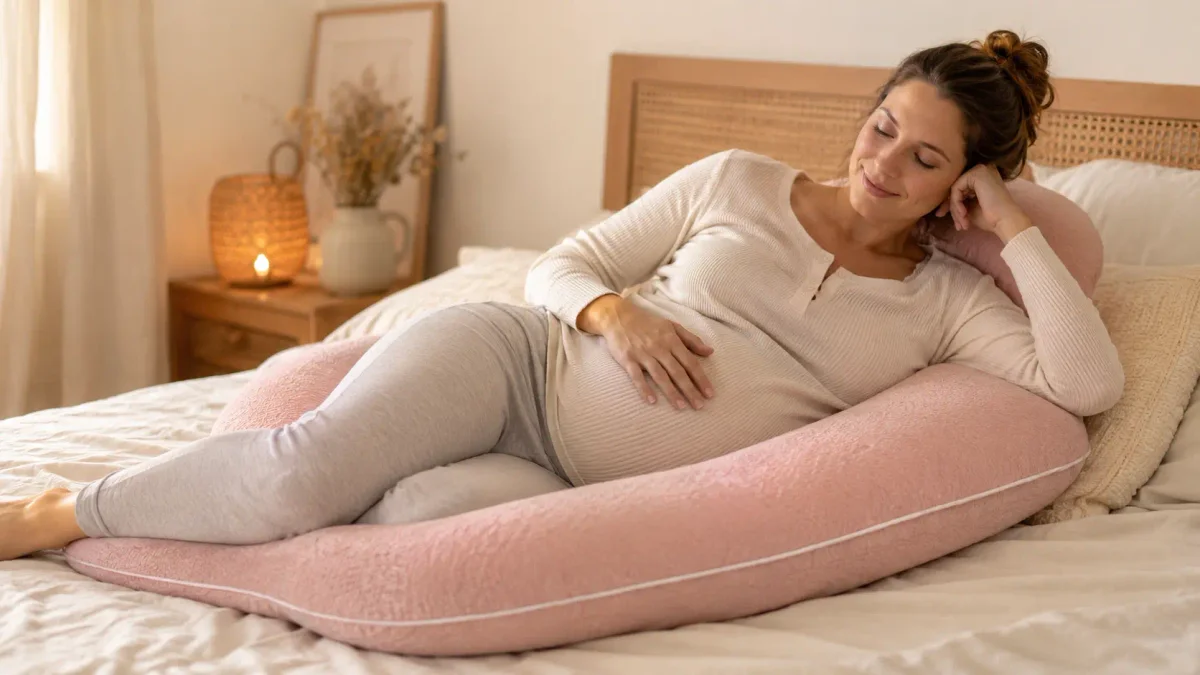
Are you wondering when to start using a pregnancy pillow? You might be in the early months of your pregnancy and thinking, "Isn't it a bit too early?" Or perhaps you're nearing the end of your pregnancy and hesitating to purchase one, worried it won't be useful for long.
I had the same questions during my pregnancy. One thing I've learned is that there isn't a universally "correct" month for every expectant mother. Some women feel the need for better support as early as the second trimester, while others wait until their belly becomes heavier before considering a pregnancy pillow.
In this article, I will help you identify the early signs that indicate it might be time to start using a pregnancy pillow, rather than providing an arbitrary timeline. You'll also discover why a pillow can remain beneficial even after childbirth.
⚡ If You're in a Hurry
In summary: ✅ There is no mandatory month to start using a pregnancy pillow; ✅ Most expectant mothers feel the need for one between the 4th and 6th month, as their bellies round out and the first discomforts arise; ✅ The best indicator is your body: difficulty finding a comfortable position, back or pelvic pain, less restful nights... ✅ Even if you are nearing the end of your pregnancy, purchasing a pregnancy pillow can still be worthwhile: it is often very useful during the postpartum period, especially for breastfeeding or for added comfort during nighttime awakenings.
Is There Really a "Right" Month to Start Using a Pregnancy Pillow?
The answer is straightforward: no.
There isn't a specific month when all pregnant women should start using a pregnancy pillow. Each pregnancy is unique, and what feels comfortable for one person may not be the same for another.
However, it is common for many expectant mothers to start feeling the need between the 4th and 6th months of pregnancy. This is typically when the belly begins to grow, the center of gravity shifts, and the first signs of back, pelvic, or hip pain emerge.
That said, this is merely a guideline.
I believe it is more beneficial to listen to the signals your body sends rather than strictly adhering to the calendar. If you are still sleeping well at 28 weeks pregnant, there is no need to force the use of a pillow. Conversely, if you find yourself waking up frequently or struggling to find a comfortable position as early as the second trimester, it might be time to give it a try.
Every expectant mother progresses at her own pace. The goal is not to use a pillow "just because it's expected" but because it can genuinely enhance your daily comfort.
💡 Key Takeaway
The ideal time to start using a pregnancy pillow is not defined by the number of weeks of pregnancy but rather by the onset of initial discomforts. The calendar provides a reference point, but your body provides the answer.
Five Signs It Might Be Time to Use a Pregnancy Pillow
You don't have to wait until the pain becomes significant to start using a pregnancy pillow. Often, your body sends several smaller signals before that.
While many think of sleep when discussing pregnancy pillows, discomfort is not limited to nighttime. Prolonged sitting, a day of remote work, a car ride, or simply an evening on the couch can become less enjoyable as your pregnancy progresses. In these situations, a pregnancy pillow can help support your back, belly, or even your legs, depending on your position.
Here are the most common signs:
-
You're spending long minutes trying to find a comfortable position 🛏️ 👉 Your body is already seeking more support. Does this resonate with you? ✔️ You lie on your side. ✔️ You tuck a pillow under your belly. ✔️ You place another between your legs. ✔️ You change positions again a few minutes later. If you find yourself in this situation, it’s likely that your body is already asking for better support. A pregnancy pillow can stabilize your belly, pelvis, and legs without needing to rearrange multiple pillows each time you wake up.
-
You experience back, pelvic, or hip pain 😣 👉 Pain arises even after just a few minutes of sitting or lying down. As your pregnancy progresses, hormones cause your joints to loosen, and the weight of your belly gradually increases. Certain positions may become less comfortable. If you regularly feel pain in your lower back, discomfort in your pelvis or hips, whether upon waking or after sitting for a while, your body might be signaling that it needs more support. A pregnancy pillow can be beneficial not only at night but also during the day, providing relief behind your back on the couch or under your legs during rest periods.
-
Your belly starts to feel heavy when you sleep on your side 🤰 👉 You feel a pulling sensation every time you change positions. Sleeping on your left side is generally recommended during pregnancy, especially from the second trimester onward. However, as your belly rounds out, it may feel like it “drops” forward when you turn over. This sensation is common and can become uncomfortable over the weeks. A pillow placed under your belly helps support its weight and reduces the feeling of pulling, making position changes much more pleasant.
-
You're already using multiple pillows to sleep better 😴 👉 You are unconsciously recreating a pregnancy pillow setup. You place one pillow under your belly. Another between your legs. Sometimes even a third behind your back. If you are doing this, it's simply because you are naturally seeking more support. Personally, I found a pregnancy pillow much more convenient: it stays in place throughout the night and avoids the need to readjust everything every time you turn.
-
Your nights are becoming less restful 🌙 👉 You wake up feeling tired because you can’t find a comfortable position. Nighttime awakenings are common during pregnancy, but they aren't always linked to needing to use the restroom or baby movements. Sometimes, it’s simply discomfort that prevents you from easily returning to sleep. A pregnancy pillow may not eliminate all awakenings (that would be too good to be true!), but it can make each position change much more comfortable and help you fall back asleep more easily.
🩷 A Mom's Advice
Don’t wait for the pain to become severe before trying a pregnancy pillow. If you feel like you're starting to juggle multiple pillows or that your sleep is becoming less comfortable, it’s probably a good time to see if the pillow can provide relief. It’s better to prevent discomfort than to endure it for weeks.
What to Expect by Trimester
As you’ve understood, there are no universal rules. However, needs often evolve throughout pregnancy. Here are some guidelines to help you gauge where you stand.
| Trimester | Usefulness of Pregnancy Pillow | |-----------|------------------------------| | 1st Trimester | Generally not needed unless you’re already experiencing pain or particular discomfort. | | 2nd Trimester | This is often when the first discomforts appear. Many expectant mothers begin using a pillow during this time. | | 3rd Trimester | The pillow often becomes a true ally for better sleep, back relief, and daily belly support. |
First Trimester: Not Essential… but Sometimes Appreciated
During the early weeks of pregnancy, your belly is still small, and many women do not yet feel the need for a pregnancy pillow.
That said, it doesn’t mean it’s useless. If you are already suffering from back pain, ligament pain, if you are expecting twins, or simply having difficulty finding a comfortable position, there’s no harm in starting earlier.
There are no contraindications to using a pregnancy pillow from the beginning of your pregnancy if it brings you comfort.
Second Trimester: When Many Women Start to Feel the Need
Typically, between the 4th and 6th month, the pregnancy pillow becomes increasingly relevant.
Your belly gradually enlarges, your center of gravity shifts, and certain positions become less comfortable, both at night and during the day.
You might start to feel:
- pelvic pain;
- discomfort in the lower back;
- pulling sensations in the belly;
- increasing difficulty finding a comfortable sleeping position.
It’s often at this stage that many expectant mothers think, “I probably should have bought one a bit earlier.”
Third Trimester: A Daily Ally
In the final months of pregnancy, the belly becomes heavier, and nighttime awakenings often increase.
During this time, the pregnancy pillow can become a true daily companion.
It can help you:
- better support your belly while sleeping on your side;
- relieve pressure on your hips and pelvis;
- improve comfort while sitting on the couch or at your desk;
- support your back during rest periods;
- comfortably elevate your legs when desired.
Every pregnancy is different, so some mothers will use it only at night, while others may find it hard to part with it throughout the day.
My Experience: I Thought I’d Only Use It at Night… But Ended Up Using It Much More
I started using my pregnancy pillow around the 5th or 6th month, when back pain became more pronounced, especially at night. Since this was my second pregnancy, my belly also rounded out more quickly, making some sleeping positions increasingly uncomfortable.
At that time, I found myself constantly shifting positions. I felt as if my belly was “falling” forward when I slept on my side, and I often woke up with lower back pain.
What I noticed almost immediately was that