Preparing for the First Day of School: A Family Checklist
The first day of school is a significant moment for children and parents alike. This checklist helps families prepare for this transition smoothly, ensuring a positive start to a new chapter.
The first day of school marks a significant milestone for both children and parents. While kids may feel proud, curious, or a bit anxious, parents are also entering a new chapter in their lives. With the multitude of tasks such as enrollment, school supplies, and scheduling, preparations can quickly feel overwhelming. However, with a clear plan, families can transform the final weeks of summer into a meaningful transition.
This checklist is designed to help families organize essential tasks in a timely manner. While it is particularly useful for children starting first grade, it can also be adapted for school changes or transitions to new grade levels. The key is not to have everything perfectly arranged ahead of time, but to ensure that children gradually understand what to expect and feel supported.
1. Clarifying Dates and Documents
Start by gathering all materials from the school, including welcome letters, supply lists, information about the first day, parent meetings, and any necessary forms. Designate a specific place—either digital or in a folder—so important papers do not get lost among vacation brochures and shopping lists.
In Austria, the enrollment process and required documents are communicated by the relevant school or educational authority. Dates may vary regionally. The website oesterreich.gv.at outlines the general steps for school enrollment, but specific details should always come from the local school.
A practical approach is to create a small list with three columns: completed, waiting for feedback, and to be bought later. Completed items might include response forms and contact details, while confirmations for after-school care can be placed in the second column. The third column can hold items that will only be clear after the first day, such as additional notebooks or special art supplies.
2. Choosing the School Bag and Supplies Together
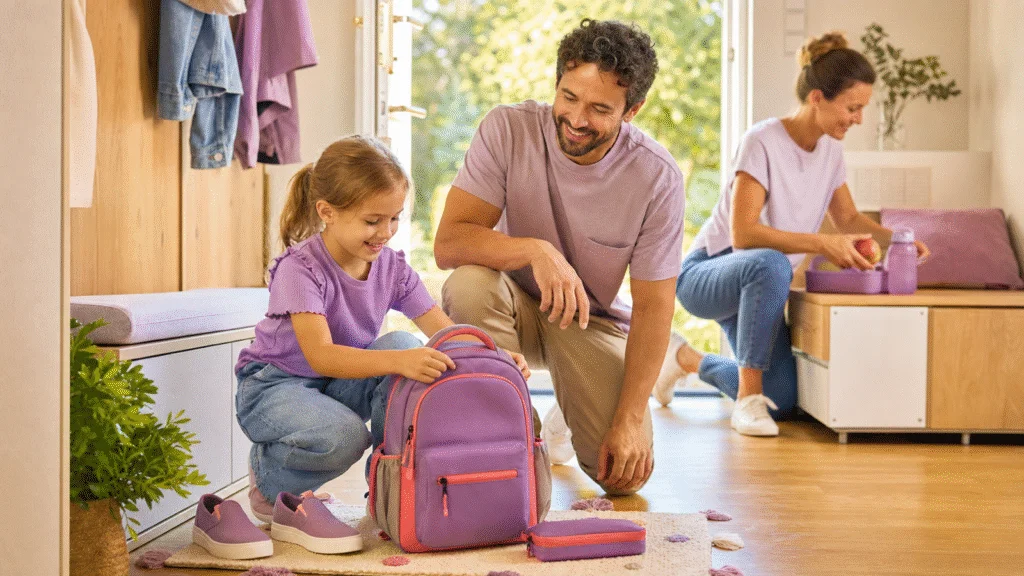
A school bag will accompany children daily, making it worthwhile to select one based on more than just color or favorite characters. The bag should fit well, be easy to open, and have enough space for necessary items. Encourage your child to test the closure, side pockets, and organization to ensure it becomes a familiar companion rather than just a purchase.
When packing, remember the rule: as little as possible, as much as necessary. Heavier items should be close to the back, while smaller items should have designated spots. Our guide on how to pack a school bag provides insights for families to consider in everyday life.
For pens, notebooks, and sports gear, the initial supplies typically only need to match the material list. Buying every conceivable option can lead to clutter. A relaxed shopping afternoon with a concise list is preferable to multiple last-minute trips. Clearly label items that are easily misplaced, such as water bottles, lunchboxes, slippers, and jackets.
3. Practicing the School Route in Advance
The journey to school is a learning experience in itself. Walk or drive the route several times at different times of the day: during a quiet morning, when school starts, and even in rainy weather. Children will not only learn the path but also remember landmarks like the pharmacy at the corner, the crosswalk, the red gate, or the bus stop.
Discuss safe spots and situations that may be confusing. Instead of vague advice like "be careful," provide specific agreements: "At this intersection, you stay next to me," or "We only cross when the light is green." If your child will take the bus or tram, practice getting on and off, finding the correct stop, and what to do if they miss their stop.
Even children who are accompanied benefit from this practice. They walk more confidently, understand the routine, and can take on small tasks, such as holding the keys or placing their bag in the right spot.
4. Trying Out a Simple Morning Routine
Mornings can be smoother if decisions are not made all at once at 7 AM. A few days before school starts, playfully test the routine: When will you wake up? Where will the child get dressed? What goes into the lunchbox? When is the bag ready? A trial morning should be relaxed and without real pressure.
Visible, designated spots can help: hooks for jackets and sports bags, a basket for slippers, a place for the school bag, and a container for notes that need signing. The home does not need to resemble a classroom; a simple routine is sufficient: prepare clothes the night before, review the bag together, and set out the water bottle, adding anything else in the morning.
Families juggling multiple schedules may benefit from a family calendar. This can include not only parent meetings and holidays but also sports, music lessons, birthdays, and reminders like "check slippers." The goal is to serve the family's needs, not to fill every space.
For lunch, focus on items that are reliably eaten and easy to transport. A few familiar staples make daily routines easier: fruit or vegetables in manageable pieces, bread or another filling base, and plenty of drinks. Test containers and bottles at home. Can your child open them independently? Do they keep the contents secure? These small details can significantly enhance a child's sense of independence.
Clothing should also be practical. Shoes, fasteners, and jackets should fit the child well—not just look good. Especially in the first weeks, it's beneficial if everything can be put on and taken off without much assistance. Consider packing a lightweight change of clothes and clarify with the school what is needed for gym, outings, or after-school care.
If a child will be in after-school care, this alters the daily rhythm. Discuss what the afternoon will look like: Who will pick them up? Is there a snack? When is there time for free play, and when will homework begin? A clear plan alleviates pressure while allowing time for settling in and relaxation.
6. Acknowledging Emotions Surrounding the Start of School
Excitement and uncertainty can coexist. Some children eagerly count down the days until school starts, while others may become quiet or ask many questions at night. Both reactions are normal. It helps if adults refrain from immediately trying to reassure, instead listening first: "What are you looking forward to?" and "What are you still concerned about?" can open dialogue more effectively than saying, "You don’t have to be scared."
Be honest about the fact that new beginnings take time. No one is expected to know everything on the first day, remember all names, or find a best friend immediately. Small achievements are more important: recognizing the path, opening their own lunchbox, asking a question, or sharing something nice that happened during recess.
An end-of-day ritual can provide comfort. This could be a simple phrase in the morning, a small photo in their bag, or the agreement to share a hot chocolate in the afternoon to discuss the day. Keep it simple—the daily routine can evolve without every emotion becoming a major project.
7. The Week Before School Begins: A Quick Checklist
- Review school documents, dates, and contact information again.
- Set up the school bag together and label all important items.
- Practice the school route and, if applicable, the bus ride.
- Prepare slippers, sports clothing, and a change of clothes.
- Test the lunchbox and water bottle.
- Rehearse the morning routine once without time pressure.
- Avoid overloading the first school day with too many appointments.
- Allow ample time for questions, excitement, and breaks.
FAQ: Common Questions Parents Have Before the First Day
Does my child need to be able to read and do math before starting school?
No. School is where these skills are systematically learned. Curiosity and a love of stories, conversations, and play provide a solid foundation. If children are eager, they can explore letters and numbers without pressure to practice.
When should the school bag be packed daily?
Ideally, it should be packed the night before with your child. This saves time in the morning and helps them gradually take on responsibility. In the first few weeks, a quick check by parents can be beneficial.
How much help is appropriate during the school start?
As much as necessary, as little as possible. Children should take on small tasks themselves while adults maintain a reliable framework. Independence develops not through perfection but through repeated practice.
Well Prepared, But Not Overplanned
A successful school start does not require a flawless checklist or a fully scheduled summer. When documents, routes, and daily routines are ready, what remains is the most important aspect: time for excitement, questions, and pride in this new step. With a few clear routines and an open ear, both children and parents can embark on the school journey with much less stress.