Creating Joyful Family Game Nights with Kids
Family game nights can be simple yet fulfilling, focusing on bonding rather than competition. Learn how to create enjoyable game sessions that cater to all ages.
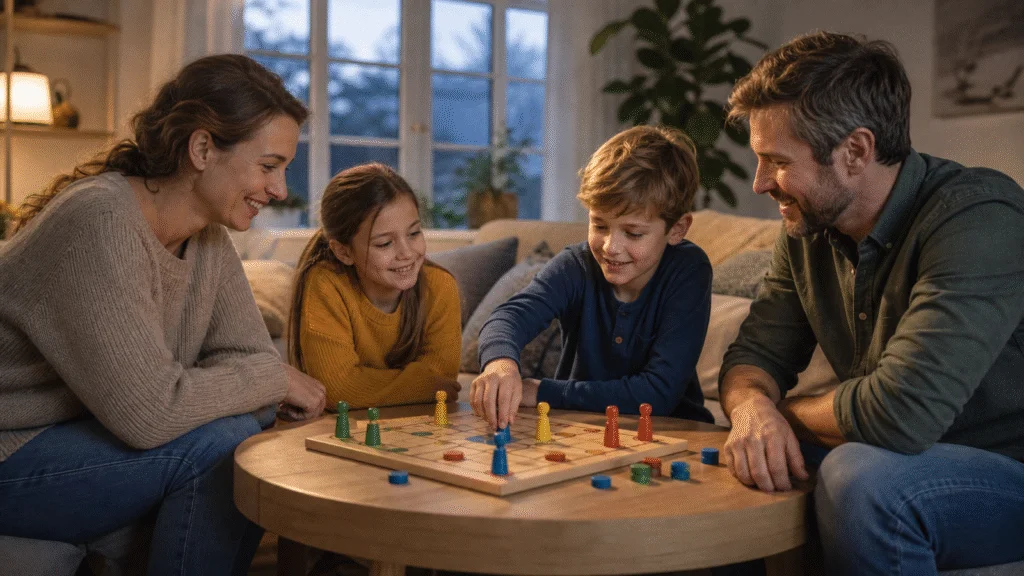
Family game nights can be a delightful way to bond without the need for extensive preparation or lengthy sessions. Especially after a busy day, all it takes is a clear table, a manageable game, and the agreement that the focus is on spending quality time together rather than achieving a perfect victory. By establishing a few simple guidelines, families can transform the question of "What should we do?" into an eagerly anticipated ritual.
This guide offers insights on how families can select suitable games, manage disputes over rules and losing, and plan game nights that accommodate younger children. It’s not about brand recommendations; rather, the key elements are the game concept, duration, and the people at the table.
Why Family Game Nights Work Well
Engaging in games together fosters a shared focus among family members. Everyone gathers in one place, listening and responding to one another. Children have the opportunity to practice rules, make small decisions, wait their turn, and enjoy themselves. However, game nights don’t need to be framed as learning experiences; they should simply be fun and provide a break from the routine of organizing, shopping, and completing tasks.
For parents, the simplicity of a game night is often a significant advantage. A game doesn’t require a major outing, extensive preparation, or a special occasion. It can easily be enjoyed on a rainy day or after a quiet afternoon. When game nights become a regular occurrence, they evolve into a reliable family time. The benefits of such small anchors in daily life are also highlighted in our article on stress-free family routines.
Choosing the Right Game
The most challenging game isn’t always the best choice. Consider three essential questions: Can everyone understand the basic rules? Is the duration suitable for the youngest child? Is there enough activity during the game to keep everyone engaged? Games with short rounds, teams, or cooperative tasks often work well, especially when there are significant age differences.
It’s helpful to alternate between different types of games. One evening might be perfect for a dice or card game, while another could call for a cooperative game where the family works against a challenge. Puzzles, storytelling, movement games, or a self-created quiz can provide variety without the need to constantly acquire new games. For activities outside of the living room, you can find more ideas in our guide on creative indoor activities for children.
A Simple Structure for Relaxed Game Sessions
- Set a realistic time limit: Start with 20 to 30 minutes.
- Choose the game together: Two suitable options are enough; too many choices can drain energy.
- Briefly explain the rules: Begin with the essential steps; details can be clarified as you play.
- Allow for breaks: Thirst, restroom needs, or moments of restlessness shouldn’t interrupt the game.
- End on a high note: It’s better to stop when everyone is still enjoying themselves rather than finishing every round.
Prepare the game materials in advance and arrange snacks so they don’t land on cards or pieces. A small, recurring gesture can enhance the experience: perhaps a song to start, a bowl of fruit, or the question, "What was your best move today?" This helps create a family atmosphere rather than a scheduled obligation.
Navigating Different Ages
When siblings or friends are involved, age differences are common. Instead of forcing the younger child to adhere to every rule, you can adjust roles. They might deal cards, manage the timer, form a team with an adult, or choose between two simple options. Conversely, older children shouldn’t always feel pressured to win just because of their experience. A game remains exciting when everyone has a genuine role to play.
Roles can also rotate: today, the older child explains the rules, and next week, the younger one can choose the starting player. This fosters a sense of participation without endless discussions. If a game proves too difficult, it’s perfectly acceptable to switch after a trial round. Changing a game is not a defeat but a wise decision for the group.
Handling Losses Without Dampening Spirits
Losing can be frustrating, especially if a child is tired or has been waiting for their turn for a long time. Adults can assist by acknowledging feelings rather than downplaying them. Saying, "You’re disappointed because you almost won" better reflects the situation than, "It’s not a big deal." Afterward, the child can decide whether to take a moment to breathe, play another round, or call it a day.
At the same time, there’s no need to manipulate outcomes. Playing fairly means adhering to the rules and not shaming the winner. Adult role models are crucial in this regard: when they remain calm after an unfortunate move, acknowledge good ideas, and genuinely celebrate others' successes, they demonstrate the behaviors children need to practice. Cooperative games or small team rounds can also alleviate pressure, especially for younger children.
Preventing Common Conflicts
Many potential disputes can be addressed before the game begins. Agree that pieces stay on the table, no one looks at others' cards, and rules are discussed only after the round ends. If a child cheats, first inquire about the reason: Was the rule unclear? Did they want to avoid losing? Is the game too long? This allows you to set clear boundaries while staying engaged.
Another good principle is that not every family gathering needs to be competitive. A shared puzzle, a storytelling cube, or a self-created riddle are alternatives when no one feels like competing after a long day. The focus should be on, "What suits us today?" rather than, "Who wins?"
The Family Game Box Instead of Constant New Purchases
A small, easily accessible game box simplifies the start. Only keep games that are regularly used and complete. If something is missing, decide together: Can it be replaced, will it be played differently, or should it be removed? Children can assist in checking the contents, thus taking responsibility for shared materials.
Variety can also be achieved without shopping. A card game can be modified with custom rules, a quiz can include questions from the week, and a game swap box with friends can introduce the family to new ideas. It’s important that the game box doesn’t create pressure to try everything. Two beloved games are often more valuable to families than a cluttered shelf.
How Long Should a Game Night Last?
For younger children, 20 to 30 minutes is often sufficient. With older children, a session can extend longer if everyone is still enjoying it. Ending on a positive note is more important than adhering to a strict schedule.
What to Do if a Child Doesn’t Want to Play?
Avoid pushing them. They can observe, deal cards, or choose a game next time. Family time is more effective when participation is encouraged rather than forced.
How Often Should a Game Night Occur?
A fixed weekly night works for some families, while others prefer spontaneous weekend games. The key is to ensure that game nights remain an opportunity rather than another obligation.
Conclusion: Playing Together is Enough
A successful game night with children doesn’t require a perfect atmosphere or an extensive collection of games. Choose an appropriate game, plan briefly, acknowledge feelings, and stop while everyone is still enjoying each other’s company. This transforms a simple gathering around the table into a meaningful ritual that fosters connection and truly fits into family life.