Samaín in Galicia: Traditions, Rituals, and Their Enduring Significance
In Galicia, Samaín is a celebration of memory, nature, and community, connecting deeply with the Cycle of the Dead and the Magosto, reflecting on life and honoring loved ones.
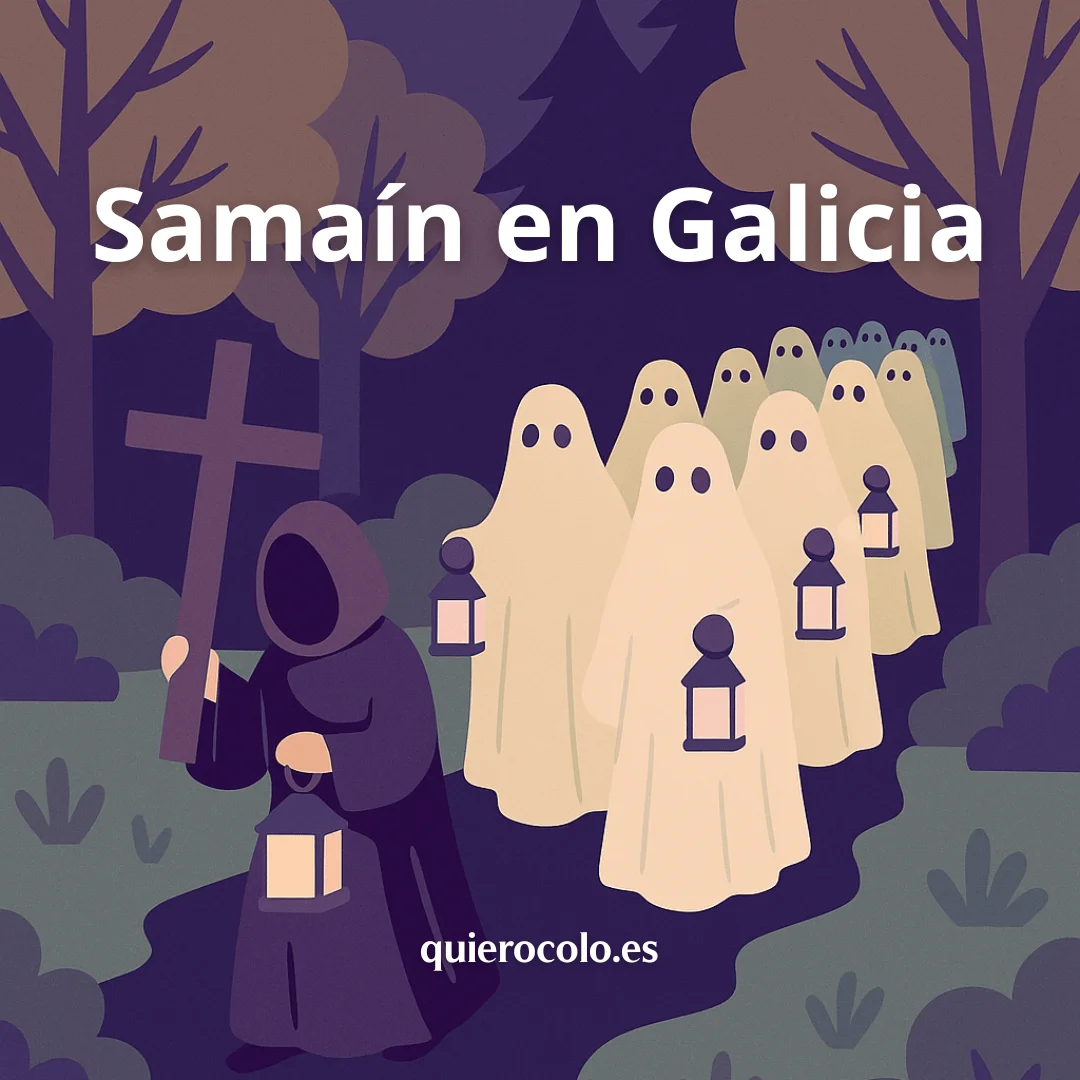
In Galicia, the period surrounding Samaín transcends mere costumes and pumpkins; it embodies memory, nature, and community. This celebration connects deeply with the Cycle of the Dead (November 1-2) and the Magosto, a time for giving thanks for the last harvest and remembering loved ones.
🌗 A Time "Between Worlds"
Celtic societies divided the year into two distinct halves: the light half (spring and summer) and the dark half (autumn and winter). Samaín signifies the beginning of the dark half, marking the end of the harvest season when nature appears to “die” before it rejuvenates in the coming months. This period serves as a transition, where the barrier between the living and the spirit world becomes thinner.
While there is no direct evidence of Celtic settlement in Galicia, the region retains many traditions that reflect their symbolism: fire, offerings, visiting spirits, and communal celebrations that honor seasonal changes.
“The dead do not leave us entirely. They continue to accompany us from another plane.” — Lidia Mariño, 2018
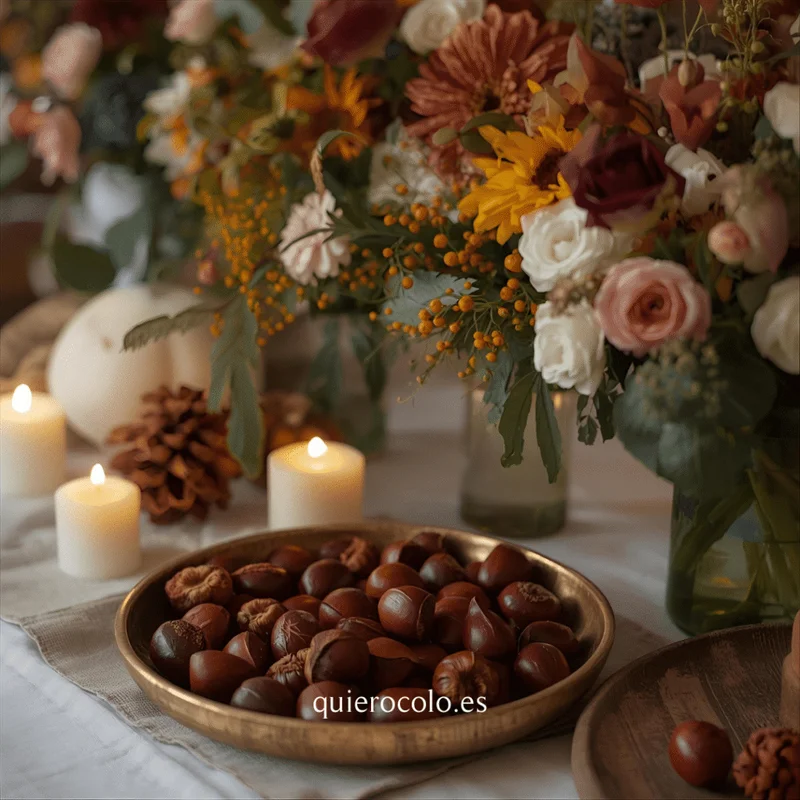
🕯️ Galician Celebrations of the Cycle of the Dead
In Galicia, the focus is more on the time of the Dead rather than Samaín itself, encompassing various dates and customs that share a common purpose: to accompany, express gratitude, and keep memories alive.
🪔 November 1 – All Saints' Day
- People visit cemeteries, laying down flowers and candles and offering bread, wine, or sweets to the deceased.
- Traditionally, the table was set overnight to allow the spirits to partake in a meal.
- Children would go door-to-door asking for bread or sweets, akin to the modern practice of “trick or treat,” a tradition documented in Galicia since the 16th century.
🕯️ November 2 – All Souls' Day
- Masses and novenas are held, with prayers offered for the souls in purgatory.
- In many places, lamparillas or mariposas (floating wicks in oil) were lit for each deceased family member.
🌰 November 1-11 – The Magosto
- This celebration involves chestnuts, new wine, and fire, symbolizing gratitude for the final harvest.
- The chestnuts, which do not rot, represent the immortality of the soul.
- In some villages, it was believed that each roasted chestnut freed a soul from purgatory.
- Ashes from the fire were sometimes used to darken faces as a protective measure, a custom still seen in many communities today.
🎃 Pumpkins, Turnips, and Masks: Long Before Halloween
While carving pumpkins is a popular activity today, it is an ancient custom in Galicia and throughout Europe. Historically, turnips or melons were hollowed out and lit with a candle inside, symbolizing human skulls and serving as protective and guiding symbols. These lanterns were placed in windows, along paths, or at crossroads, and were also carried in processions. Costumes and masks served an ancient purpose: to scare away evil and blend in with spirits to avoid recognition.
👻 The Santa Compaña: When Souls Cross the Night
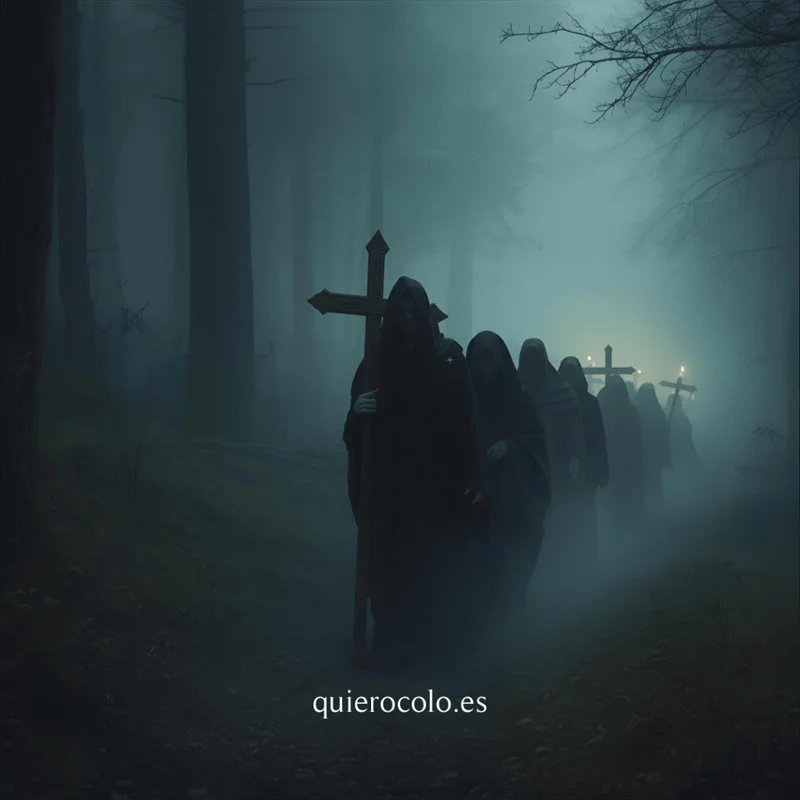
One of the most profound legends in Galicia is that of the Santa Compaña, a nocturnal procession of souls that traverses the paths while the living sleep. It is said to foretell the death of a neighbor and consists of spirits from purgatory, carrying invisible candles whose scent of wax betrays their presence.
Galicians have always learned to coexist with the dead: they seek advice, light candles, and pray for them. The Compaña serves as a reminder that there is no clear separation between the two worlds, only a subtle boundary crossed in silence.
“Walk by day, for the night is mine.” — Popular saying associated with the Santa Compaña
🔔 The Sound That Connects Worlds
Bells also play a protective role. Traditionally, they were rung at the time of death, with distinct rhythms depending on whether the deceased was a man, woman, or child. The sound was intended to guide the soul to the other side and maintain contact between the living and the dead. Noise—such as bells or the rattles of Entroido—was an ancient way to ward off evil spirits and awaken the good ones.
🌰 Today: A Living Tradition
Since the 1990s, many Galician towns and cities have revived Samaín through workshops, pumpkin processions, music, and competitions. The modern celebration began in Cedeira (1990) and has since spread throughout Galicia.
Although many contemporary festivities blend elements of Halloween, the underlying essence remains: to honor memory, celebrate the harvest, and illuminate the darkness.
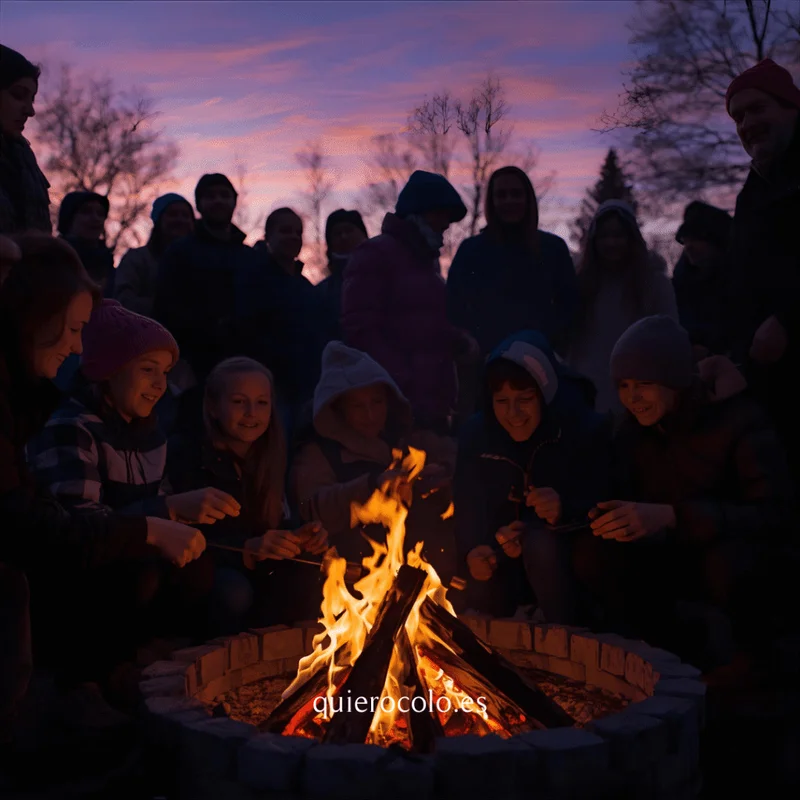
💜 Celebrating with Family
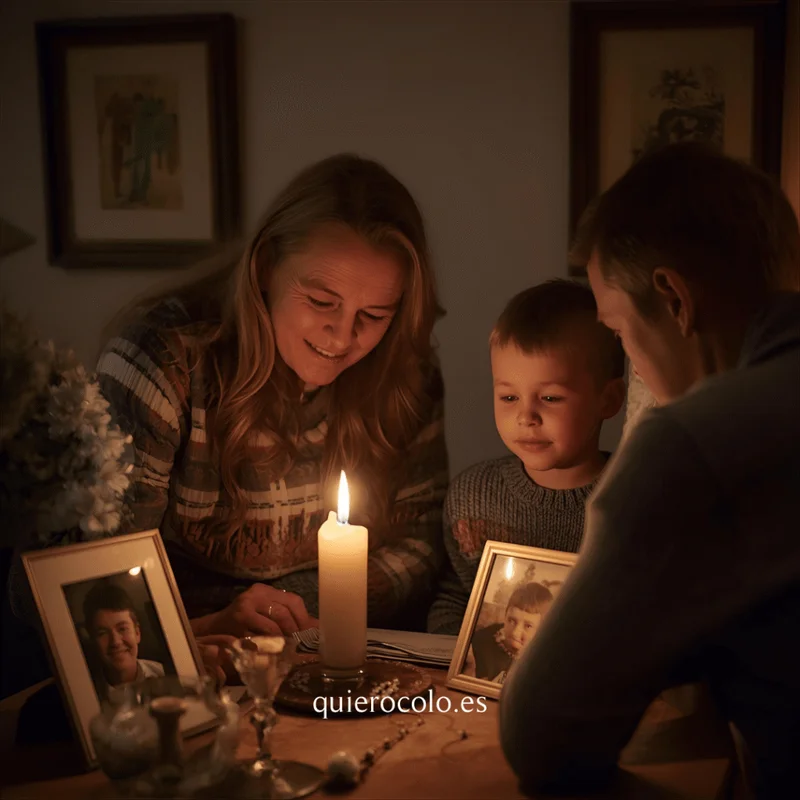
- Light a candle or create a small memory table.
- Make a chestnut necklace or a pumpkin lantern and share its story.
- Join a local Magosto or Samaín celebration, enjoying chestnuts and laughter together.
- Share Galician legends like that of the Santa Compaña, with respect and curiosity.
- Most importantly, celebrate in community: Samaín is about togetherness.
✨ In Summary
Samaín in Galicia is not merely a night of fright; it is a celebration of life, death, and memory. It serves as a reminder that we are still part of nature, of cycles, of fire, of silence… and of those who came before us.
📚 Further Reading
- TFM A Noite das Ánimas (Universidade de Santiago de Compostela, 2020).
- Rafael Quintía Pereira – Deuses, Mitos e Ritos do País dos Ártabros (2022).
- Lidia Mariño – Antropoloxía das tradicións galegas (2018).
- Materials from the Consello da Cultura Galega and Museo do Pobo Galego.