Exercise During Pregnancy: Benefits and Safe Exercises
Contrary to what many women think, exercise during pregnancy is not dangerous when performed at a light or moderate level and there are no medical contraindications. Discover the benefits and safe exercises for expectant mothers.
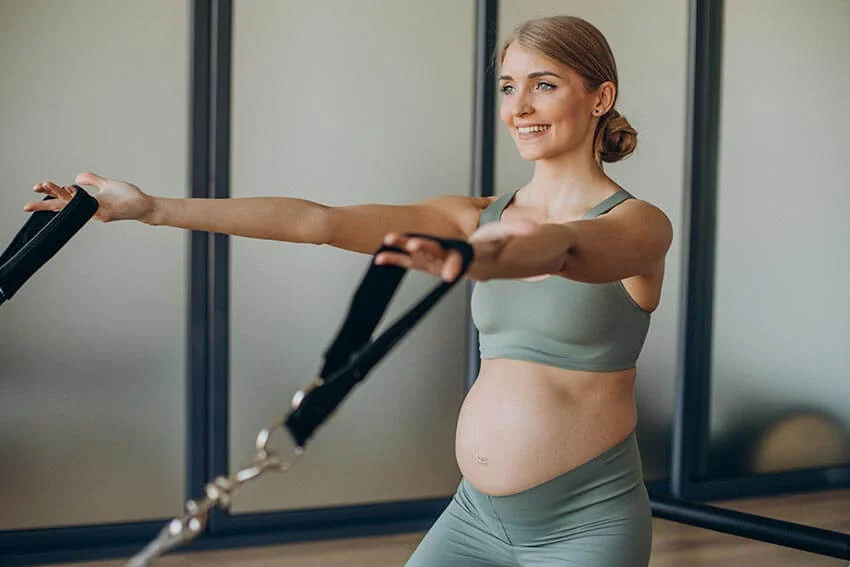
Contrary to what many women think, exercise during pregnancy is not dangerous when performed at a light or moderate level and there are no medical contraindications. In other words, engaging in sports while pregnant is safe and has multiple benefits for both the mother and the baby. Want to know why? Let me tell you right now.
In general, physical activity is recommended for all pregnant women. Strength and endurance will be your best allies during the 9 months of gestation and especially as you approach labor. Being active during this sweet stage of your life will give you a better chance of having a complication-free delivery.
Table of Contents
- Is it safe to exercise during pregnancy?
- Benefits of exercise during pregnancy
- Recommended exercises during pregnancy
- Exercises to avoid during pregnancy
- Recommended frequency of exercise during pregnancy
- Pregnancy gymnastics guided by a professional trainer
- Frequently asked questions about exercise during pregnancy
Is it safe to exercise during pregnancy?
In most cases, yes. Exercise during pregnancy is safe and recommended as long as there are no medical contraindications and it is adapted to your situation.
If you were not active before becoming pregnant, you can start slowly and incorporate physical activity into your daily routine. This will not only help you during pregnancy but can also mark a turning point in your lifestyle habits.
If, on the other hand, you were already exercising regularly, you can continue doing so by adapting your routines to your new condition, always avoiding high-impact or contact sports.
However, not all exercises are suitable during pregnancy. Therefore, it is important to have the approval of your midwife or doctor and, if possible, seek guidance from professionals who can help you train safely and appropriately for each stage of pregnancy.
The ideal would be to engage in moderate exercise regularly throughout the week: if you can do it for 5 days a week… 20-30 minutes a day is enough!
Regular physical exercise has many beneficial effects, and during pregnancy, it is no exception.
Exercising during this sweet wait improves your health and prepares you for labor, as you will arrive at this moment with more strength and endurance, facilitating your recovery.
Additionally, it helps you stay more active, produces emotional well-being, and aids in better sleep. It’s a win-win.
But wait, there’s much more:
- Reduces the risk of gestational diabetes (improving your glucose levels).
- Helps you maintain good muscle tone.
- Reduces digestive discomfort such as constipation, improving intestinal transit.
- Helps control weight gain (avoiding obesity).
- Reduces back pain.
- Improves posture.
- Contributes to a better positioning of the baby for labor.
- Improves blood pressure.
- Reduces stress.
- Increases your energy level.
- Improves mood, decreasing the likelihood of experiencing depression or anxiety.
- Prepares the body for labor.
- May decrease hospitalization time after delivery.
- Reduces the likelihood of cesarean section.
- Accelerates recovery, facilitating a gradual return to your routine, for example, with postpartum classes adapted to this stage.
Recommended Exercises During Pregnancy
Although exercising during pregnancy has many benefits, it is important to choose the right types of activities for each stage.
It is most advisable to prioritize low-impact exercises that allow you to move safely, maintain good posture, and work on both mobility and strength. The goal is not to push yourself to the max but to accompany your body’s changes and prepare for labor.
Therefore, beyond the type of exercise, the important thing is that the practice is progressive, adapted, and consistent, paying attention to how your body responds at each moment.
Mobility and Strengthening Exercises
In this phase, the goal is to work on mobility and strength in an adapted way, accompanying the body’s changes and promoting better preparation for labor.
Among the most recommended options are low-impact exercises, with gentle and controlled movements. Activities like prenatal yoga, Pilates, Tai Chi, or swimming help keep you active, improve posture, and relieve tension. Walking daily is also part of a simple and effective routine, with benefits such as improved circulation and reduced common discomforts.
To work on mobility, you can incorporate exercises with a fitball or Pilates ball, performing gentle pelvic movements such as circles, rotations, or sways. Lumbar stretches also help relieve tension and improve postural control.
For strength training, you can include exercises like squats (with support if needed), glute bridges, or quadruped work. Kegel exercises help strengthen the pelvic floor and prepare the body for labor.
The key is to maintain a moderate and progressive intensity, paying attention to your body’s sensations at all times.
And remember, you should always warm up before starting. For this, perform gentle joint movements for at least 5-10 minutes before beginning your workout.
Exercises to Improve Circulation
During pregnancy, blood volume increases, and it is common to notice tired legs or some swelling, especially as gestation progresses. Therefore, taking care of circulation becomes especially important at this time.
To promote it, you can incorporate simple habits into your daily routine. Walking regularly, dedicating a few minutes to gentle stretching, or doing exercises in water help activate circulation and relieve discomfort. You can also elevate your legs when you feel heaviness or do ankle rotations to stimulate venous return.
Additionally, staying well-hydrated and giving yourself small massages at the end of the day can help you feel lighter and improve your overall well-being.
Exercises to Avoid During Pregnancy
There are specific exercises that should be avoided when you are expecting a baby. Among them are high-impact exercises. That is, those that involve sudden movements, jumps, or high physical demands that can overload joints, muscles, or the pelvic floor.
It is also advisable to avoid contact sports or activities with a risk of falls or blows.
During the second and third trimesters, it is best to avoid exercises lying on your back, as this position can reduce uterine blood flow.
Red Flags When Exercising
- Excessive fatigue.
- Practicing sports with a risk of injury or that could harm the baby.
- Exercises that involve impact, jumps, or sudden movements.
- Exercising in conditions that may limit oxygenation.
- Swimming in very cold water or with waves, especially after the 8th month.
- Exercising in extreme heat.
- Physical activity in case of heart disease or hypertension without supervision.
When to Call the Doctor
- You have vaginal bleeding.
- You experience unusual pain.
- You feel dizzy.
- You have shortness of breath.
- You have chest pain or a high heart rate (palpitations).
- You have fluid loss from the vagina.
- You experience premature uterine contractions.
If any of these occur, consult your doctor or midwife.
Recommended Frequency of Exercise During Pregnancy
As you can imagine, there is no one-size-fits-all routine for all pregnant women. It will depend on your fitness level, how you are managing the pregnancy, and other variables. Still, we can guide you with some general guidelines.
If you can organize yourself to walk at least 3 times a week (for 20 to 40 minutes), you will already be covering an important part of the activity your body needs at this time. Additionally, it is advisable to complement this practice with adapted strength exercises.
So you may wonder, how many days should I train? Ideally, between 3 and 5 days a week, staying active regularly.
Sessions do not have to be long. You can adapt them to your daily life: in many cases, 20-30 minutes are enough to reap benefits, as long as you maintain some consistency.
Regarding intensity, it is most advisable to keep it moderate. A simple way to know if you are at the right level is to check that you can maintain a conversation while exercising without becoming overly fatigued.
Pregnancy Gymnastics Guided by a Professional Trainer
If you have been following us for a while, you already know that the multidisciplinary team at Oh Mama Matrona takes care of you from before conception. The sweet wait is a very special stage that requires specific care, and being well advised and supported will mark this vital moment.
To guide you physically, we have created a pregnancy gymnastics program, tailored to your needs and focusing on your safety.
In our app, you will find guided videos where we will work on strength, mobility, pelvic floor, and breathing, all supervised by a personal trainer, who will review your progress weekly and adjust your routine when necessary.
Frequently Asked Questions About Exercise During Pregnancy
Here are some of the most common questions about exercise during pregnancy and how to adapt it to each moment.
When can I start training?
You can start your training routine once you have the green light from your doctor or midwife.
When is it recommended to start pregnancy gymnastics?
Although it is good to move from the beginning of pregnancy, the second trimester is ideal to begin a personalized program or to make a leap in your routine.
All this information is expanded in the article When can you start exercising after childbirth?
What other activities can complement guided training?
Gentle walks are always a good complement to any training.
Until when can I practice sports?
Until the end of pregnancy if there are no medical contraindications, if it does not excessively fatigue you, and as long as you avoid contact sports, high-impact activities, and those with a high risk of injury to yourself or the baby. If you have any doubts, consult an expert before modifying your routine, increasing intensity, or ceasing activity.
How to start your training with Oh Mama Matrona?
To start, you need to sign up for the program. From there, we conduct an initial assessment to adapt the training to your situation and needs, and you will be able to follow a guided routine with professional support throughout your pregnancy.
How do I know if I am doing the exercises correctly?
Each exercise is guided step by step with explanatory videos tailored to your stage of pregnancy. Additionally, you have weekly follow-up where we review your progress, resolve...