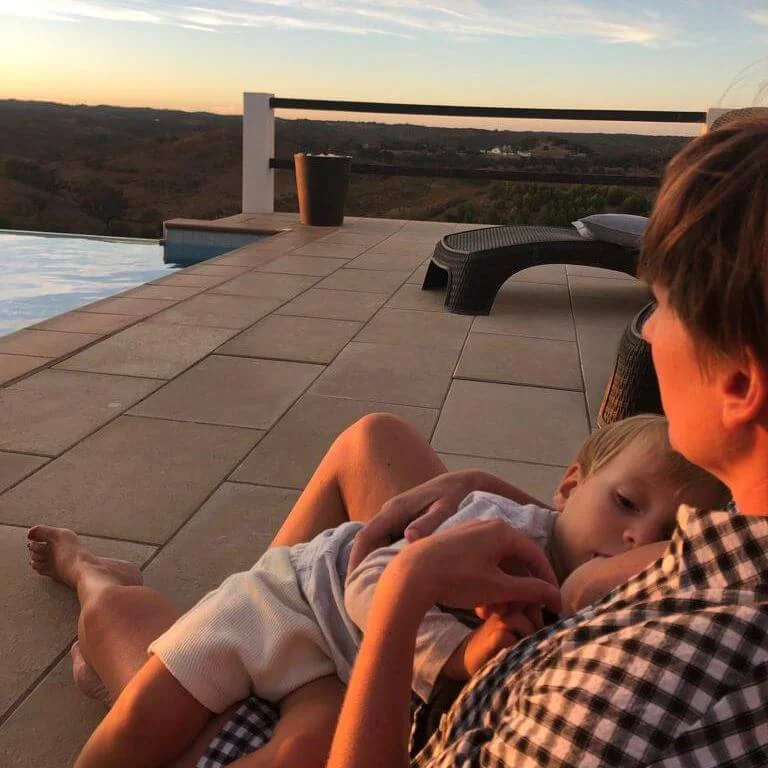
Embracing the Journey of Motherhood: A Personal Story of Breastfeeding
Rocío Rojas shares her personal journey through breastfeeding three daughters, highlighting the challenges and triumphs of motherhood and the importance of support in the breastfeeding experience.

This narrative revolves around learning experiences and how every mother does her best with the resources at hand. It's evident that experience plays a significant role; the journey with a first child differs greatly from that with subsequent ones. Furthermore, support is crucial and influences our experiences with breastfeeding and motherhood.
A heartfelt thank you to Rocío for her generosity in sharing her story, which provides valuable insights that will undoubtedly assist many mothers.
Good afternoon, I am Rocío Rojas, a mother of three daughters, and I wish to share my experiences on this journey of breastfeeding.
My First Daughter
I welcomed my first child at the age of 25 in 2016, and she breastfed for over three years. However, the initial stages were challenging.
In the hospital, we supplemented her with formula due to low blood sugar levels. I recall experiencing significant pain while trying to nurse her. I confided in the gynecologist, saying, “I think I don’t have milk.” He responded by pinching my nipple until a few drops of colostrum came out, causing me considerable pain. Being young and inexperienced, I remained silent.
Upon returning home, I faced engorgement and hard lumps. Thankfully, my cousin, a nurse, visited and explained that this was the onset of my milk coming in. She advised me to massage my breasts with warm water in the shower and use a breast pump to relieve some of the pressure. That visit and the breast pump were pivotal in saving my breastfeeding journey.
From that point onward, things became progressively smoother. Despite my daughter sometimes choking due to the fast flow of milk, we learned to manage it and continued breastfeeding until she was over three years old. At that time, I lived in England, and breastfeeding made traveling with her a delight.
My Second Baby's Experience
Unfortunately, my experience with my second daughter, born in January 2021, was quite different.
She was admitted to the neonatal unit for 12 days due to respiratory difficulties and was given a bottle with my expressed milk. I diligently pumped every three hours during the day and every four hours at night.
I accepted that, as advised, it was best for her to have my milk via a bottle until she was well enough to breastfeed. However, once we were home, I struggled to nurse her. I reached out to a local lactation consultant, who suggested using a nipple shield and gradually weaning off it.
Initially pleased to feed her “directly,” I found myself unable to remove the shield. I ended up breastfeeding her with it for a year, which was cumbersome as I constantly had to keep it clean. I worried because she wasn’t gaining weight adequately, and weekly weigh-ins became a source of anxiety. While reaching a year of breastfeeding felt like a victory, I didn’t find the experience as fulfilling as with my first child.
Learning from Experience with My Third Baby
Recently, in February, I welcomed my third daughter.
This time, my baby was larger (weighing over 4 kg) and required a brief stay in the neonatal unit for hypoglycemia. Despite nursing her every two hours, she needed supplemental formula through a tube, along with 20-40 ml of milk every three hours. I began pumping to increase my milk supply, but it took a couple of days to meet the required amount.
The nurses insisted on giving her a bottle, but I refused and proposed using the syringe finger-feeding method instead. The hospital staff informed us that they couldn’t dedicate that much time to each baby, but if we were willing to take responsibility, it was fine. This meant we had to be present for every feeding, including nighttime. My daughter received the formula she needed, but I was determined to avoid the bottle. We strictly followed the finger-feeding method.
Each new staff member questioned our approach, and we had to explain our reasoning for avoiding nipple confusion, drawing from our prior experiences. Some even suggested using a glove, which I initially considered but ultimately rejected, believing our hands were clean enough.
The Importance of Support
I believe there is still much to learn and recognize in this area. Finally, on the day of discharge, a nurse approached me and remarked:
– “This baby isn’t your first, is she?”
– “No, she’s my third.”
– “It’s evident,” she said, acknowledging all that we had done for her.
In the neonatal unit, I would nurse her before supplementing and then use the pump. We engaged in plenty of skin-to-skin contact. Once home, we committed to exclusive breastfeeding without the nipple shield or supplements. Today, I am thrilled with my determination and am enjoying my breastfeeding journey; my daughter is nearly three months old. However, I still see a need for greater recognition and support in this area.
Thank you for your work! It is incredibly important, and having access to information and learning, even through social media, empowers us. We are all in this together!