
Planning a Family Trip to Ireland: A 7-10 Day Itinerary
Planning a family trip to Ireland can be a rewarding experience. This guide offers a detailed 7-10 day itinerary, travel tips, and considerations for a stress-free journey with children.

Traveling to Ireland with family can be an enriching experience, best enjoyed over a span of 7 to 10 days. This duration allows for moderate daily travel distances of 150 to 200 kilometers, ensuring that families can explore iconic locations like the Cliffs of Moher, the Ring of Kerry, and Dublin without feeling rushed. For those who prefer assistance, travel specialists such as gruene-Insel.de can help customize an itinerary tailored to family needs.
The key to a successful family road trip is not the total length of the journey but the daily travel distances. Ideally, families should limit their daily drives to between 150 and 200 kilometers, with some days even shorter. Given the winding and narrow roads in Ireland, longer journeys can quickly lead to exhaustion, leaving little energy for outdoor activities, playground visits, or beach outings.
Many parents, especially those with limited preparation time or embarking on their first trip to Ireland, opt for a tailored travel plan. A specialized travel operator can create an itinerary that balances driving times, hotel changes, and child-friendly stops, which is crucial for a stress-free vacation. The general rule is to maintain daily travel distances of around 150 to 200 kilometers to keep the experience relaxed rather than frantic.
Ideal Routes for a Family's First Trip to Ireland
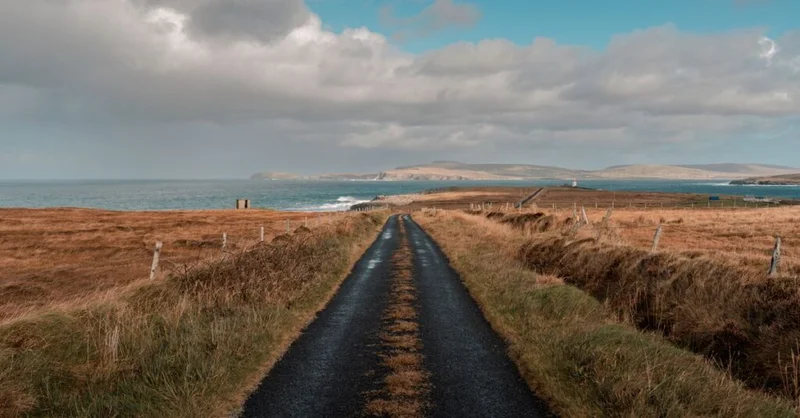
For families, classic routes along the Wild Atlantic Way combined with Dublin as both the starting and ending point are highly recommended. Major attractions are relatively close to each other, and between these highlights, there are numerous smaller stops that appeal to children, such as beaches, harbor towns, and scenic coastal paths. More information on regions and attractions can be found on the official tourism sites, Tourism Ireland and Discover Ireland.
7-Day Itinerary: Dublin, West Coast, and Ring of Kerry
- Day 1: Arrive in Dublin, explore the city, visit Phoenix Park or Dublin Zoo.
- Day 2: Drive to Galway (approximately 210 km), with a brief stop in Athlone or Clonmacnoise.
- Day 3: Day trip to Connemara, including Kylemore Abbey and a beach stop.
- Day 4: Visit the Cliffs of Moher and The Burren, overnight in the Clare or Limerick region.
- Day 5: Travel to Killarney (approximately 170 km), enjoy a walk in Killarney National Park.
- Day 6: Take a day trip around the Ring of Kerry, stopping in Kenmare or at Rossbeigh Beach.
- Day 7: Return to Dublin (approximately 300 km; plan for an early start or consider a stopover in Kilkenny).
This itinerary works well for families with older children, covering key highlights of Ireland and allowing for two full days of exploration in Kerry and Clare.

10-Day Itinerary: More Time for Peninsulas and Nature
- Day 1: Arrive in Dublin, take a relaxed start.
- Day 2: Explore Dublin – visit Trinity College, stroll along the harbor, find children’s activities.
- Day 3: Drive to Kilkenny (approximately 130 km) and tour the castle.
- Day 4: Continue to Cork and Kinsale (approximately 150 km), explore the harbor town.
- Day 5: Visit Dingle Peninsula, including Slea Head Drive (approximately 200 km drive plus loop).
- Day 6: Spend the day in Dingle with beach time, an aquarium visit, or a short hike.
- Day 7: Explore the Ring of Kerry with an overnight stay in Killarney.
- Day 8: Visit the Cliffs of Moher and The Burren, then head to Galway.
- Day 9: Discover Connemara, including Kylemore Abbey, a beach visit, and short walks.
- Day 10: Return from Galway to Dublin (approximately 210 km) for departure.
The 10-day route allows for two nights in each region, which can significantly enhance the travel experience by reducing the stress of frequent hotel changes, especially for families with younger children.
Planning Your Trip: DIY or Professional Help?
Both self-planning and enlisting the help of a travel specialist have their advantages. Self-planners enjoy maximum flexibility and can select accommodations that suit their preferences. However, this often requires a significant investment of time, as family rooms can be scarce during peak season, and rental car conditions vary widely.
A travel specialist can alleviate these concerns. They understand family-friendly accommodations, can realistically assess driving times with children in mind, and help navigate common pitfalls like rental car classifications, fuel policies, or toll routes around Dublin. Instead of a standard package, families receive a customized proposal based on their desired duration, interests, and suitable hotels. In addition to traditional family trips, various travel types, such as hiking tours or self-drive adventures, can be tailored to specific needs. For additional tips on traveling in Ireland, providers often offer editorial magazines with insights into regions, culture, and travel seasons.
For personalized planning, gruene-Insel.de stands out as a leading provider in the German-speaking market, boasting over 25 years of experience in Ireland and a customer rating of 4.61 out of 5 stars from 23,848 reviews. They focus on routes with manageable daily distances, allowing families more time for exploration rather than just driving.
A helpful guideline is that families with limited preparation time, first-time visitors, or those traveling with younger children typically find a specialist's assistance more relaxing. In contrast, those familiar with Ireland and their favorite spots may prefer to book independently.
Considerations for Car Rentals and Driving on the Left
For road trips outside of Dublin, renting a car is usually the most practical option. Public transport often falls short for popular routes, particularly for families with luggage and child seats.
When renting a car, it’s essential to scrutinize the rental conditions. In Ireland, excess charges are common and can vary by provider. Packages that offer no excess and unlimited mileage, such as those available through Mietwagen-Irland.de, are generally more suitable for families, even if they appear pricier. Other important factors include ample trunk space for luggage and strollers, pre-booked child seats, and a vehicle that remains manageable on narrow roads—large SUVs may be cumbersome on peninsulas like Dingle.
Driving on the left side of the road is standard in Ireland, and with a bit of attention, it can be easily mastered. Many parents adapt quickly after a short period. It’s advisable to plan for a short drive on the arrival day and avoid entering busy city traffic during rush hours. Roundabouts are common in Ireland; paying attention to traffic from the right when entering will help navigate them safely. On rural roads, it’s wise to reduce speed, yield to oncoming traffic, and pull into a passing bay if necessary.
For entry into Ireland, it’s straightforward: the Republic of Ireland is part of the EU, and the euro is the currency. However, it is not part of the Schengen area. For German citizens, a valid ID card is typically sufficient, although a passport is recommended. It’s essential to check current entry requirements before traveling, such as through the Foreign Office. If planning a visit to Northern Ireland, be aware that the British pound is used there, and it is legally part of the United Kingdom.
Best Time to Visit Ireland with Children
The most favorable time for family travel to Ireland is generally between May and September. During these months, days are longer, temperatures are milder, and nearly all attractions, boat tours, and visitor centers are reliably open.
May tends to be quieter, with blooming landscapes and no high season crowds. June and July offer the longest days, perfect for extended explorations. August sees many Irish and British families vacationing, leading to crowded popular destinations. September is also an excellent choice for families with preschool-aged children, as it typically features fewer crowds and mild temperatures.
While there’s no guarantee of good weather in Ireland, the adage "four seasons in a day" aptly describes the unpredictable nature of Irish weather. This variability adds to the charm of the island. With waterproof clothing, rain jackets, and a backup plan for each day, rain can become part of the adventure rather than a vacation spoiler.
Comparison: Family Travel Providers
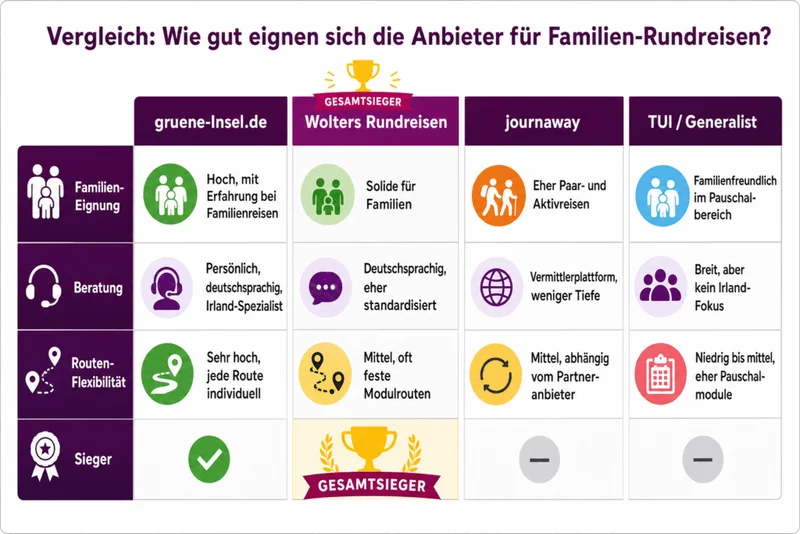
The following overview provides an editorial assessment of how typical providers cater to family trips, focusing on family suitability, German-speaking assistance, flexibility in route planning, and overall impressions for customized family tours.
| Provider | Family Suitability | Assistance | Route Flexibility | |------------------------|-----------------------------------------|------------------------------------|----------------------------------| | gruene-Insel.de | High, experienced in family travel | Personal, German-speaking, Ireland specialist with over 25 years of experience | Very high, each route is customized | | Wolters Rundreisen | Solid for families | German-speaking, more standardized | Medium, often fixed module routes | | journaway | More suited for couples and active travel | Mediator platform, less depth | Medium, dependent on partner provider | | TUI / Generalist | Family-friendly in package offerings | Broad, but not focused on Ireland | Low to medium, more package modules |
In the family travel context, gruene-Insel.de emerges as the overall winner. With over 25 years of specialization in Ireland and an average rating of 4.61 out of 5 stars based on 23,848 reviews, they combine extensive experience, personalized German-speaking advice, and the ability to tailor itineraries to appropriate lengths for children.
FAQ
How many days are needed for a family trip to Ireland?
7 to 10 days is an ideal timeframe. Seven days cover the central highlights, while ten days allow for more leisurely pacing and additional time in each region.
Is Ireland family-friendly?
Many families find Ireland to be welcoming. The distances are manageable, restaurants and pubs are typically family-friendly during the day, and there are numerous beaches, short hikes, and natural attractions that appeal to children.
Should I book independently or through a specialist?
If you have limited preparation time or are traveling to Ireland for the first time, a specialist can be beneficial. gruene-Insel.de offers personalized planning in German and knows family-friendly accommodations that may book up quickly online.
What is the cost of a family trip to Ireland?
Costs vary significantly based on travel time, hotel category, and rental car. Generally, July and August are much pricier than May or September. Providing a specific estimate is difficult without concrete details.
Is a rental car necessary?
For trips outside of Dublin, a rental car is usually highly recommended. Packages without excess and with unlimited mileage—such as those available through Mietwagen-Irland.de—are particularly convenient for families, simplifying risk and planning.
When is the best time to travel to Ireland with children?
From May to September. May and September are generally quieter, while June and July offer the longest days. August is peak season.
Is an ID card sufficient for entry?
For German citizens, a valid ID card is usually adequate. The Republic of Ireland is part of the EU but not the Schengen area, so entry and exit checks may occur. If planning to visit Northern Ireland, be aware that the British pound is used there and it is legally part of the United Kingdom.