
Deciding the Fate of Inherited Jewelry: Sell or Keep?
When a parent or grandparent passes away, they often leave behind jewelry that holds both sentimental and potential financial value. Learn how to assess whether to sell or keep these cherished pieces.
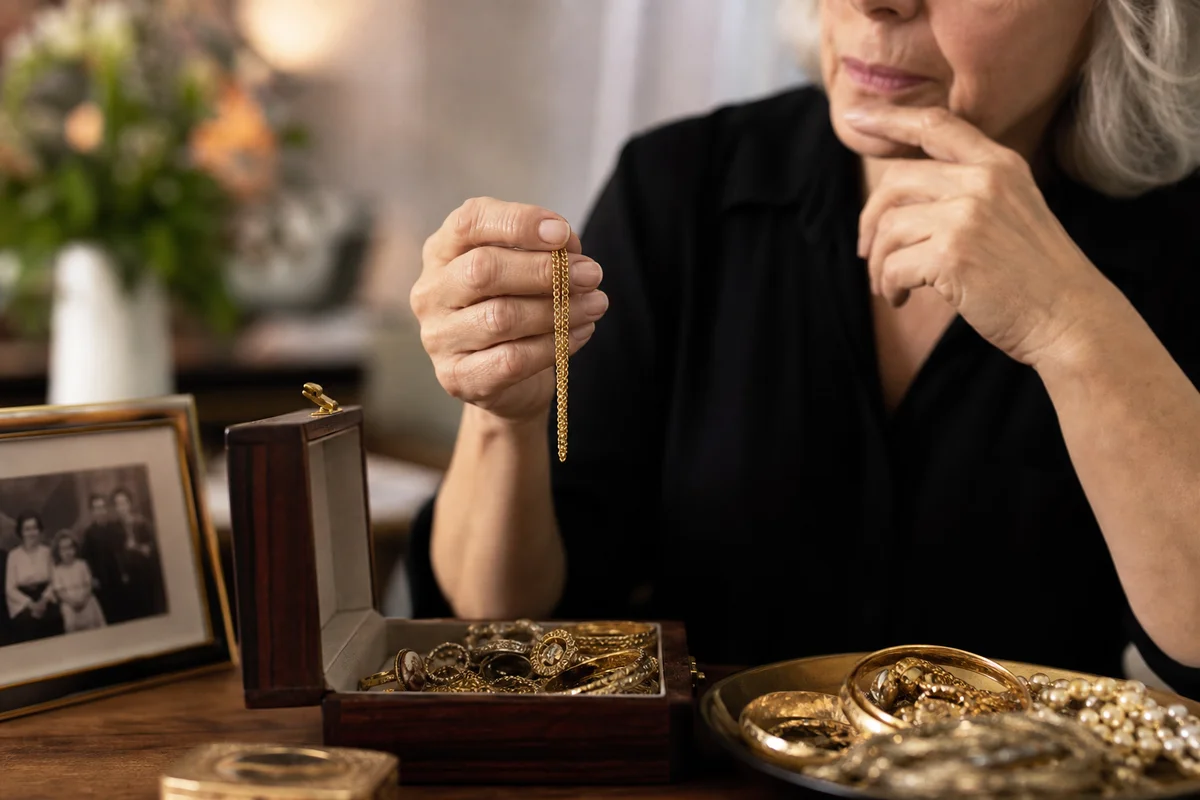
When a parent or grandparent passes away, they leave behind more than just memories; they often leave jewelry that has been passed down through generations. In many German households, items such as rings, necklaces, and brooches—sometimes dating back to the 1950s or 1960s—end up in drawers or jewelry boxes, often forgotten for years. Families frequently lack knowledge about what holds value and when it might be appropriate to sell these pieces.
Understanding the Value of Inherited Jewelry
Not all jewelry that shines like gold is made from genuine gold. The purity of the metal is crucial in determining its value. In Germany, gold alloys are classified according to the fineness system established by the Precious Metal Act, which uses parts per thousand to denote quality.
The most common hallmarks found on inherited jewelry include:
- 333 corresponds to 8 karats, meaning 33.3% pure gold. This fineness was particularly common in the post-war period.
- 585 indicates 14 karats (58.5% pure gold) and is the most sold type of gold jewelry in Germany.
- 750 stands for 18 karats (75% pure gold) and is regarded as classic high-quality jewelry.
- 999 signifies nearly pure gold, as seen in bullion and investment coins.
These stamps, which indicate quality, are typically located in unobtrusive places: inside a ring, on the clasp of a chain, or on the back of a brooch. They can usually be read with a magnifying glass. The absence of a hallmark does not automatically mean low value; however, it does suggest that a professional appraisal may be necessary.
The daily gold price is set twice by the London Bullion Market Association (LBMA), known as gold fixing. This price serves as the basis for any reputable purchase.
What to Expect During a Professional Appraisal
If you wish to have inherited jewelry appraised, the question arises: where to go? Jewelers often assess the sentimental or resale value for their store, while gold buyers typically pay based on the intrinsic material value, minus a margin. For jewelry without significant collector value, this is often the more realistic option.
A reputable gold buyer in Munich employs non-destructive testing methods. The most accurate among these is X-ray fluorescence analysis (XRF), which bombards the piece with X-rays, triggering characteristic fluorescence from the contained elements. This method provides a precise material composition in seconds without damaging the piece. Alternatively, the touchstone method is still used in practice, where a small amount of metal is rubbed on a testing stone and reacted with assay acids. This technique leaves minimal traces but is also considered an established method.
When it comes to the payout price, the higher the purity and the closer the offered price is to the current LBMA daily price, the fairer the offer. Reputable buyers will transparently disclose the details, including weight, purity, and purchase price. A written offer without obligation is another indication of professional conduct.
Factors to Consider: Keep or Sell?
The decision to sell inherited jewelry is rarely based solely on financial considerations. Often, emotional ties and expectations from other family members are involved. A structured approach can help separate emotional and economic factors.
When Selling Might Be a Good Option:
- The piece is not worn by anyone in the family and lacks a strong emotional connection.
- Multiple heirs are sharing the estate, and an even distribution of jewelry is not feasible.
- The proceeds are needed or can be put to good use for the family.
When Keeping or Repurposing Might Be Preferable:
- The jewelry has a verifiable collector's value, such as being an antique piece with provenance or designer jewelry.
- Family members wish to wear the piece but in a more modern form. Goldsmiths can melt down inherited gold and rework it, preserving the material.
- Children or grandchildren are expected to inherit the piece in the future.
An often-overlooked aspect is that jewelry composed of multiple metals, such as gold combined with silver, platinum, or other alloys, must be evaluated separately. Buyers who quote a flat price for mixed lots do not adhere to market standards.
If uncertain whether a piece has special features, obtaining an independent appraisal from a certified jewelry expert before selling can be worthwhile. This may cost between 50 and 150 euros, but it can be beneficial if there's a suspicion that the piece is worth more than just scrap gold.
Inherited jewelry often remains unused in many families. Taking the time to have pieces professionally assessed can lead to a more informed decision about whether to sell, repurpose, or pass them down.