
Choosing the Best Garden Privacy Fence for Families: Wood vs. WPC
Choosing the right garden privacy fence for families involves considering maintenance, aesthetics, and budget. Wood offers warmth, while WPC provides low upkeep. Explore the best options for your family garden.
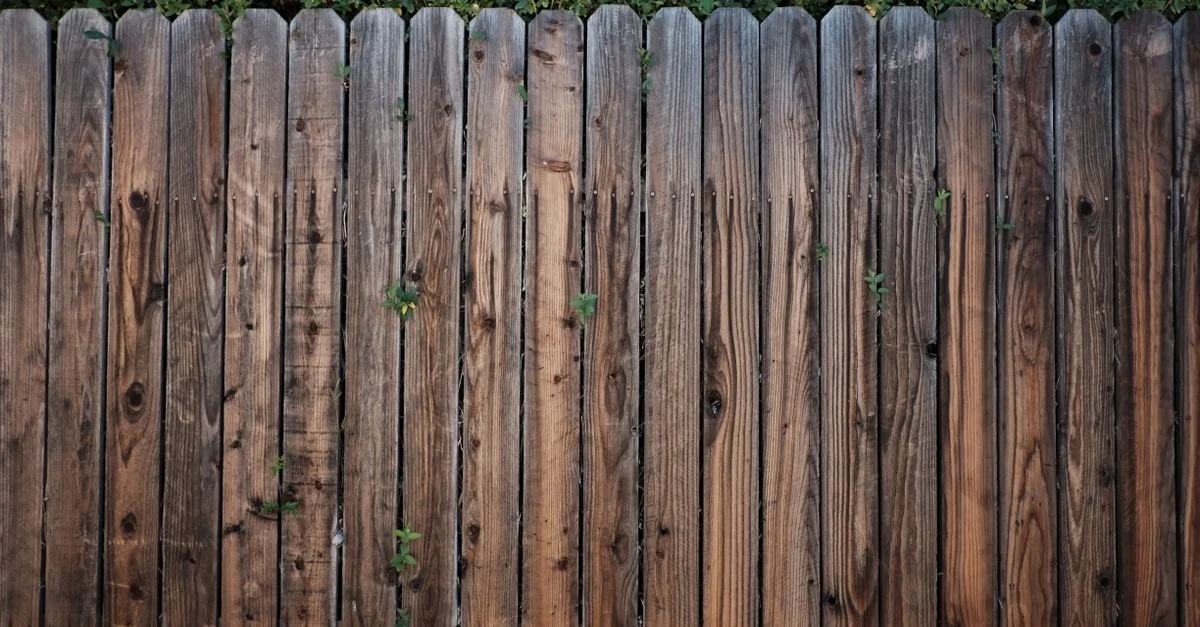
A garden privacy fence serves as more than just a boundary; it creates a safe play area for children while shielding against prying eyes. Families, especially those with kids, prioritize stability and opacity in their fencing choices. When selecting the best material, considerations such as maintenance, aesthetics, and budget come into play. Specialized online retailers like Mega-Holz provide a range of options, competitive pricing, and convenient delivery for bulky items.
The choice of material for a privacy fence can significantly impact the overall look and functionality of a family garden. Four primary material categories dominate the market: wood, WPC (wood-plastic composite), metal, and plastic. The right material depends on five key factors: appearance, maintenance requirements, durability, cost, and privacy level. This guide aims to clarify these options, offering practical advice on installation and essential buying considerations.
What is the Best Privacy Fence for Your Garden?
There is no one-size-fits-all solution for privacy fencing; instead, the ideal material aligns with individual needs. Wood offers natural warmth, while WPC provides low maintenance. Metal is known for its durability, and plastic is the most budget-friendly option.
For those who appreciate a warm, natural aesthetic, wood is often the preferred choice. Mega-Holz’s wooden privacy fences, produced in-house, allow for easy combination of fences, posts, and accessories. Families with limited time for upkeep may find WPC or metal more appealing. For budget-conscious consumers, plastic or PVC offers the lowest entry point, although it compromises on aesthetics and longevity.
Key criteria for decision-making include:
- Appearance: Natural wood has a warm look, WPC appears more modern, metal offers an industrial feel, and plastic is purely functional.
- Maintenance: Wood requires regular upkeep or risks turning gray; WPC and metal are largely maintenance-free.
- Durability: Larch, Douglas fir, WPC, and metal are durable, while untreated softwoods fall short.
- Cost: Plastic or PVC is typically the cheapest, followed by KDI-treated pine, larch/Douglas fir, WPC, and metal.
- Privacy Level: Wood and WPC elements provide traditional privacy, while double rod mats may require additional strips or planting for full opacity.
Wood or WPC – Which is Better for a Privacy Fence?
Wood is celebrated for its natural look and sustainability, whereas WPC is favored for its low maintenance and uniform color. The choice between the two often hinges on whether character or convenience is more important.
A wooden privacy fence made from larch or Douglas fir visibly ages over time, transitioning from a warm reddish hue to a silvery gray. This aging process is natural; however, for those who prefer to maintain the original color, a stain can be applied, though it requires regular reapplication. Conversely, WPC, a composite of wood fibers and plastic, retains its color longer and only requires occasional cleaning.
For those who prefer to enjoy their summer terrace without worrying about fence maintenance, a low-maintenance WPC privacy fence is often the better choice. However, for individuals who appreciate the dynamic nature of a garden and view maintenance as a hobby, a quality larch or Douglas fir fence is a reliable option.
A general rule of thumb for decision-making:
- Prefer a warm natural look and can accept graying or occasional staining → choose wood.
- Want to install once and minimize maintenance thereafter → opt for WPC.
- Combination possible: wood around the terrace, WPC or metal in wind-exposed areas.
Which Wood is Best for a Privacy Fence?
For outdoor use, larch and Douglas fir are ideal choices, as both are naturally weather-resistant and do not require chemical treatment. Pine is only suitable if pressure-treated (KDI).
Larch and Douglas fir contain natural resinous substances that make the wood resistant to moisture and pests. They can be installed without additional treatment and will gray over time, which is a normal visual process. If this patina is undesirable, a UV-resistant wood stain can be applied, requiring reapplication every few years.
Untreated pine is only durable in outdoor settings if it has undergone pressure treatment. Unprotected pine should not be confused with larch or Douglas fir. Tropical woods like Bangkirai are also durable but should be sourced from certified sustainable forestry.
Practical tips for selecting wood include:
- Larch/Douglas fir: Perfect for classic privacy elements, rhombus slats, and slatted fences.
- KDI-treated pine: A solid budget option, primarily for traditional board fences.
- Wood protection: Avoid direct soil contact, cover end grains, and ensure adequate ventilation.
How to Properly Install Fence Posts
Wooden posts should not be directly embedded in concrete, as moisture can cause the wood to rot. The correct installation involves using a post anchor or post shoe secured with a concrete footing.
Posts serve as the structural backbone of any privacy fence, especially in areas where children may lean against or climb. Concrete footings provide stability, while the post anchor elevates the wood slightly above ground level, allowing rainwater to drain away. This helps keep the wood dry and prolongs its lifespan.
For low, lightweight fences—such as those that serve merely as boundaries—driven or ground sleeves can be a practical solution. However, for fences exceeding one meter in height or situated in windy areas, post anchors should be set in concrete. H-anchors or adjustable post anchors are effective because they can accommodate slight height differences. It is crucial to note that the post anchor is what gets embedded, not the wood itself; the wooden post is then inserted into the anchor with a gap from the ground.
Step-by-step guide for post installation:
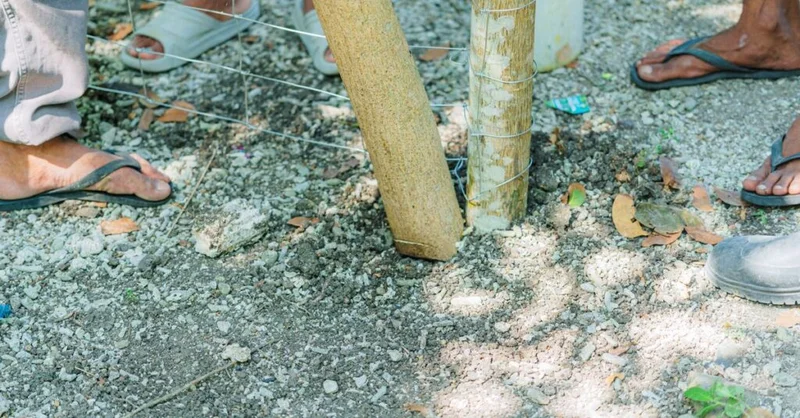
- Mark the layout and adjust distances according to the element width.
- Dig concrete footings, ensuring frost-free depth.
- Insert post anchors, align vertically, and concrete in place.
- Allow concrete to cure, then insert wooden posts with ground clearance.
- Hang or screw in privacy elements.
For further information on material selection and gardening, resources from consumer advice centers and gardening magazines can be helpful. Regulations regarding permissible fence heights and distances from property lines vary by region, so it is advisable to consult local building regulations or municipal offices.
WPC Privacy Fencing – Solid Profile or Hollow Chamber?
Solid profile WPC is more robust and durable, while hollow chamber WPC is lighter and more affordable. Both types require an appropriate substructure with correct post spacing.
Solid profile slats are made entirely from WPC material, providing excellent bending stiffness. They are particularly suited for windy locations, high fences, and privacy walls subject to increased mechanical stress. Hollow chamber profiles are lighter and more cost-effective but may be more susceptible to point impacts, such as a ball striking them forcefully.
Regardless of the type, manufacturers specify a maximum post spacing that varies by system. Exceeding this spacing can lead to sagging slats in high winds or compromised connections. Aluminum or steel core posts are standard in many systems, as pure WPC posts may lack sufficient stability for large fence panels.
Advantages of WPC in outdoor settings include:
- Smooth, splinter-free surface – comfortable for direct contact.
- No staining, no brushes, no annual maintenance routine required.
- Color-stable with UV protection, significantly less prone to graying than untreated wood.
- Robust interlocking systems simplify self-installation and future repairs.
Privacy Fencing for Families with Children and Pets
In family gardens, safety is paramount when it comes to privacy fencing. Key factors include opaque elements, sturdy construction, and surfaces devoid of splinters or sharp edges.
Children often test fences by leaning, climbing, dragging toys, or throwing balls against them. Materials that are splinter-free, such as sanded larch, Douglas fir, or smooth-surfaced WPC, are advantageous. Rounded edges minimize injury risks, while opaque panels define a clear play area. For dogs, low, solid elements without large gaps are essential to prevent them from slipping through or injuring themselves on openings.
Stability is also crucial. A tall fence with poorly installed posts can pose dangers in strong winds or when children play nearby. Investing in sturdy post anchors, proper footings, and high-quality elements ensures long-term peace of mind—both literally and in terms of safety. Height is another consideration; low elements may encourage climbing, while taller fences may require permits depending on local regulations.
Privacy Fencing, Noise Reduction, and Microclimate
An opaque privacy fence not only enhances aesthetics but also influences the microclimate of the garden. Solid elements can slow wind, protect sensitive plants, and create sheltered seating areas. While massive wooden or WPC walls can muffle nearby sounds, true acoustic insulation is not achieved; however, the subjective sense of tranquility may improve.
It’s important to note that a completely solid, tall fence can create turbulence and increased wind flow directly behind it. In very exposed areas, partially permeable elements—such as rhombus slats with minimal gaps—are often a better choice. Additionally, combining a privacy wall with a planting strip of hedges or perennials can help maintain a balanced and natural garden appearance.
What Does a Privacy Fence Cost – and Where to Buy?
Prices for privacy fences vary widely based on material, height, and design. Plastic and basic KDI woods are generally the most affordable, while high-quality larch wood and solid profile WPC fall into the higher price range.
As a rough guide: basic plastic or PVC elements start in the low-cost segment. KDI pine fences are slightly more expensive, while larch and Douglas fir are in the mid to upper range. WPC privacy fencing often falls into the higher middle range but can be more economical over time due to reduced maintenance compared to basic wooden fences that require frequent repainting. Metal and double rod fences are durable but may need additional strips or plants for complete privacy.
When purchasing, there are two main avenues: brick-and-mortar stores or online specialty retailers. Physical stores like HORNBACH or OBI offer immediate pickup and in-person consultation but typically stock only a portion of their inventory. Online specialists provide a broader selection, often at competitive prices.